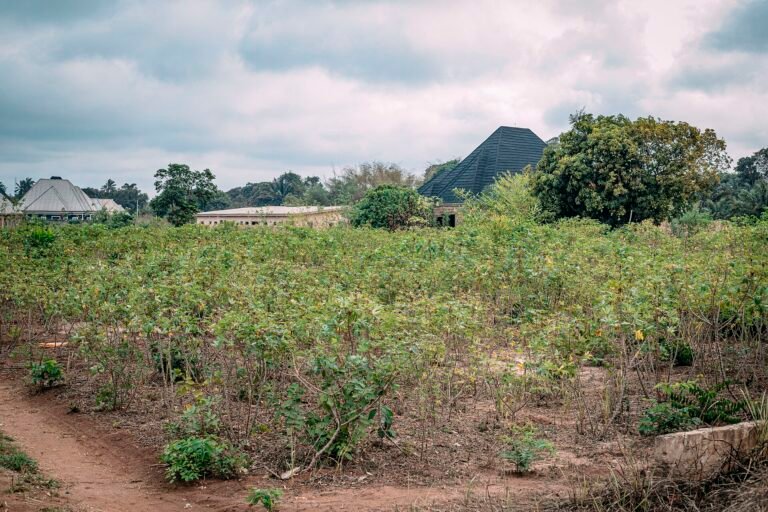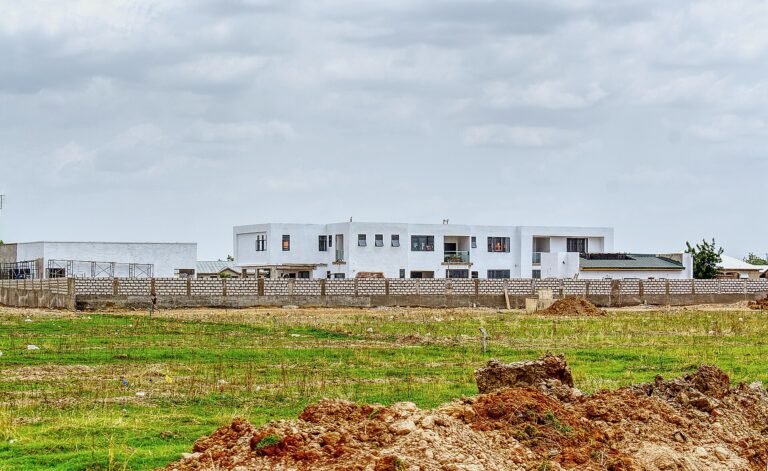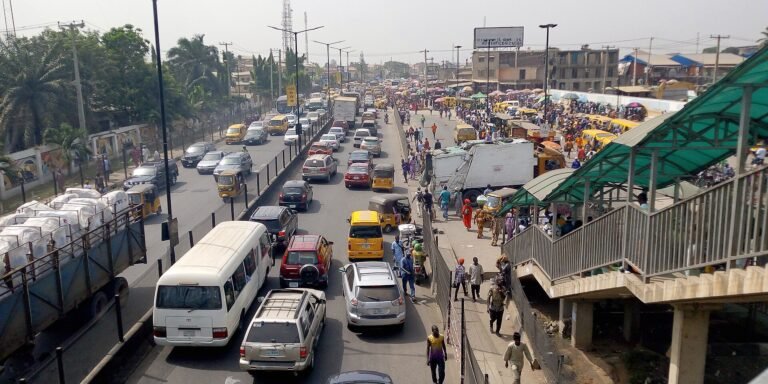
There is a particular kind of investor who visits Aba, looks at the traffic, the drainage and the state of some of the roads, and concludes that this is not a property market worth taking seriously. That investor is making a category error, and it is worth naming precisely, because the same error is made about several Nigerian cities.
The error is judging a property market by how it looks rather than by what it does. Aba looks difficult. What Aba does is manufacture and trade at a scale that few African cities match outside of a handful of megacities. Leather goods, garments, footwear, furniture, fabricated metal, cosmetics and packaging come out of workshops and small factories here in volumes that supply markets across Nigeria and well beyond its borders. Ariaria and the clusters around it are not a market in the retail sense. They are an industrial district that happens to be organised as markets.
That economic base changes everything about what property is for in this city. In a capital city, the tenant is a civil servant who wants a flat. In Aba, a very large share of the tenant base is a producer who wants a secure space with power to make something in, or a trader who wants somewhere to keep stock overnight. Property that serves that demand stays occupied through economic cycles that empty out residential blocks elsewhere. This guide sets out how the Aba market actually works, where the demand sits, what the infrastructure problem costs a buyer, and how to position. For the land-buying process here, read our Aba and Abia land buying guide.
First, separate Aba from Umuahia
Outsiders conflate them constantly, and they are different markets.
Umuahia is the state capital. Government, state institutions, a calmer residential feel, and property demand driven substantially by civil servants, professionals and people building family homes. Land is bought to live on.
Aba is the commercial and industrial city. Larger, denser, busier, and property demand is heavily driven by commerce. Land is bought to earn on.
They are roughly an hour apart and neither one’s prices or growth logic should be applied to the other. If you are told that “Abia property” is doing something, ask which city.
Where the demand actually is
Workshop and small industrial space. The most under-supplied product in the city relative to demand. Producers need secure, powered space with a yard, and a great deal of production currently happens in cramped, improvised conditions because better space does not exist at a price people will pay. A row of simple, secure, well-built units with a workable power arrangement, on a road a lorry can use, rarely struggles for tenants.
Storage and warehousing. Traders need somewhere to keep stock. Secure storage near the commercial corridors is chronically short, and the tenants are businesses rather than individuals, which changes the credit profile.
Shop lines on busy frontage. The classic Aba build is ground-floor shops with residential above. It works because it captures both income streams from one plot, and because commercial rent per square metre generally exceeds residential.
Modest residential near the working areas. Workers need housing close to where they work, and the units that let best are small and affordable rather than large and impressive.
Logistics space near the expressway junction. Space for trucks to load, turn and park is scarce and valuable in a city that ships goods nationally.
What works less well: large luxury residential. The tenant pool for expensive detached houses in Aba is small, and a long vacancy destroys the return. Build for the economy that exists.
The areas, and what each one is for
Osisioma and the expressway junction. Where the Enugu-Port Harcourt expressway meets the city. The natural location for warehousing, logistics and larger commercial plots. Highway access is the entire value proposition here, so pay very close attention to road setbacks and any planned expansion.
Ariaria and the market corridors. The commercial heart. Extremely dense, extremely busy, high value per square metre for commercial use, and effectively impossible for anything requiring calm.
Ogbor Hill and across the river. Long-established, densely populated, with real residential rental demand. This is also the area where drainage and flooding must be examined most carefully.
Port Harcourt Road, Owerri Road, Ngwa Road corridors. Mixed commercial frontage with residential behind. Prices fall as you move outward from the centre.
Obingwa, Ugwunagbo, Ukwa and the outer local governments. The affordable belt, where land banking money goes. Larger plots, lower prices, longer horizon, and family-land paperwork discipline becomes essential.
Umuahia. A separate calculation, as above.
The infrastructure problem, priced honestly
This is the section that determines whether an Aba investment works, so let us be direct about it.
Parts of Aba have serious drainage and road problems. Streets flood. Some roads deteriorate badly in the rains. Erosion is active in places. These issues have been the subject of repeated intervention efforts precisely because they are well known and long-standing.
For a buyer, this does not mean avoid Aba. It means that the street matters more here than in almost any other Nigerian city, and that the price difference between a good street and a bad one is usually smaller than the difference in what the property will actually earn.
Your checks:
- Can a lorry reach the plot in August? If your tenant cannot receive or dispatch goods for four months of the year, they will leave.
- Is the plot higher or lower than the road?
- Where does the street’s drainage actually go? Follow it. A channel that ends at a wall ends in somebody’s compound.
- What do the neighbouring buildings tell you? Water marks, raised thresholds added later, sandbags.
- Visit in the rainy season, or at minimum ask three neighbours directly what the street looks like in August.
- Budget for filling and a raised plinth if you buy low, and treat it as part of the purchase price.
A more expensive plot on a good, drained, lorry-accessible street is usually the cheaper investment once you finish the arithmetic.
The Enyimba Economic City question
There has been long-standing discussion of a large industrial city project in Abia, and it has influenced land pricing in parts of the state.
Handle this the way you should handle every announced project in Nigeria: price the land on what physically exists today, and treat any future project as free upside rather than as the reason for your purchase. If a project is delivered, you gain. If it is delayed for a decade, which happens, you have still bought land at a price justified by present-day fundamentals.
Land priced as though a project is already operating has already given your profit to the seller. Land priced on today’s reality, in a corridor with genuine current activity, is a sound purchase whether or not the announcement materialises.
Running the numbers on a commercial build
Here is an illustrative example to show the shape of an Aba commercial investment.
| Item | Example amount |
|---|---|
| Plot on a usable secondary road | 5,000,000 |
| Purchase costs, survey, deed, search, registration | 1,450,000 |
| Sand filling and site preparation | 900,000 |
| Perimeter fence and gate | 1,500,000 |
| Construction of eight simple, secure units with a shared yard | 24,000,000 |
| Power arrangement and borehole | 3,000,000 |
| Total | 35,850,000 |
If those eight units let at 600,000 a year each, gross rent is 4,800,000. Deduct management, repairs, security, rates and a vacancy allowance of, say, 1,100,000, and net rent is around 3,700,000. That is a net yield of roughly 10.3 per cent, which is materially better than typical Nigerian residential yields, and it is why commercial space in a working city deserves serious attention.
Run your own version with local figures, using the method in rental yield in Nigeria.
The title work
Land in and around Aba is largely customary family land, much of it Ngwa land, with state titles issued by the Abia State Ministry of Lands.
Non-negotiables:
- Family head plus principal members sign, with a written family resolution. See buying family land
- A registered survey plan, charted with the Surveyor-General
- A formal search at the state lands office through your own lawyer
- Direct questions about court cases, including suit numbers
- A proper deed of assignment with the survey attached. See deed of assignment explained
- Payment by transfer, with receipts bearing the plot number
- Fencing immediately, because an open plot in a busy commercial area attracts occupiers quickly
- Application for a Certificate of Occupancy once you own it, which widens your future buyer pool considerably
Final thoughts
Aba is a market for investors who are comfortable with a city that works harder than it looks. It will not impress your friends the way an address in a manicured estate does. What it will do, if you buy the right kind of property on the right kind of street, is stay occupied, because the people renting from you are running businesses that need somewhere to operate and have very few alternatives.
That is a genuinely valuable characteristic. Residential rental demand in Nigeria softens when household incomes are squeezed. Demand for a secure workshop from somebody who makes shoes for a living is far stickier, because without the space the business stops entirely.
So approach Aba as a commercial investor rather than a residential one. Choose the street before the plot, and choose it on the basis of drainage and lorry access rather than on price. Build what producers and traders actually need, which is secure, powered, unglamorous space. Do the family-land paperwork with complete discipline. Fence the plot the week you buy it. And price any announced megaproject at zero until it is built.
Do that, and Aba will do for your money exactly what it has done for generations of people who came here with very little and worked. It will turn effort and good positioning into steady, dependable income.