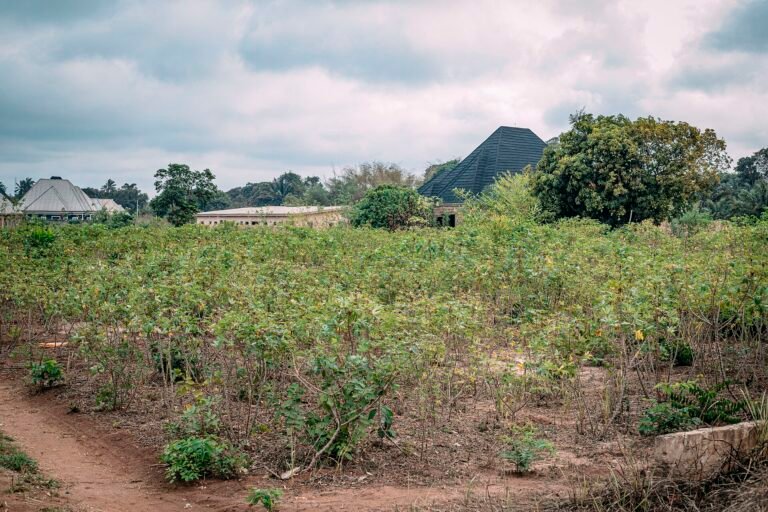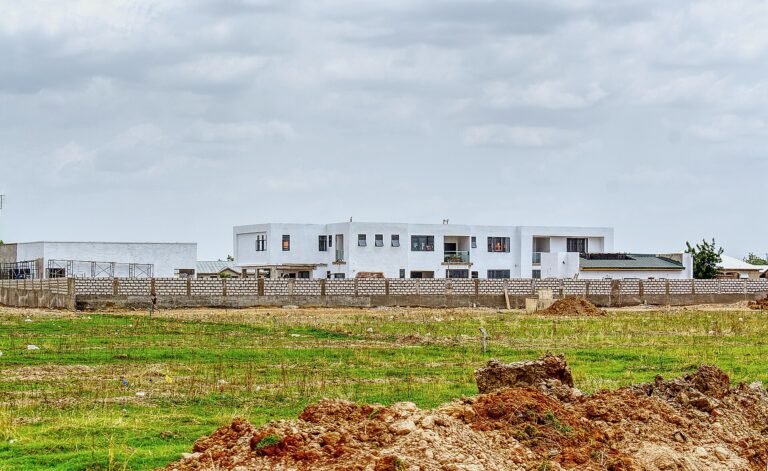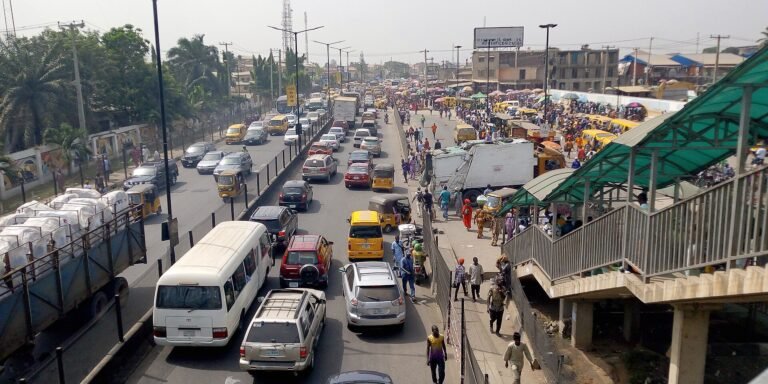
There is a category of land problem in Nigeria that has nothing to do with dishonest sellers, forged documents or family disputes. The seller may be entirely genuine. The family may be united. The receipts may be perfect. And the land may still be unbuildable, unsellable or subject to removal, because the government has an interest in it that nobody mentioned. This is the quietest category of land trouble in Nigeria, and it catches people who did almost everything else right. There is no villain to spot, no suspicious behaviour to notice, and no warning of any kind until the day it matters.
These interests have names, and the names are the vocabulary of Nigerian land: acquisition, commitment, excision, setback, right of way, revocation. They are not obscure legal technicalities. They determine whether you can obtain a title, whether you can lawfully build, how much of your plot is usable, and whether a road project in eight years will take part of your compound.
They are also almost entirely invisible on the ground. A plot inside a government acquisition looks exactly like a plot outside it. A plot on a road setback looks like a plot with a nice frontage. A plot under a planned rail corridor looks like bush. The only way to see these things is to ask the government, which is what a charting search does. This guide explains each interest, what it means for you, and how to check. Read it with our guide to land registry searches.
Where government’s interest comes from
Under the Land Use Act, all land in a state is vested in the Governor, held in trust for the people, with the equivalent role in the Federal Capital Territory sitting with the Federal Government through the FCT Minister.
Beyond that general position, governments have taken further, specific steps over the decades. They have formally acquired defined areas for public purposes. They have committed land to particular schemes. They have reserved corridors for roads, railways, drainage, pipelines and power transmission. And the law allows a right of occupancy to be revoked where the land is required for an overriding public interest, with compensation payable for unexhausted improvements.
All of that is recorded. None of it is visible from a car window.
Government acquisition
What it means. The state formally acquired a defined area of land for public purposes. From that point, the families who previously held it no longer have the legal right to sell it, whatever custom says and whatever has continued to happen in practice.
Why it matters. You cannot obtain a Certificate of Occupancy over land under acquisition. You cannot perfect a transfer. Your position is that of an occupier of government land. If the government acts on its acquisition, compensation, where it applies at all, typically relates to unexhausted improvements such as buildings and crops, not to the market value of the land itself.
Where it bites hardest. Lagos above all, where very large areas were acquired from the 1970s onward and where a great deal of that land continued to be occupied, sold and built upon.
The check. A charting search at the Surveyor-General’s office, using the survey coordinates.
Excision
What it means. The government has released a defined portion of acquired land back to the original community. Once excised and published in the state gazette, that portion can lawfully be sold by the community.
The critical detail. An excision covers a specific area, defined by survey, not a whole village. A community can genuinely have an excision while a particular plot inside that village sits outside the excised boundary.
The check. Ask for the gazette number, year and page in writing. Confirm the gazette exists. Then chart your specific plot to prove your coordinates fall inside the excised area. All three steps. See excision and gazette explained.
Committed land
What it means. The land has been earmarked for a specific government purpose, such as a road scheme, a rail corridor, a housing programme, an industrial estate or a public facility.
Why it matters. Committed land is generally not released. It is being held for a defined use, and buying it means buying a dispute you are unlikely to win.
The check. Charting. The result will state that the land is committed.
Setbacks
What it means. A strip of land alongside a road, a drainage channel, a river or a power line that must be kept clear of building.
Why it matters. The land inside a setback is still part of your plot on paper, but you cannot lawfully build on it. On a plot with substantial road frontage, the setback can remove a significant share of your buildable area. Buildings erected inside setbacks have been demolished during road expansion works in several Nigerian cities.
The important nuance. Setback distances vary by the class of road and by the authority. Federal highway legislation prescribes a substantial reserve measured from the centre of the road. States and local planning authorities prescribe their own figures for state and local roads. Do not guess. Ask the relevant planning authority for the specific figure applying to your specific road.
The check. Ask the planning authority directly, and confirm through charting whether the plot falls within a road reserve. Also read the survey plan carefully, as setbacks are sometimes shown.
Rights of way for pipelines and power lines
Two specific corridors deserve their own mention, because they are commonly overlooked and the consequences are severe.
Petroleum pipeline right of way. Pipelines carrying petroleum products run through many parts of the country, with a legally protected corridor along their route. Building over or immediately beside a pipeline is unlawful, dangerous and has been the cause of loss of life in Nigeria. Structures within such corridors are removed.
High-tension electricity transmission corridor. Transmission lines carry a right of way beneath and beside them within which building is prohibited. You will sometimes see plots offered cheaply under high-tension lines. There is a reason they are cheap.
The check. Look up. Walk the plot and look for pipeline markers, which are usually visible posts along the route, and for overhead transmission lines. Ask the planning authority. Ask the neighbours.
Revocation for overriding public interest
What it means. The law permits a right of occupancy to be revoked where the land is required for an overriding public interest, following the prescribed procedure, with compensation payable in respect of unexhausted improvements.
Why it matters. This is the residual risk that even a perfectly titled plot carries. It is uncommon for ordinary residential plots and considerably more relevant to land in the path of major public projects.
Practical response. You cannot eliminate this risk, but you can be aware of it. Before buying near a major planned corridor, ask the planning authority what is intended for that route. And note the important practical point: your compensation position is much stronger if your title is properly registered. An unregistered occupier of land subject to revocation is in a considerably weaker position than a registered holder.
Other reservations to ask about
- Drainage and waterway reserves, where building is prohibited and physically unwise
- Green areas in planned cities, which are protected in the master plan and where structures have been removed
- Railway corridors, which have their own reserves
- Airport approach zones, which restrict building height near airports
- Government reserved areas and institutional land, held for schools, hospitals and public facilities
The single check that covers most of this
Charting. It is worth stating plainly.
Take the survey plan, with its coordinates, to the Office of the Surveyor-General of the state, or the equivalent land information office, through your own lawyer or surveyor. Ask for a charting search. They will place your coordinates on the official map.
The answer will be one of: free from acquisition; under acquisition; committed; under excision; within a road setback or drainage reserve; or overlapping another registered parcel.
That single exercise, which costs a modest official fee plus a professional fee, resolves the great majority of the risks in this article. It is the highest-value spend available to a Nigerian land buyer and it is skipped by a very large proportion of them. See survey plan explained for how to read the document you will be charting.
Questions to ask before you pay
- Is this land free from government acquisition, and can I chart it before payment?
- If it is excised, what is the gazette number, year and page?
- Does any part of this plot fall within a road setback, and what is the setback distance for this road?
- Is there any drainage, waterway or river reserve affecting the plot?
- Are there any pipelines or high-tension lines on or near the plot?
- Is the land committed to any government scheme?
- What is the approved land use for this plot?
- Is there any planned road, rail or public project on this route?
Ask them in writing. Keep the answers. An honest seller answers all eight without difficulty.
Final thoughts
The government’s interests in land are the quietest risk in Nigerian property and one of the most consequential. They do not announce themselves. There is no dishonest seller to spot, no forged signature to catch, no suspicious behaviour to notice. A family can sell you land in complete good faith, having farmed it for four generations, without knowing that the state acquired it before they were born.
Which is exactly why the check has to be systematic rather than intuitive. You cannot feel your way to the answer. You have to ask the government, using coordinates, through a formal search, before your money moves.
So make charting a fixed, non-negotiable part of every land purchase, in every state, at every price level. Get the gazette reference in writing where excision is claimed and confirm that your specific plot sits inside it. Ask the planning authority for the setback on your specific road. Walk the plot and look up for power lines and along the ground for pipeline markers. Ask what is planned for the corridor.
Then, when the answer comes back clean, buy with real confidence, and register the title so that your position is as strong as the law allows.
And when the answer does not come back clean, be glad. You have just spent a small sum to avoid a very large one.