Land banking is the simplest investment idea in Nigerian property and the one most likely to be oversold. You buy land in an area that has not developed yet, you do nothing with it, and you wait. If the area grows, the land becomes worth more, and you sell. There is no tenant to chase, no roof to repair, no builder to supervise. You buy, you fence, you wait.
That simplicity is exactly why it is the entry point for most Nigerian investors. A plot on the outer edge of a growing corridor can still be bought for the price of a used car, sometimes less, and it can be paid for over a year or two. Compared with the tens of millions needed to build a block of flats, land banking is the version of property investment an ordinary salary earner can actually reach.
But the simplicity hides a hard truth that the marketing never mentions. Land banking is a bet, and the thing you are betting on is not the land. It is infrastructure. Bare land does not grow in value because time passes. It grows because a road arrives, or a port opens, or an estate fills up, or a university expands, and people who need to be near those things start competing for the ground nearby. Where that does not happen, land sits, and years of your money sit with it, quietly losing purchasing power. This guide explains how land banking actually works, how to pick a corridor with real reasons behind it, how long to expect to wait, and what the honest arithmetic looks like. For the mechanics of purchase, read our complete guide to buying land in Nigeria.
What actually drives land value
Land is worth what somebody will pay to be there. So the question behind every land banking decision is: why will anybody want to be here in ten years?
The reasons that have historically worked in Nigeria are few and physical.
A road. By a wide margin the most powerful driver in this country. A place that was ninety minutes of suffering from a city centre becomes thirty minutes of driving, and the entire calculation of who can live there changes overnight.
A large employer or industrial project. A port, a refinery, a free trade zone, a large factory, a mine. These bring workers, and workers bring housing, shops, schools and transport.
An institution. A university, a polytechnic, a teaching hospital, a state secretariat. These create permanent, renewing populations who need somewhere to live nearby, year after year.
An airport. Especially a cargo airport, which pulls logistics, warehousing and the businesses that serve them.
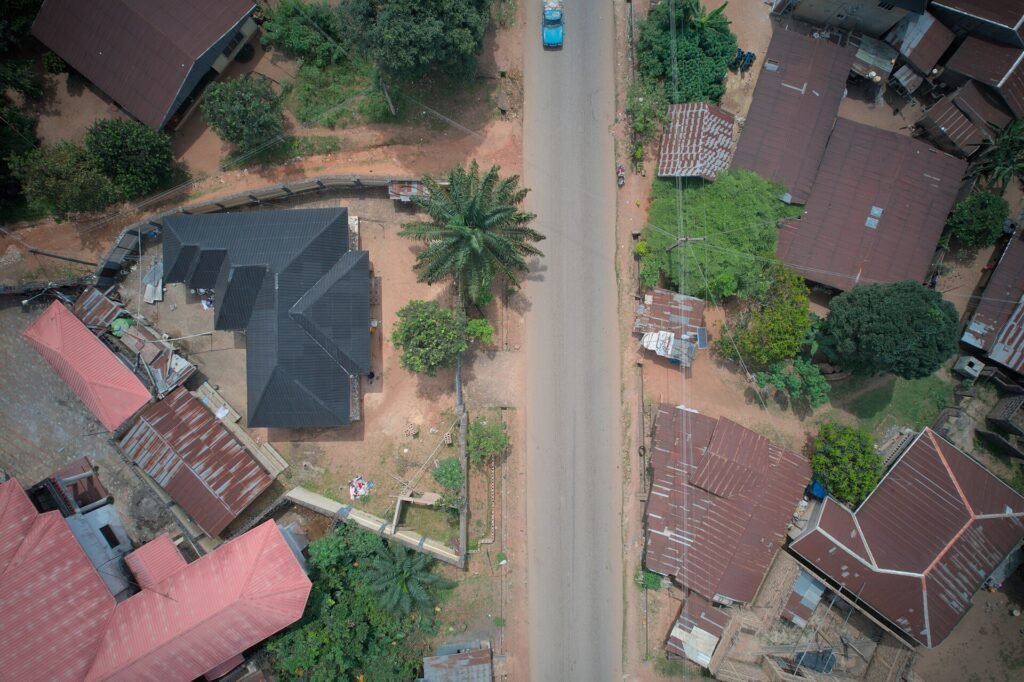
Spillover from a saturated area. When the established part of a city becomes unaffordable, the next ring out absorbs the pressure. This is the quietest and most reliable driver of all, and it is why the outskirts of every growing Nigerian city eventually fill in.
Government relocation or a new administrative centre. Powerful when it actually happens, and frequently announced without happening.
Notice what is not on the list. A beautiful entrance gate. A 3D rendering of an estate. A celebrity endorsement. A bus full of buyers clapping. Those are marketing, and marketing is a cost the seller passes to you, not a driver of future value.
How to read a corridor
When you are looking at an area, you are trying to work out where it is in its life cycle. Corridors move through predictable stages.
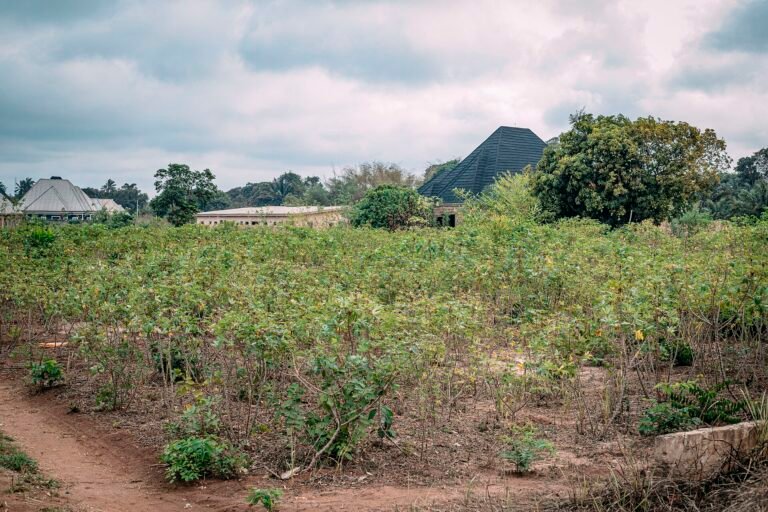
Stage one: farmland. Bush, farms, a few compounds. Cheapest possible entry. Highest uncertainty. You may wait fifteen years or forever.
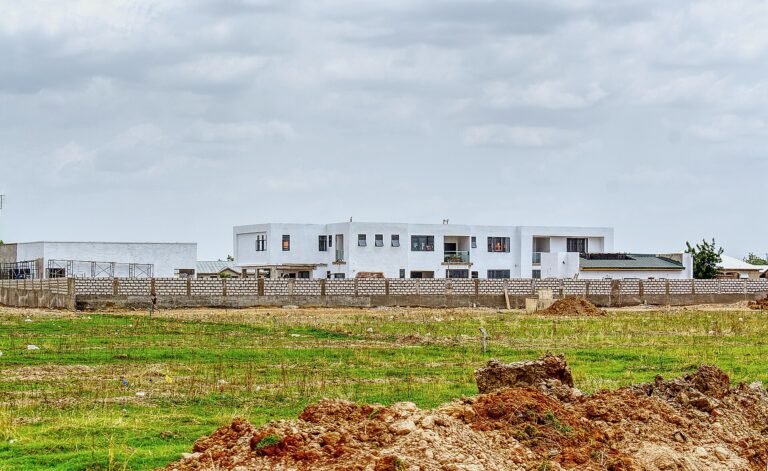
Stage two: first movers. A few plots fenced, one or two houses built, an estate signboard. Prices have moved from the farmland level but are still low. This is often the sweet spot, because the direction of travel is now visible but the price has not caught up.
Stage three: active building. Multiple sites under construction, a graded road, electricity poles going in, a shop or two. Prices rise sharply through this stage. Still worth entering, but the easy money has gone.
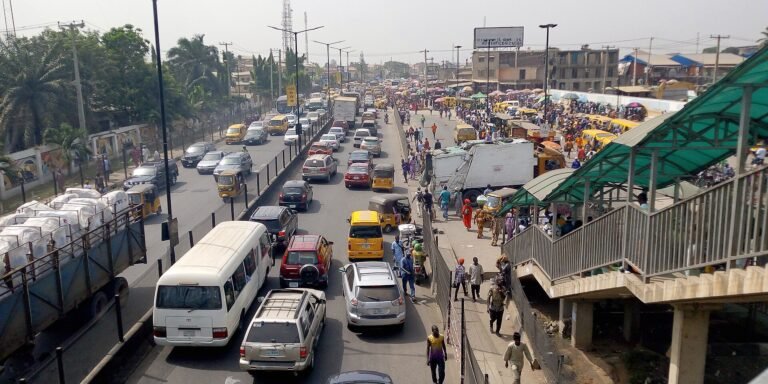
Stage four: occupied. People living there, schools, a market, transport. Prices are now near the level of the established areas. Buy here to live or to rent, not to bank.
Your job is to identify stage two, and to confirm it with your own eyes rather than an agent’s description.
Practical checks on the ground: count the buildings under construction within a ten-minute walk; count the electricity poles and look for a transformer; look at the road surface and whether machinery is currently working on it; ask a resident how long the road has been “coming”; and note whether there is any commercial activity, because a single provisions shop is a meaningful sign that somebody thinks people will pass by.
How long does land banking take?
Longer than the adverts suggest.
A realistic expectation for a stage two corridor is five to ten years before a substantial revaluation, and the biggest jump usually occurs around the moment infrastructure is delivered rather than when it is announced. Announcements move prices a little. Completed roads move prices a lot.
That timeline has an important consequence: do not land bank with money you might need. Land is the least liquid asset most Nigerians own. Selling a plot in an undeveloped area quickly means accepting whatever a bargain hunter offers, and the discount can be brutal. Land banking money should be money you can genuinely forget about.
The honest arithmetic
Here is a worked example that shows both the promise and the trap.
Suppose you buy a plot in 2019. The plot price is 3,000,000 naira, and by the time you have paid for survey, deed, levies, registration and a simple fence, your all-in cost is 4,000,000.
Seven years later, in 2026, the area has developed and you sell for 12,000,000. After agency fees and selling costs you net 11,200,000.
Total return: you turned 4,000,000 into 11,200,000. That is a gain of 7,200,000, or 180 per cent.
Annualised return: spread over seven years, that works out to roughly 16 per cent a year compounded. A perfectly respectable number in many markets.
Now the part nobody puts in the brochure.
Against inflation: Nigerian inflation over that period ran high, and in several of those years it exceeded 16 per cent on its own. A 16 per cent annual gain during a period of comparable or higher inflation means your purchasing power barely moved, and may have fallen.
Against the dollar: in 2019, 4,000,000 naira was worth a very different number of dollars than 11,200,000 naira is worth today, because the exchange rate moved dramatically over that period. Measured in dollars, that apparently successful investment may well have gone backwards.
This is the single most important thing to understand about land banking in Nigeria, and almost nobody says it out loud. A plot that merely doubles or triples over seven years has not necessarily made you richer. The land banking successes that genuinely change a family’s position are the ones where the land multiplied many times over, and those are the ones where major infrastructure actually landed.
Which means the choice of corridor is not one factor among many. It is very nearly the whole thing.
Our full method for running these numbers, including inflation and currency, is in how to calculate ROI on Nigerian land.
The costs of holding land
People imagine bare land is free to hold. It is not.
- Fencing and clearing, which is a genuine cost and genuinely necessary
- Periodic clearing of bush, since an overgrown plot invites encroachment
- Ground rent where the land carries a state title
- Travel to inspect it
- A caretaker or neighbour you compensate for keeping an eye on it
- Community levies in some areas
- Opportunity cost, the return the same money could have earned elsewhere
Budget one to two per cent of the plot value per year for holding costs and you will not be far wrong in most places. Over ten years that is a meaningful drag, and it should be in your calculation.
Reducing the risk
Buy in more than one corridor if you can. Two plots in two different growth stories is safer than one plot in one. Not everyone can afford this at the start, but it should be the plan as your capital grows.
Prefer places with more than one driver. A corridor with a road and an institution is far safer than a corridor with only an announcement.
Buy title you can register. An unregistered plot in a suddenly hot area is exactly the plot somebody will try to take from you. Register it. See Governor’s Consent explained.
Fence, mark, and visit. Occupation is protection. A signboard with your name and phone number costs very little and prevents a great deal.
Buy where you can physically get to. Especially for your first purchase.
Do not over-commit on instalments. A payment plan you cannot comfortably meet turns a good investment into a forced sale. See land payment plans in Nigeria.
Verify before you pay. Every time, without exception. See land registry search in Nigeria.
When land banking is the wrong choice
Be honest with yourself about this. Land banking is wrong for you if:
- You need income from your investment
- You may need the money within five years
- You cannot afford the extra costs of survey, deed and registration
- You would be buying with borrowed money at a high interest rate
- You would be putting all of your savings into a single illiquid asset
- You cannot get to the land to check on it
If several of those apply, a smaller, more liquid holding elsewhere, or a developed property producing rent, may serve you better. See real estate vs fixed deposit, stocks and dollars.
Final thoughts
Land banking is a genuine strategy with a genuine record in Nigeria. Families have been lifted by plots bought early on corridors that later received a road, a port or a university. The entry price is low enough that ordinary people can participate, and unlike most investments available to a Nigerian saver, it produces an asset that is physically real, cannot be printed away, and can be handed to children.
But it is a patient strategy that lives or dies on one decision, which is whether the place you chose actually grows. Everything else, the paperwork, the fencing, the negotiation, matters enormously for protecting the investment, but it is the corridor that determines whether there is anything worth protecting.
So spend your effort where it counts. Walk the area yourself. Count the buildings going up. Look for the road that is actually being built rather than the one being promised. Prefer corridors with more than one reason to grow. Understand that you are likely waiting five to ten years, and hold only money you can genuinely leave alone for that long. Budget the holding costs. Register the title. Fence the plot and put your name on it.
Then be patient, and stop checking the price. The land is not going anywhere, and neither, if you chose well, is the reason you bought it.