The most common financial accident in Nigerian property is not fraud. It is arithmetic. A buyer sees a plot advertised at five million naira, saves five million naira, pays five million naira, and then discovers that owning the plot properly requires nearly seven. The extra two million was never hidden. Nobody lied. It simply was not mentioned, because the buyer did not ask and the seller was advertising a plot price rather than a total cost. And by then the money is gone, the plot is technically theirs, and the documents that would make it properly theirs are still years away.
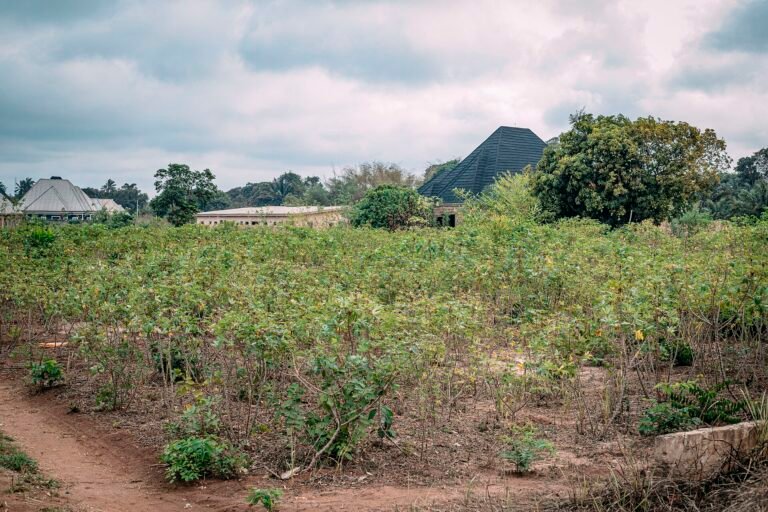
What happens next is predictable and painful. The buyer, having spent everything, cannot pay for the survey. Without a survey there is no deed. Without a deed there is no registration. And so the plot sits in a folder as a receipt and a promise, for years, unregistered, unfenced and unbuildable, while the buyer waits to save again. Nigeria is full of such plots. Many of them were bought with money that came from real sacrifice.
All of it is avoidable by finding out the total cost before you pay the first naira. There is nothing mysterious about the charges. They are the same charges on nearly every transaction in the country, and an honest seller will list them for you if you ask. This guide sets out every one: what it is, why it exists, roughly how large it is relative to the plot price, who normally bears it, and where it can be negotiated. For the process itself, see our complete guide to buying land in Nigeria.
The full list of charges
1. The plot price
The advertised figure. This is what everybody quotes and what almost nobody actually pays in total.
Negotiable? Frequently, particularly for outright cash payment, for buying multiple plots, or where a plot has been unsold for a while.
2. Agency or commission fee
Paid to the agent who introduced and facilitated the transaction. Commonly around five per cent of the price, sometimes more on smaller transactions.
Who pays? Practice varies. In many transactions the buyer pays. In some the seller pays, or it is split. Establish this at the start rather than at completion.
Negotiable? Sometimes, especially on larger purchases. Be careful about squeezing an agent to nothing, because a well-treated agent is genuinely useful to you afterwards.
3. Survey fee
The cost of producing a registered survey plan for your specific plot, prepared by a licensed surveyor and lodged with the office of the Surveyor-General.
Rough scale: commonly in the region of five to fifteen per cent of a modest plot price, and proportionally much less on expensive land.
Negotiable? The professional fee is somewhat negotiable. The requirement is not. Never buy land without a registered survey plan. See survey plan explained.
4. Search and verification costs
Official fees at the land registry and the Surveyor-General’s office, plus your lawyer’s professional fee for conducting the searches and producing a written report.
Rough scale: small relative to everything else, and by far the best value in the entire transaction.
Negotiable? Do not try. This is the spend that protects all the others. See land registry search in Nigeria.
5. Legal fees and deed preparation
Your lawyer’s fee for preparing or reviewing the deed of assignment, advising on the transaction and handling the documentation.
Rough scale: commonly a percentage of the transaction value, often in the region of five per cent, though this varies with complexity and with the lawyer.
Important: use your own lawyer, not the seller’s. This is the single most valuable rule in Nigerian property. See deed of assignment explained.
6. Development or infrastructure levy
Charged by estates to fund internal roads, drainage, a perimeter fence, a gatehouse, electricity provision and sometimes a borehole.
Rough scale: highly variable and frequently the largest surprise on the bill. In some Lagos estates it can approach or exceed the plot price itself. In smaller upcountry estates it may be modest.
Negotiable? Rarely on the amount, but always insist on knowing exactly what it delivers and by when, in writing. See buying a home in an estate.
7. Community, family or town union documentation
On customary land, the costs associated with the family’s own documentation, the family head’s endorsement, community acknowledgement and any established local expectations.
Rough scale: usually modest, but it must be established in writing in advance.
The key rule: get the complete list of expected payments before you pay for the land, and put it in the agreement. Legitimate customary payments are known in advance and receipted. Payments that appear one at a time after purchase are a different thing entirely. See omonile and land grabbers.
8. Governor’s Consent fee
The state’s charge for approving the transfer of titled land from the seller to you. Calculated on the assessed value of the property.
Rough scale: a percentage of value, set by each state and revised periodically.
Negotiable? No. It is a statutory charge. See Governor’s Consent explained.
9. Stamp duty
Duty payable on the instrument of transfer. An unstamped deed cannot be registered and has limited use in evidence.
Rough scale: a percentage of the consideration.
10. Registration fee
The charge for entering the transaction in the state land register, which is what makes your interest a matter of public record.
11. Capital gains tax
Arising on the disposal of the property. Conventionally the seller’s liability, though it is commonly dealt with as part of the perfection process, so establish clearly who bears it.
12. Certificate of Occupancy processing
Where you are applying for a state title rather than taking an existing one, expect application fees, a premium or capital contribution, ground rent, and processing costs. See what is a Certificate of Occupancy.
13. Ground rent
An annual charge on land held under a state grant. Confirm the seller’s arrears position before completion, because arrears attach to the land.
14. Fencing, clearing and a signboard
Not a legal cost, and not optional in practice. Bare, bush-covered land with an absent owner is exactly the land that gets encroached on or resold. Clearing, a simple perimeter and a board with your name and number is protection, not decoration.
15. Sand filling and site preparation
Applicable where the plot sits low or on soft ground. On some coastal and riverine plots this is a very large number, occasionally a significant fraction of the plot price. Establish it before you agree the price, not after.
16. Travel, inspection and incidentals
Trips to the land, to the registry, to the lawyer. Small individually, real in aggregate, and much larger if you are buying from another state or from abroad.
Three worked examples
A modest upcountry plot
| Item | Amount |
|---|---|
| Plot price | 1,800,000 |
| Survey | 250,000 |
| Deed and legal | 180,000 |
| Family and community documentation | 120,000 |
| Search and verification | 80,000 |
| Estate levy | 200,000 |
| Fencing and signboard | 400,000 |
| Total | 3,030,000 |
That is 68 per cent above the advertised price, largely because fixed costs weigh heavily on a small transaction.
A mid-range plot in a state capital
| Item | Amount |
|---|---|
| Plot price | 6,000,000 |
| Survey | 400,000 |
| Deed and legal | 400,000 |
| Search and verification | 120,000 |
| Community documentation | 250,000 |
| Estate levy | 700,000 |
| Registration and title processing | 600,000 |
| Total | 8,470,000 |
About 41 per cent above the advertised price.
A Lagos corridor estate plot
| Item | Amount |
|---|---|
| Plot price | 15,000,000 |
| Survey | 800,000 |
| Deed of assignment | 500,000 |
| Search and charting | 250,000 |
| Development levy | 3,000,000 |
| Agency fee | 750,000 |
| Registration, stamp duty and consent | 1,200,000 |
| Total | 21,500,000 |
About 43 per cent above the advertised price, with the development levy doing most of the damage.
The pattern across all three: budget for thirty to seventy per cent above the advertised plot price, with smaller transactions at the higher end of that range because the fixed costs do not shrink.
The single most useful question you can ask
Before you commit to anything, ask this, and ask for the answer in writing on letterhead or by email:
“Please give me a complete written schedule of every payment I will be required to make, from today until the plot is registered in my name, including who each payment goes to and when it falls due.”
An honest, well-organised seller will produce this without hesitation. They get asked constantly and they have the list ready.
A seller who becomes vague, who says the other charges will be discussed later, or who gives you a figure verbally and will not put it in writing, has told you something important about how the rest of the transaction will go.
How to budget so you never get stuck
- Take the advertised price and add fifty per cent. That is your working figure until you have the written schedule.
- Do not spend your emergency fund on the purchase.
- Sequence the essentials first. Survey, search, deed and registration come before anything cosmetic. A registered plot with no fence is a far better position than a fenced plot with no deed.
- If money is tight, buy a smaller or cheaper plot and complete it properly, rather than buying a bigger one you cannot document.
- On an instalment plan, confirm what is inside and outside the plan. Survey, deed and levy are frequently outside it. See land payment plans in Nigeria.
- Keep a reserve for the charges that arrive at registration, which is usually the last and largest cluster.
Final thoughts
Nobody in this business is hiding these charges. They are ordinary, they are broadly the same everywhere in the country, and any lawyer or experienced buyer could recite them from memory. They only feel like a trap because buyers ask “how much is the plot” instead of “how much to own the plot properly, registered, in my name”.
Those are different questions with very different answers, and the gap between them is where a great many Nigerian property dreams stall. The half-finished, undocumented, unfenced plot sitting in a folder somewhere is almost never the result of a scam. It is the result of a budget built on the advertised number.
So build your budget on the total instead. Ask for the complete written schedule before you commit. Add fifty per cent to any advertised price as your planning assumption until you have that schedule. Protect the money for survey, search, deed and registration as untouchable, because those four items are what turn a payment into ownership. And if the total is more than you have, buy something smaller and finish it properly.
A modest plot fully paid for, surveyed, deeded, registered and fenced is worth far more, in money and in peace of mind, than an impressive plot you are still trying to complete four years later.