Ask a hundred Nigerians where they would put money they wanted to keep safe and grow, and a very large share will say land. It is the default answer, passed down through families, and it is not a foolish one. Land in the right place has protected Nigerian savings through devaluations, bank failures, policy changes and inflation that has repeatedly destroyed the value of cash. A plot bought in a growing corridor twenty years ago has, in many cases, done better than almost anything else the same money could have bought.
But “real estate” as an answer hides more than it reveals. Buying a plot of bush and holding it for ten years is real estate. Building a block of flats and collecting rent is real estate. Running short-let apartments is real estate. Buying an off-plan unit from a developer is real estate. Buying farmland with a management contract is real estate. These are five completely different businesses with different capital requirements, different risks, different timelines and wildly different returns, and the single biggest mistake beginners make is choosing one without realising the others existed.
This guide is for the person with some savings who wants to start properly. We will go through the main ways of making money from Nigerian property, what each one actually requires, what returns are realistic rather than advertised, the risks specific to each, and a sensible way to take the first step. Where numbers appear they are worked examples chosen to make the arithmetic clear, not market quotations. For the mechanics of a purchase, read our complete guide to buying land in Nigeria.
The two ways property makes money
Everything in this business reduces to two sources of return, and you should always know which one you are relying on.
Capital appreciation is the increase in the value of the asset. You buy at one price and, later, the asset is worth more. This is the main return from bare land, and it produces nothing at all until you sell or borrow against it.
Income is money the property pays you while you own it. Rent from tenants, nightly rates from short-lets, a share of a harvest from farmland, or lease payments from a commercial occupier.
Bare land is pure appreciation with zero income and ongoing small costs. A rented flat is mostly income with some appreciation. Understanding which engine you are buying prevents the commonest disappointment in Nigerian property, which is the person who buys land expecting it to “bring returns” and then wonders, three years later, why nothing has arrived.
Strategy one: land banking
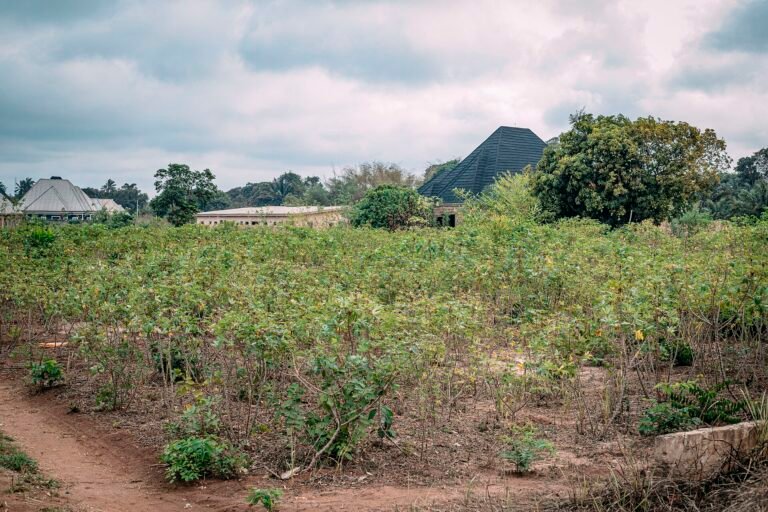
Buy land in an area before it develops. Hold it. Sell when the area has grown.
Capital needed: the lowest entry point in property. Plots in developing corridors around most Nigerian cities remain within reach of an ordinary saver.
Timeline: long. Five to ten years is a sensible expectation, and the biggest gains usually come from the moment infrastructure actually arrives.
Effort: low, but not zero. You must fence it, mark it, visit it and keep documents safe.
Realistic return: highly variable, and this is where honesty matters. Land near a genuinely transformative project can multiply several times over. Land in an area that never develops can sit flat for a decade while inflation eats the value of your money. The average is far less exciting than the stories you hear, because you only ever hear about the winners.
Main risks: buying in a place that never grows, title problems, and encroachment on land you never visit.
Full treatment in land banking in Nigeria.
Strategy two: buy and build to rent
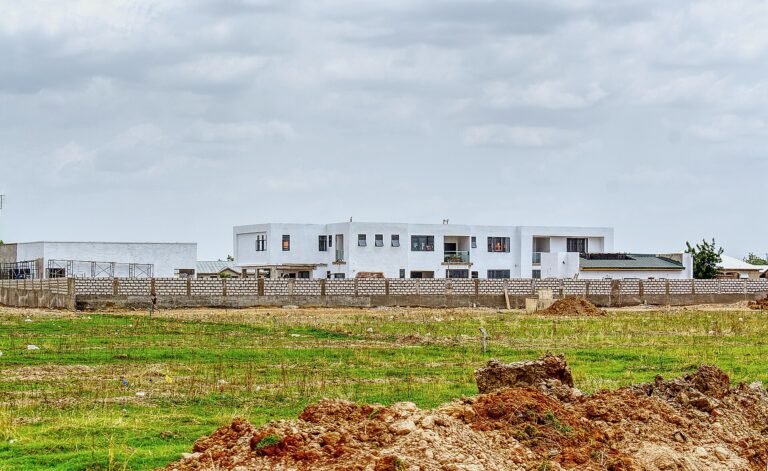
Buy land, build a house or a small block of flats, let it out.
Capital needed: much higher. In most Nigerian markets the building costs several times the land.
Timeline: eighteen months to three years from purchase to first rent, if things go well.
Effort: high during construction, moderate afterwards.
Realistic return: here is a worked example. Suppose the land costs 5,000,000 and building a block of four two-bedroom flats costs 45,000,000, so 50,000,000 all in. Suppose each flat lets for 900,000 a year, giving gross rent of 3,600,000. Deduct agency and management, repairs, insurance, security, and an allowance for months when a flat sits empty, and you might keep around 2,700,000. That is a net yield of roughly 5.4 per cent a year on the money invested, plus whatever the property appreciates.
That number surprises people, because 5 per cent sounds small next to what a fixed deposit or a treasury instrument might pay in a high-rate period. It is the honest number, and the reason people still do it is appreciation, the ability to eventually own an asset outright, and the fact that rent tends to rise over time while a fixed sum of cash does not.
See rental yield in Nigeria for the full method.
Strategy three: buy a finished property to rent
Skip construction and buy something already built and let.
Capital needed: high, but the money goes out once rather than in stages.
Timeline: immediate income.
Effort: moderate. You are a landlord from day one.
Realistic return: typically similar to or slightly below build-to-rent, because you are paying somebody else’s development profit. What you buy in exchange is certainty and speed.
Main risks: overpaying, hidden defects, and inheriting bad tenants. A proper inspection is essential. See house inspection checklist.
Strategy four: short-let apartments
Furnish a property and let it by the night or the week.
Capital needed: high, because you pay for the property and then furnish it to a standard guests will accept.
Timeline: immediate, once furnished.
Effort: very high. This is a hospitality business wearing a property costume. Cleaning, linen, guest communication, power, water, security, reviews, pricing.
Realistic return: can be substantially higher than long-let in the right location, and can be worse once occupancy dips or a competitor opens twenty units nearby. Location is everything and the market in the big cities has become crowded.
See short-let apartments in Nigeria.
Strategy five: off-plan purchase
Buy a unit from a developer before or during construction, usually at a discount to the finished price, paying in instalments.
Capital needed: moderate to start, because payments are staged.
Timeline: as long as the construction takes, plus the delay.
Effort: low, apart from the due diligence, which must be substantial.
Realistic return: the discount to the finished price is your gain, if the project completes on time and to standard.
Main risks: the big one. Developer failure, long delays, specification changes and, in the worst cases, projects that never complete. Your due diligence is on the developer as much as the building. See off-plan property in Nigeria.
Strategy six: farmland
Buy agricultural land, farmed by you or under a management arrangement.
Capital needed: low per hectare compared with urban land.
Timeline: annual crops pay within a year or two, tree crops take several years.
Effort: low if managed, high if you farm it yourself.
Realistic return: modest income plus land appreciation, when done honestly. Be extremely careful with schemes promising fixed high annual percentages, and read how to buy farmland in Nigeria before committing.
What return should you actually expect?
Be suspicious of anybody who answers that question with a single confident number.
For property held over a long period in a genuinely growing area, a sensible expectation is that your asset roughly keeps pace with, and over good stretches beats, inflation and currency depreciation, while producing modest income if it is developed. That is not a get-rich-quick outcome. It is a preserve-and-grow-steadily outcome, and in a country where the value of cash has fallen sharply over the years, preserving value is itself a significant achievement.
The extraordinary returns you hear about, where a plot bought for a small sum is now worth a great deal, are real but they are selected. They come from a specific kind of situation: land bought early in a corridor that subsequently received major infrastructure. Nobody tells you about the plots bought at the same time in the corridor that never got the road.
Our comparison against other options is in real estate vs fixed deposit, stocks and dollars.
How a beginner should actually start
One: fix your foundation first. Have an emergency fund in cash before you tie money up in property. Land is the least liquid asset most Nigerians own, and selling in a hurry always means selling cheap.
Two: decide your engine. Do you need income now, or can you wait for appreciation? If you need income, do not buy bare land. If you can wait, bare land is the cheapest way in.
Three: start within your means, in cash if possible. A modest plot fully paid for, properly titled and registered, beats an ambitious plot half paid for with a payment plan you are struggling to meet.
Four: buy where you can physically get to. For your first purchase, choose somewhere you can visit, inspect and check on. Distance multiplies every risk.
Five: spend money on verification. Your own lawyer, a search, a charting, a surveyor to walk the beacons. Treat it as part of the purchase price. See land registry search in Nigeria.
Six: budget the full cost. Plot price plus survey, deed, levies, registration, fencing. See the real cost of buying land.
Seven: register the title. Unregistered property is cheap to buy and painful to sell.
Eight: then take possession visibly. Clear it, fence it, sign it, visit it.
The mistakes that cost beginners the most
- Buying bare land and expecting monthly income
- Believing an advertised yield without asking for evidence of a completed cycle
- Skipping the search because the seller was introduced by someone trusted
- Ignoring the extra costs and getting stuck with an unregisterable plot
- Taking a payment plan that requires more than they can comfortably pay
- Buying far away, sight unseen, on the strength of a video
- Treating property as liquid, then being forced to sell at a discount
- Putting every last naira into one plot with no cash left for fees or emergencies
Final thoughts
Real estate deserves its reputation in Nigeria. Over long periods, in the right locations, with clean title, it has done what savers most need an asset to do, which is to hold value while everything around it loses value. There is a reason it is the first thing so many Nigerian families buy once they have anything to spare.
But it is an investment, not a guarantee, and it rewards the people who treat it like a business rather than a tradition. That means knowing whether you are buying appreciation or income before you pay. It means being realistic that a rented block of flats in Nigeria commonly yields a single-digit net percentage, and that bare land yields nothing at all until the day you sell. It means understanding that land banking is a bet on infrastructure arriving, and that some corridors never receive it.
Start small, start close to home, pay for verification, buy title you can register, and take your time. The people who do well in Nigerian property are almost never the ones who moved fastest. They are the ones who were still holding, with clean papers, when the road finally came.