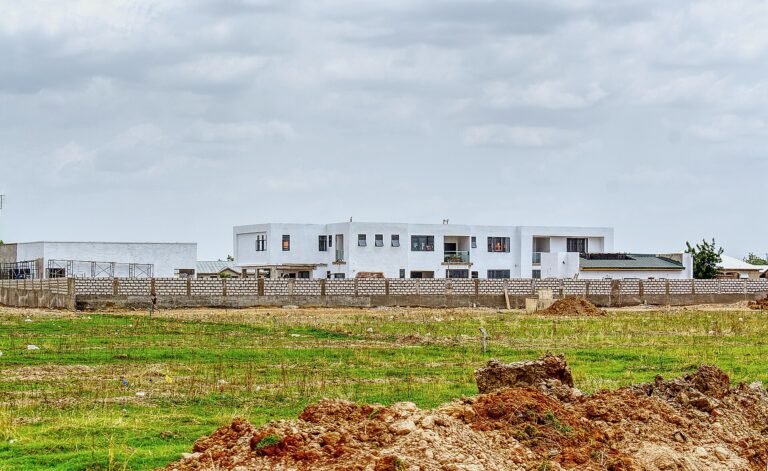
Here is a conversation that happens in Nigeria every day. Somebody says they bought a plot for two million naira five years ago and it is now worth six million. Everyone agrees this is excellent. Three times the money. Property is the best investment in Nigeria. The conversation moves on. And because everybody in the room accepts it, the same flawed calculation gets repeated at the next gathering, and the next, until it becomes something everyone in the country simply knows to be true.
That calculation is wrong in at least four separate ways, and each of those ways makes the deal look better than it was. It ignores every cost of buying beyond the plot price. It ignores the costs of holding the land for five years. It ignores the costs of selling. It ignores what two million naira could have earned somewhere else. And most importantly, it treats naira in 2021 and naira in 2026 as though they are the same thing, which anybody who has bought a bag of rice recently knows they are not.
None of this means property is a bad investment. It means most people cannot tell their good property decisions from their bad ones, because they never do the arithmetic properly. And an investor who cannot measure results cannot improve them. This guide teaches the calculation, step by step, with the formulas written out plainly and worked examples you can copy. It applies to land, to rented property and to anything else you buy hoping it will be worth more later. For the broader picture, see our beginner’s guide to real estate investment in Nigeria.
Step one: work out your true total cost
Not the plot price. Everything.
| Cost item | Include it? |
|---|---|
| Plot or property price | Yes |
| Survey fee | Yes |
| Deed preparation and legal fees | Yes |
| Development or infrastructure levy | Yes |
| Agency fee | Yes |
| Search and verification costs | Yes |
| Registration, consent, stamp duty | Yes |
| Fencing, clearing, signboard | Yes |
| Travel to inspect | Yes, if significant |
Call this figure your total cost basis. In practice it is commonly 20 to 40 per cent above the advertised plot price, which is exactly why so many casual calculations are wrong from the first line. See the real cost of buying land in Nigeria.
Step two: add the holding costs
Every year you own bare land, small amounts leave your pocket: ground rent where applicable, periodic bush clearing, a caretaker, community levies, travel to check on it.
A workable rule of thumb is one to two per cent of the property value per year for bare land. For a developed property, holding costs are much higher, since you now have repairs, insurance, security, management and periods when the property is empty.
Step three: subtract the selling costs
When you finally sell, you do not receive the sale price. You receive the sale price minus:
- Agency commission, commonly around five per cent
- Legal fees on the sale
- Capital gains tax where applicable
- Any outstanding levies or arrears that must be cleared
Your net proceeds are what actually reaches your account.
Step four: the basic return formula
Now the arithmetic.
Total return % = (Net proceeds − Total cost basis) ÷ Total cost basis × 100
Worked example. You buy a plot advertised at 3,000,000.
- Plot price: 3,000,000
- Survey, deed, levies, registration, fencing: 1,000,000
- Total cost basis: 4,000,000
Seven years later you sell for 12,000,000. Agency and legal costs take 800,000.
- Net proceeds: 11,200,000
- Gain: 11,200,000 − 4,000,000 = 7,200,000
- Total return: 7,200,000 ÷ 4,000,000 × 100 = 180 per cent
Add holding costs of, say, 40,000 a year for seven years, which is 280,000, and the gain falls to 6,920,000, giving a total return of about 173 per cent.
Already this is a different number from the “three times my money” version of the same deal.
Step five: annualise it, because time matters
A 173 per cent return over seven years is not the same as 173 per cent over two years. To compare anything with anything, convert to an annual rate.
Annualised return = ((Net proceeds ÷ Total cost) ^ (1 ÷ years) − 1) × 100
Using our numbers: 11,200,000 ÷ 4,000,000 = 2.8. Raise 2.8 to the power of one-seventh, subtract one, multiply by a hundred.
The answer is approximately 16 per cent a year.
That is the number to write down, because 16 per cent a year is a figure you can compare against a fixed deposit, a treasury instrument, a mutual fund, or a different plot of land. “It tripled” is not comparable to anything.
Step six: the two adjustments that change everything
This is where Nigerian investors most often fool themselves.
Inflation
Money loses purchasing power. If your investment gains 16 per cent a year while prices rise 20 per cent a year, you are poorer in real terms even though your bank balance is bigger.
Approximate real return = nominal return − inflation rate
Nigerian inflation has run high for years, and in several recent years it has been well above 16 per cent. Applied to our example, a 16 per cent annual nominal return over a period of higher inflation means the investment did not actually preserve purchasing power, let alone grow it.
This is not an argument against property. It is an argument for being honest about which property deals actually worked. The ones that did were not the ones that tripled over seven years. They were the ones that went up many times over, typically because real infrastructure arrived.
Currency
For anyone earning or planning in dollars, and for anyone thinking about the real value of their savings, this matters just as much.
Convert your entry cost to dollars at the rate on the day you bought, and your net proceeds to dollars at the rate on the day you sold. Then run the same return formula in dollars.
The naira has depreciated substantially over recent years. A property that shows an impressive naira gain over that period can show a flat or negative dollar result. Investors who never do this calculation are frequently surprised when they try to convert the proceeds.
Do both calculations, naira and dollars, and look at them side by side. That pair of numbers tells you the truth about a deal.
For rented property: yield versus total return
Rented property has two returns, and you should measure them separately.
Gross rental yield
Annual rent ÷ total cost × 100
Net rental yield
(Annual rent − annual running costs) ÷ total cost × 100
Running costs include agency and management, repairs and maintenance, insurance, security, service charge, tax, and a vacancy allowance for the months when the property earns nothing.
Worked example. You buy land for 5,000,000 and build four flats for 45,000,000, so 50,000,000 total. Each flat lets for 900,000, giving 3,600,000 gross.
- Gross yield: 3,600,000 ÷ 50,000,000 = 7.2 per cent
- Running costs and vacancy allowance: say 900,000
- Net rent: 2,700,000
- Net yield: 2,700,000 ÷ 50,000,000 = 5.4 per cent
Total return is then net yield plus annual appreciation. If the property also rises 12 per cent in value that year, your total return is roughly 17.4 per cent before inflation.
More detail in rental yield in Nigeria.
Opportunity cost: the question people avoid
The final adjustment is to ask what else the money could have done.
If a treasury instrument or a fixed deposit would have paid you a certain rate over the same period, with no fencing, no bush clearing, no title worries and immediate access to your money, then your property investment has only genuinely outperformed if it beat that rate after all costs.
That comparison is uncomfortable, and it is exactly why so few people run it. Run it anyway. Sometimes property wins comfortably. Sometimes it does not, and knowing which is which is what separates an investor from a collector of plots. See real estate vs fixed deposit, stocks and dollars.
A simple spreadsheet you can build
Set up eight lines and you have a working model for any property decision:
- Purchase price
- All acquisition costs
- Total cost basis, being one plus two
- Annual holding cost
- Years held
- Expected or actual sale price
- Selling costs
- Net proceeds, being six minus seven
Then three calculated lines: total return, annualised return, and annualised return minus average inflation.
Run the same sheet on every plot you are considering, using conservative assumptions. It will quietly reject a lot of exciting-sounding deals, which is precisely its value.
Common mistakes in the arithmetic
- Using the advertised price instead of the total cost
- Ignoring years, and quoting a total return as though it were annual
- Forgetting selling costs
- Comparing a property’s total return to a bank’s annual rate
- Ignoring inflation entirely
- Ignoring currency movement
- Counting an agent’s valuation as a sale price. Until somebody pays, it is an opinion
- Believing an advertised yield without asking for evidence of a completed cycle
Final thoughts
Property investment in Nigeria is not hard to understand. It is hard to measure, and most people never try, which is why the same three or four myths circulate at every gathering where someone mentions land.
The tools in this article are not complicated. Add up everything you actually spent. Add the small costs of holding it. Subtract what it costs to sell. Divide by the number of years. Then subtract inflation, and run the whole thing again in dollars. That is the entire method, and it can be done on a phone in ten minutes.
What it gives you is the ability to tell the difference between an investment that worked and one that merely looked like it did. That distinction is worth a great deal over a lifetime, because it changes which corridors you buy in next, how long you hold, when you sell, and whether you take on a payment plan.
Do the maths before you buy, using conservative assumptions, and do it again honestly after you sell. Most people do neither. The ones who do both end up owning the plots everybody else wishes they had bought.