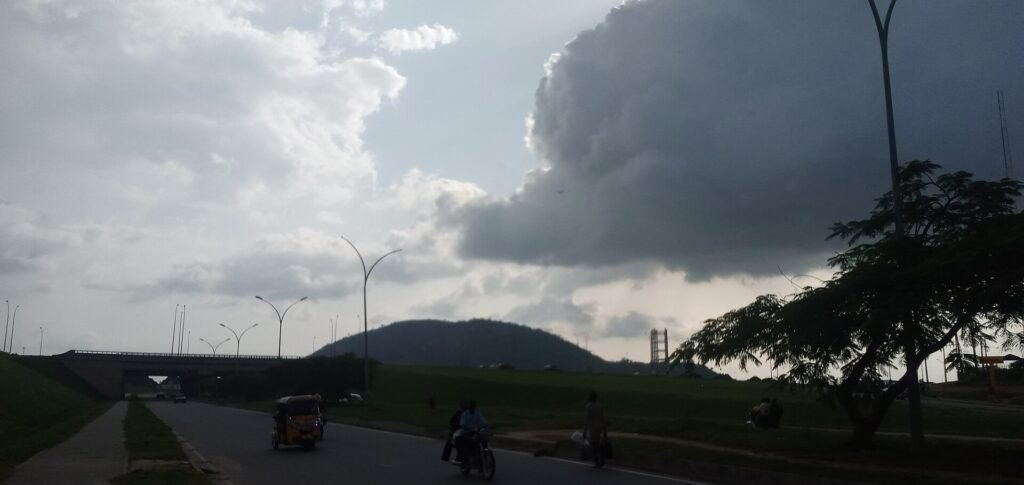
Abuja is the only major Nigerian property market whose demand is created almost entirely by a decision rather than by geography. Lagos exists because of a port and a lagoon. Onitsha exists because of a river and a market. Abuja exists because in the 1970s Nigeria decided to move its capital to the middle of the country, and everything in its property market flows from that. Every other Nigerian city grew because of something in the ground or on the water. Abuja grew because of a signature.
That origin explains the market’s most distinctive features. Demand is concentrated among people whose presence in the city is tied to government, diplomacy or the corporate headquarters that follow government. Supply at the top end has been built with enormous enthusiasm and, at various points, has visibly exceeded that demand, which is why anyone who drives through the prestige districts notices a striking number of large, beautiful, empty houses. Meanwhile the parts of the market serving ordinary working people, in the outer districts and satellite towns, are chronically under-supplied and consistently full.
For a buyer, that gap is the whole story. Abuja punishes people who buy where the prestige is and rewards people who buy where the population is. This guide maps the districts and satellite towns, explains what drives demand in each, sets out where the rental market actually works, and covers the risks specific to a planned federal city. For the land documents and FCT-specific rules, read our Abuja land buying guide first.
How Abuja is organised
The city was built in phases, and the phase largely tells you the age, the density and the price level.
Phase 1: Maitama, Asokoro, Wuse, Garki and the Central Area. The oldest and most prestigious. Embassies, ministries, top-end residential and the commercial core. Enormous prices, very low rental yields, and the segment where vacancy at the top end is most visible.
Phase 2: Utako, Jabi, Wuye, Gudu, Durumi, Kaura, Gaduwa, Dakibiyu. The strong middle of the city. Real neighbourhoods with genuine mixed demand, good commercial activity around Jabi and Utako, and the best balance of price to livability for a professional household.
Phase 3: Katampe, Guzape, Jahi, Mabushi, Kado, Life Camp. Newer, still developing in parts, with substantial construction. Katampe and Guzape have attracted significant high-end residential development.
Gwarinpa and the northern belt. Gwarinpa is a very large planned residential estate and one of the most genuinely populated parts of the city, which makes it a dependable rental market.
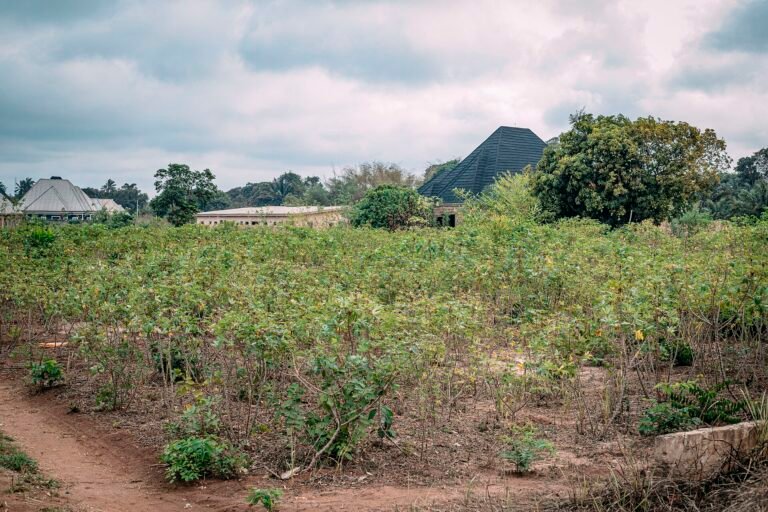
Outer districts: Lokogoma, Galadimawa, Dutse, Karsana, Idu, Kagini and the Airport Road corridor. Where much of the practical investor money now goes. Prices are lower, infrastructure keeps arriving, and the population is real.
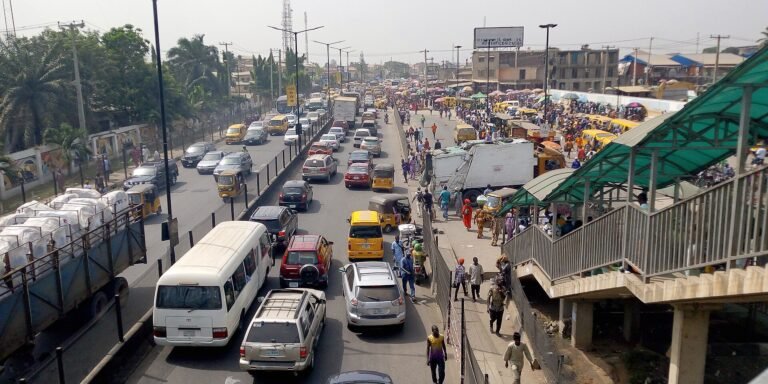
Satellite towns: Lugbe, Kubwa, Kuje, Gwagwalada, Bwari, Dei-Dei, Zuba. Where a very large share of Abuja’s working population actually lives. Far cheaper, high rental demand, and the segment where title quality varies most.
Across the boundary: Karu, Nyanya, Mararaba, Masaka. Understand clearly that some of these fall in Nasarawa State, not the FCT, with Nasarawa titles and Nasarawa procedures. Cheap, densely populated, strong rental demand, and a completely different legal environment.
What drives Abuja demand
Federal employment. Ministries, agencies, parastatals and the enormous ecosystem of contractors and consultants around them. This is the base load of the market.
Diplomatic and international presence. Embassies, high commissions and international organisations, concentrated in Phase 1, often taking large properties at high rents.
Corporate headquarters. Banks, telecoms, oil companies and their staff.
Security-driven migration. Over the years, Abuja has absorbed substantial numbers of people relocating from other parts of the country, and that inflow supports the middle and lower segments particularly strongly.
Institutions. The university at Gwagwalada and other tertiary institutions create student rental markets in the satellite towns.
Transport investment. The airport road expansion and the city rail line have improved access along specific corridors, and access improvements in Abuja have historically translated into land value along those corridors.
The high-end vacancy problem, discussed honestly
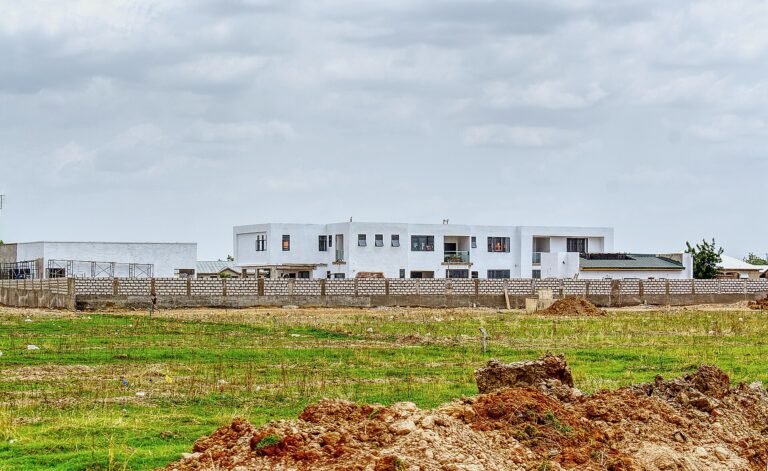
It would be misleading to write about Abuja property without addressing this directly. The city has, for years, carried a visible stock of expensive, completed, unoccupied residential property, particularly large detached houses in prestige districts. Anyone can see it while driving.
Several things explain it. Large houses were built speculatively for a tenant class that is smaller than the volume of construction assumed. Owners hold out for high rents rather than reducing, partly because many are not under financial pressure to let. Some properties are held as stores of value rather than as income assets. And the mismatch between what was built, which is large family houses, and what most tenants need, which is smaller units, is substantial.
For a buyer, the practical lessons are clear:
- Do not buy a large prestige house expecting easy rental income. Verify actual achieved rents in that specific street, not asking prices.
- Yields at the top end are poor. The purchase price is very high relative to realistic rent.
- The middle and lower segments are where occupancy is. Smaller units in populated districts let quickly and consistently.
See rental yield in Nigeria for how to calculate this properly.
Where the rental market actually works
Small units in the outer districts. One and two-bedroom flats in Lokogoma, Galadimawa, Kaura, Karsana, Lugbe and similar areas. Real tenants, real demand, reasonable yields.
Gwarinpa and the established middle districts. Deep, continuous demand from professionals and families.
Satellite town housing. Modest units in Kubwa, Lugbe, Kuje and Gwagwalada serving the enormous working population that commutes into the city. The cheapest entry and often the healthiest yields.
Serviced and short-stay accommodation near business districts and the airport corridor, serving government and corporate visitors. Competitive and management-intensive. See short-let apartments in Nigeria.
Commercial and office space in Central Area, Wuse and Utako, which is a specialist market requiring corporate tenants and professional management.
The risks specific to Abuja
Title type. The single biggest one. A federal allocation recorded at AGIS is strong. An Area Council paper is much weaker, and in the built-up city it will not stand against the Master Plan. Cheap Abuja land is almost always cheap for this reason. See Abuja land buying guide.
Demolition risk. Abuja enforces its Master Plan more strictly than most Nigerian cities enforce planning. Structures on road corridors, drainage channels, green areas or in breach of land use have been removed. Always check your plot against the Master Plan and always get building approval. See building plan approval in Nigeria.
Land use classification. Residential land is not commercial land. Change of use is a formal application.
Ground rent arrears. These attach to the plot and surface during any transfer. Confirm the position before buying.
Offer letters treated as titles. An offer or allocation letter is a stage in a process, not a finished title, and offers can carry conditions such as building within a stated period.
Over-supply at the top. Discussed above. Buy where the tenants are.
A practical strategy for different budgets
Modest budget. Land or a small unit in a satellite town or an outer district, bought with proper FCT title where possible, held or let. Verify the title type before anything else.
Middle budget. A two or three-bedroom flat in a populated middle district such as Gwarinpa, Lokogoma, Kaura or Life Camp, let to professionals. Predictable, liquid, and easier to resell than most Abuja property.
Larger budget. Either a small block of flats in a growing outer district, which is where the yield is, or a commercial property with a corporate tenant. Approach large prestige houses with caution unless you have a specific tenant.
Long-horizon land. The outer corridors along the expressways and towards the developing districts, bought with a verified AGIS record and held for years.
Buying in the satellite towns without getting burned
Most first-time Abuja investors end up looking at Lugbe, Kubwa, Kuje or Gwagwalada, because that is where the prices are reachable. It is a sensible instinct and the rental demand there is genuine. It is also where FCT title quality varies most, so a few extra rules apply.
Establish the title type before anything else. Ask the direct question: is this an FCT Administration allocation with a file at AGIS, or an Area Council paper? Do not accept “it is genuine” as an answer to that question, because both are genuine documents, they are simply not equal in strength.
Find out whether the area has been regularised. Some outlying settlements have been through, or are going through, a formal regularisation process that converts older holdings into recognised titles. Land in a regularised area with documentation is a very different asset from land in an unregularised one.
Check what the Master Plan says about the settlement. Satellite towns sit at the boundary between planned and organic development, and structures in the path of planned roads and infrastructure have been removed.
Look at what tenants actually need there. In these towns, small units let fastest: single rooms with facilities, self-contained units and one-bedroom flats aimed at workers commuting into the city. Large family houses sit empty far longer.
Confirm which jurisdiction you are in. On the eastern edge, the boundary between the FCT and Nasarawa State runs through built-up areas. Nasarawa land is Nasarawa land, with Nasarawa titles and Nasarawa procedures. That is not a problem, but it is a completely different transaction.
Final thoughts
Abuja is a well-planned, orderly and genuinely pleasant city, and it has produced excellent returns for people who bought land in developing districts before infrastructure arrived. It has also produced a large number of disappointed investors who bought impressive houses in impressive districts and then discovered that impressive does not automatically mean occupied.
The difference between those two groups is not luck. It is whether they bought where the population is or where the prestige is. In a city whose employment base is heavily governmental and whose ordinary workers overwhelmingly live in outer districts and satellite towns, the tenants are not in Maitama. They are in Lugbe, Kubwa, Lokogoma and Gwarinpa, and there are not enough decent, affordable units for them.
So buy the market that exists. Get the title type right, because in the FCT that single question separates a solid asset from a demolition notice. Pull the AGIS record before you pay. Check the plot against the Master Plan. Get building approval. And then build or buy the sort of property that ordinary working Abuja residents are actually queuing for.
Do that and Abuja is one of the most rewarding markets in Nigeria. Do the opposite and you will own something beautiful, empty and expensive to maintain.