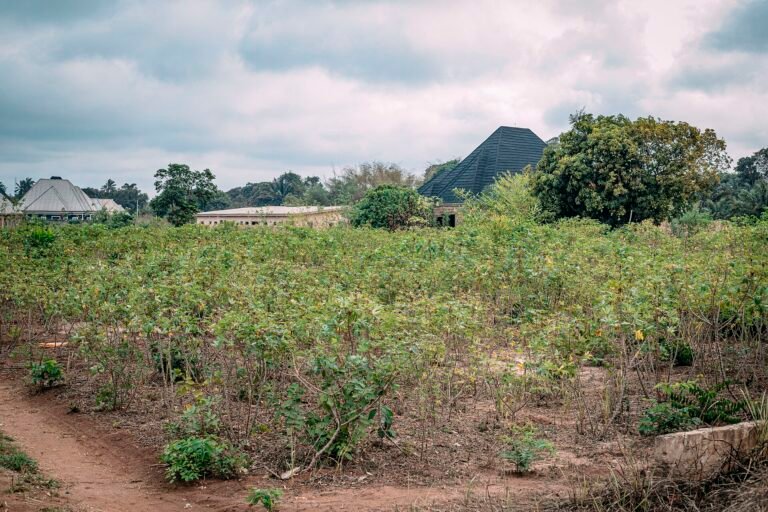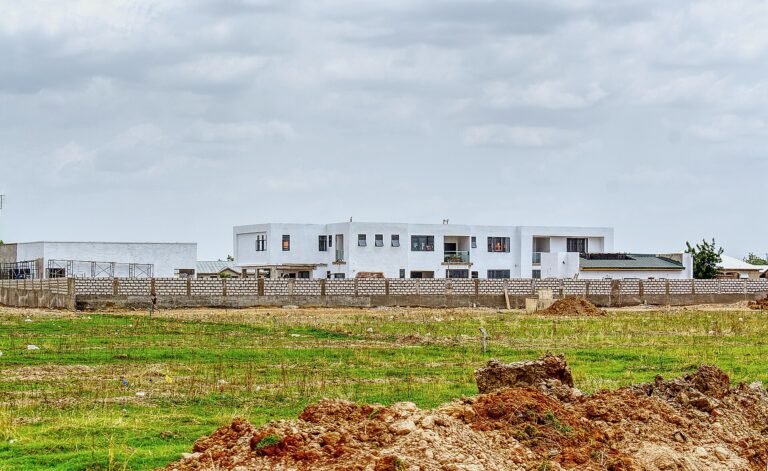
Drive out of Owerri towards the airport and you pass through a landscape that has been changing steadily for the last several years. Bush gives way to fenced plots. Fenced plots give way to estate signboards. Estate signboards give way to the first bungalows, then to clusters of houses, then to a small provisions shop and a borehole serving a handful of families. Then bush again, and the pattern repeats a few kilometres later.
That pattern is what a growth corridor actually looks like on the ground, and the Owerri to Ngor Okpala axis is one of the clearest examples of it in the South East. It is not dramatic. There is no port, no refinery, no headline megaproject. What there is instead is a state capital that has outgrown its old boundaries, an airport that gives the corridor a permanent anchor, land that is still genuinely cheap by any national standard, and a very large population of Imo people living elsewhere in Nigeria and abroad who want to own something at home.
Those forces are quieter than the ones driving Lagos, and they are also more durable. Nothing about them depends on a single project being delivered. This guide looks at the corridor honestly: what is driving it, how far along it has come, which sections are which, what buyers should realistically expect, and the particular care this market requires because almost all of the land in it is family land. For the buying process, read our Owerri and Imo land buying guide.
What is actually driving this corridor
The airport. Sam Mbakwe Cargo Airport sits in Ngor Okpala local government, and it is the reason this direction, rather than any other direction out of Owerri, became the busiest land corridor in the state. Airports anchor a road, and roads anchor land value.
Owerri’s outward pressure. The city has been growing for two decades. New Owerri filled. Then the areas around it filled. Land inside the city became expensive relative to local incomes, and buyers pushed outward. This is the most reliable driver in Nigerian property because it does not depend on any announcement.
The institutions. The Federal University of Technology at Ihiagwa and the Federal Polytechnic at Nekede sit on the other side of the city and generate their own housing demand, which absorbs a great deal of suburban land and pushes other buyers further out.
The diaspora and out-of-state population. Imo people are heavily represented in trade and the professions across Nigeria and abroad, and a plot at home is a near-universal ambition. This creates persistent, price-insensitive demand for land that is not tied to the local economy at all.
Affordability. This is a driver in its own right. Land in this corridor remains cheap enough that a person on an ordinary salary can buy a full plot in cash or over a short instalment period. Very few Nigerian corridors within reach of a state capital can still say that.
Where the corridor stands today
Be honest about the stage, because it determines what you should expect.
This is a stage two to stage three corridor. There are fenced plots, active estates, a growing number of completed houses, some graded roads and electricity along the main routes. It is no longer bush, and prices have moved from where they were five years ago.
But it is not yet a filled-in suburb. Large stretches remain undeveloped. Many estates have sold plots that stand empty. Public infrastructure thins out quickly once you leave the main road. Water and power are handled privately in most places.
What that means practically: the corridor has proven that it grows, which removes a great deal of the risk that early buyers carried. It has not yet delivered the full revaluation that comes when an area genuinely fills. A buyer arriving now is past the highest-risk, highest-reward phase and into a steadier one, and should plan on a five to ten year horizon rather than a quick flip. See land banking in Nigeria.
Reading the sections
Close to Owerri: Naze, Egbu, Orji, Akwakuma, Amakohia. Effectively suburban already. Services exist, prices are higher, and this is where you buy to live rather than to bank.
The middle belt: Obibi, Umuowa and the villages along the main route. Active estate territory. Roads are mixed, some electricity, growing occupancy. The balance point between price and readiness.
Deeper into Ngor Okpala: towards Obiangwu and the airport. Cheapest, largest plots, most estate signboards, least occupancy. Longest horizon, most careful family-land paperwork required.
Off the main road. Prices drop sharply once you leave the tarred route, and so does convenience. A plot two kilometres down a sand track is a different asset from one on the road, whatever the estate brochure implies. Walk the access route yourself.
The buy-and-build model, and its deadline clause
Much of the land in this corridor is sold under a buy-and-build arrangement: you buy the plot, and the estate requires you to begin or complete construction within a stated period.
There are good reasons for this. An estate full of empty bush plots never develops, services never arrive, and the early builders live in isolation. Requiring construction is how a developer turns a survey plan into an actual neighbourhood.
But read the clause carefully, because it directly affects your plan:
- What exactly must you do, and by when? Start, or complete?
- What is the penalty for missing it? A fee, a forfeiture, a repurchase at your original price?
- Can the deadline be extended, on what terms, and in writing?
- Does the deadline start from payment, from allocation, or from when the estate delivers roads?
If your intention is to buy and hold for eight years, a two-year building deadline is not a detail. It is the whole deal.
What this market requires that others do not
Family land discipline, above everything. Almost all land here originates from kindreds and families holding land under customary tenure. The single most common way to lose money in this corridor is to buy from one branch without the family head and principal members signing. Insist on the family head, the principal members, a written resolution, and a deed of partition where one exists. See buying family land in Nigeria.
A neighbourhood search, done properly. Go to the village on a working day. Ask three unrelated people who owns the land and who the family head is. If the answers differ, walk away regardless of the paperwork.
A charted survey. Take the survey plan to the Surveyor-General’s office in Owerri and have it charted, and run a title search at the Ministry of Lands through your own lawyer. Village land is not exempt from government schemes, road plans or competing registrations. See land registry search in Nigeria.
Physical checks for water and flooding. Ask how deep boreholes go and what they cost in that specific area. Ask whether water has ever entered compounds nearby. Visit in the rains if you possibly can.
Occupation. Clear the plot, fence it even simply, put up a signboard with your name and number, and visit twice a year. Bush-covered land in a rural corridor with an absent owner is exactly the land that gets resold by an opportunist.
Extreme caution if buying from abroad. This corridor is heavily marketed to the diaspora and heavily targeted by fraudsters for the same reason. Never buy on a video call. Send a neutral person you trust and pay your own licensed surveyor separately. See buying property in Nigeria from abroad.
A realistic worked expectation
Suppose you buy a plot at 1,800,000, and by the time you have paid for survey, deed, family documentation, any estate levy, registration and a simple fence, your all-in cost is around 3,000,000.
For that to be a good investment over eight years, it needs to do more than double, because Nigerian inflation over any eight-year period in recent memory has been substantial. A plot that reaches 6,000,000 has roughly kept pace with a high-inflation environment and no more. A plot that reaches 12,000,000 or beyond, which happens where a road is delivered and the section genuinely fills, is a real gain.
That is the honest frame. The corridor’s low entry price is its greatest attraction, but a low entry price also means a modest absolute gain unless the multiple is large. Choose the section and the access road accordingly, and run the numbers using the method in how to calculate ROI on Nigerian land.
Final thoughts
The Owerri to Ngor Okpala corridor is a good example of a Nigerian growth story that works without any drama. There is no single project that will transform it overnight, and there does not need to be. A capital city keeps growing outward, an airport anchors the road, institutions hold a population in place, and a very large diaspora keeps wanting a piece of home. Those things do not stop.
What that means for a buyer is that the risk here is not really about whether the corridor grows. It probably will, gradually, as it has been doing. The risk is almost entirely about paperwork and position. Buy from the wrong branch of a family and you own a dispute. Buy two kilometres down a sand track and you own something far less valuable than the plot on the road. Buy under a building deadline you cannot meet and you may lose the plot entirely.
So do the family work properly and get every required signature in one room. Chart the survey and run a real search. Walk the access route, not just the plot. Read the building clause before you sign anything. Then clear the land, fence it, put your name on a board, and let a growing capital city come towards you.
That is what has worked on this corridor for the last ten years, and it is what will most likely work for the next ten.