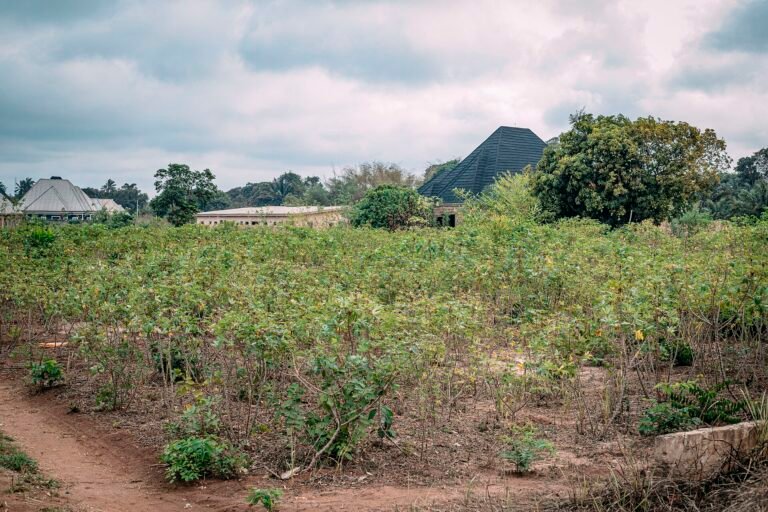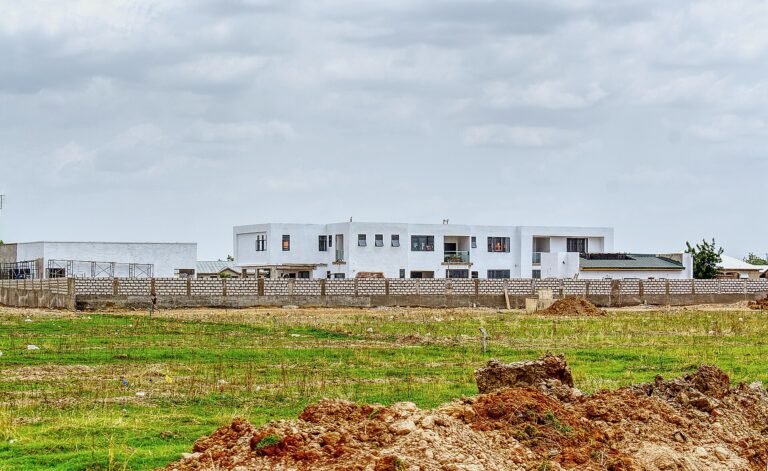
There is a category of Nigerian land buyer who does everything right and still loses. They inspect the plot. They meet the family. They collect a signed agreement, a receipt and a survey plan. They fence the land and even build. And then, years later, a government notice appears, or a road comes through, or an official informs them that the land they have been improving was never available to be sold in the first place. They did not buy from a fraudster, they did not sign a forged document, and in most cases nobody involved intended to deceive them at all. Something much quieter went wrong, and it went wrong before the family ever put pen to paper.
What happened to those buyers, in most cases, is that they bought unexcised land. It is the defining land risk of Lagos State, it exists in Ogun and elsewhere in the south-west, and versions of the same problem appear in any state that acquired large areas for public purposes. And it is almost invisible to an ordinary buyer, because unexcised land looks exactly like excised land. Same bush, same families, same receipts, same confident agents.
Excision and gazette are the two words that separate the two. They are not complicated ideas, but they are surrounded by enough jargon that many buyers nod along without understanding, which is precisely how the problem persists. This guide explains what government acquisition actually is, what an excision does, what the gazette is and why it matters, how to verify both properly, and the specific tricks that are played with these words. If you are buying in Lagos, read this alongside our Lagos land buying guide.
Start with acquisition
Under the Land Use Act, land in a state is vested in the Governor in trust for the people. Beyond that general position, state governments have also, over the decades, formally acquired large specific areas of land for public purposes: new towns, industrial schemes, roads, housing programmes and future expansion.
Lagos did this on a very large scale. Vast stretches of what were then villages and farmland were acquired by the state, particularly from the 1970s onward. Legally, that land became government land, and the families who had farmed it for generations no longer had the right to sell it.
The families, however, remained on it. Life continued. Some of that land was developed by the government as planned. A great deal of it was not. And over the years, portions of it have been sold, resold and built upon by people who genuinely had no idea that the state had a prior claim.
That is the situation excision exists to resolve.
What excision means
Excision is the process by which the government formally releases a portion of acquired land back to the original community.
Picture it as cutting a piece out of a larger sheet. The state acquired a big area. Under an excision, it carves a defined portion out of that acquisition and hands it back to the village. From that point, the released portion belongs to the community, and the community can lawfully sell it.
An excision is defined by a survey. It is not “the village got its land back” in a vague sense. It is a specific number of hectares, with specific boundaries, released to a specific community, recorded on a specific plan. Land inside those boundaries is free. Land outside them, even in the same village, even next door, is still government land.
This is the detail that catches people. A village may have 300 hectares excised while the wider acquisition covers 1,000 hectares. A seller can truthfully say “our village has excision” while selling you a plot that sits outside the excised portion.
What the gazette is
A gazette is the official published record of a government. When an excision is granted, it is published in the state’s official gazette, which records the community, the local government area, the area released in hectares and the plan reference.
Why does publication matter? Because it makes the excision a public fact rather than a private claim. Anyone can go and look. A gazette entry has a number, a year and a page, and those three things are what you should be asking for.
So the correct question to a seller is not “is the land excised?” It is:
“What is the gazette number, the year and the page, and can I see the excision survey plan?”
An honest seller of excised land answers that in seconds, because they are asked constantly. Hesitation, deflection or “our lawyer has it” is informative.
Verifying properly, in three steps
Step one: get the gazette details and the excision plan. Written down, not spoken.
Step two: confirm the gazette exists. Your lawyer checks the published record against the reference given. This confirms that the excision was actually granted to that community, in that year, over that stated area.
Step three, and this is the one people skip: confirm that your specific plot falls inside the excised area. This is done by charting. Your survey plan’s coordinates are placed on the official map alongside the excision boundaries. Only that exercise proves that the particular piece of earth you are buying is inside the released portion.
Steps one and two without step three are how buyers end up owning a plot in a village that has excision, on land that does not.
The full charting and search procedure is in land registry search in Nigeria.
The words to be careful with
The vocabulary around excision is used loosely, sometimes carelessly and sometimes deliberately. Here is a translation table.
| What you are told | What it may actually mean |
|---|---|
| “The land is excised” | Possibly true of the village, not necessarily of your plot |
| “Excision is in process” | An application has been made. It is not granted. It may never be granted |
| “The file is with the government” | Nothing has happened yet |
| “It is under gazette” | Ask for the number, year and page, then verify |
| “The C of O is coming” | A separate process entirely. Ask what stage it is actually at |
| “Everybody here has built, so it is fine” | Buildings do not create title. Whole neighbourhoods have been affected before |
| “We have a global C of O for the estate” | Then ask to see it, in whose name, and whether it is encumbered |
Notice the pattern. Every one of these is answered by a document, and every one of them is deflected by a phrase.
What happens if you buy unexcised land
Let us be balanced. A great many people live on unexcised land in Lagos without incident, sometimes for decades. Government does not have the resources or the intention to clear every such area, and in practice a lot of unexcised land is left alone.
But the risks are real and they are concentrated in exactly the places where value is created:
- You cannot obtain a Certificate of Occupancy over land the state has acquired and not released. The route to a state title is closed until excision happens.
- You cannot perfect a transfer, which means no consent, no registration, and therefore a much weaker legal position.
- A serious future buyer will discover it and either walk away or demand a steep discount.
- Banks will not lend against it.
- If the government does act, whether for a road, a scheme or a development, your position is that of an occupier of government land, and compensation, where it applies at all, is typically limited to unexhausted improvements rather than the market value of the land.
In short, unexcised land can be lived on and can be cheap, but it is a compromised asset. If you buy it knowingly, at a price that reflects the risk, that is a decision. If you buy it believing you are getting normal land at a bargain, that is a loss you have not noticed yet.
Beyond excision: acquisition, committal and setback
Charting can return several other answers, and it is worth knowing them.
Free from acquisition. The land is not affected. Best result.
Under government acquisition. The state has taken it. Do not buy.
Committed. The land is earmarked for a specific government use, such as a road, a rail corridor or a scheme. Committed land is generally not released, and buying it is buying a fight.
Within a road setback. A strip along a road reserved for future widening or for services. You cannot lawfully build in it, so if a large share of your plot falls inside, the usable land is much smaller than the survey suggests.
Within a drainage or waterway reserve. Similar, and additionally a bad physical idea.
We cover these fully in government acquisition, setback and committed land.
Practical rules
- Ask the excision question in writing and keep the answer.
- Never accept a spoken gazette reference. Number, year, page. On paper.
- Chart your specific plot, not just the village.
- Use your own lawyer, not the estate’s.
- Do the check before payment, or before anything beyond a small refundable deposit with written refund terms.
- Treat “in process” as “no”. If you choose to buy on that basis, price it as unexcised land.
- Be sceptical of unusual cheapness in a location where everything nearby is expensive. There is usually a reason, and this is frequently it.
- In estates, ask about the developer’s own root of title, not merely your plot.
Final thoughts
Excision is one of those Nigerian property subjects that sounds bureaucratic and turns out to be the whole ball game. In the south-west in particular, and in Lagos above all, the difference between land that is released and land that is not is the difference between an asset you can title, register, borrow against and sell, and a plot you can occupy but never fully own.
The encouraging part is that the check is not difficult, it is not expensive relative to what is at stake, and it is available to anybody willing to ask precise questions and pay a lawyer for a search. Three things: the gazette reference in writing, verification that the gazette exists, and charting that proves your specific coordinates fall inside the excised boundary.
Everything else in the transaction, the negotiation, the friendly agent, the discount, the site inspection bus, the fenced entrance with the estate name in big letters, sits on top of that one question. If the answer is good, proceed with confidence. If the answer is vague, understand exactly what you are being offered and price it accordingly.
And if a seller becomes annoyed that you asked, you have just received the most valuable answer of all.