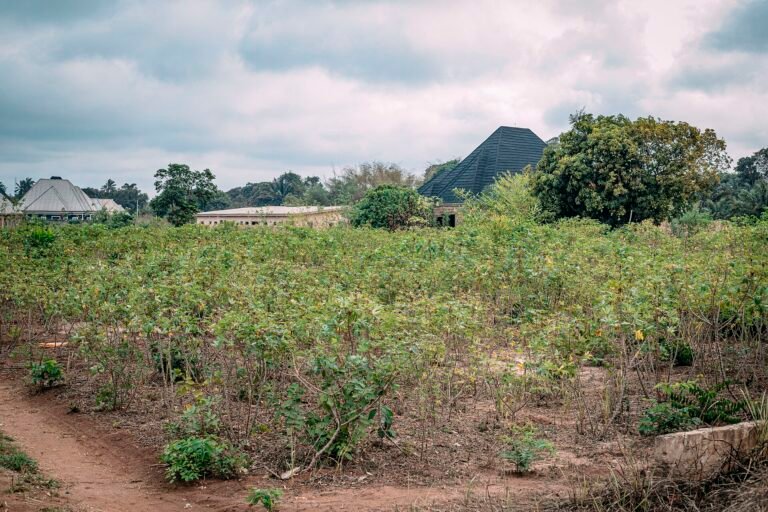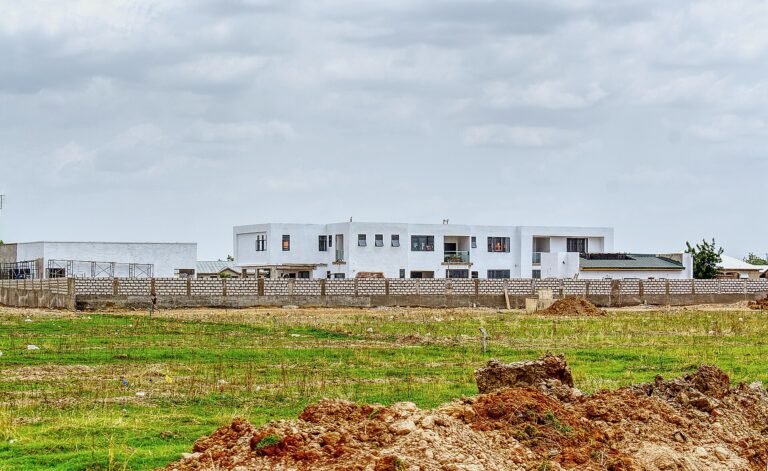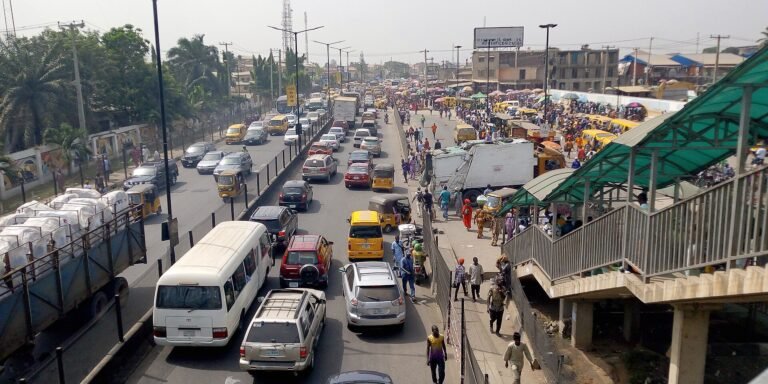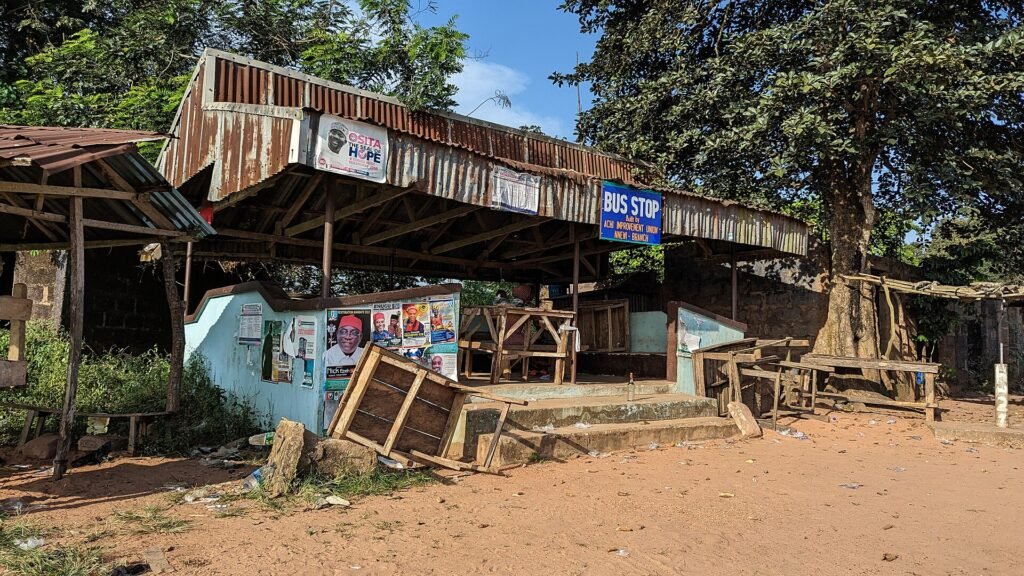
Awka and Asaba are close enough that people treat them as one region and different enough that treating them as one region is a mistake. They are both state capitals. They both sit on the same major highway. They are separated by the River Niger and by roughly forty minutes of driving, traffic permitting. And they grow for almost entirely different reasons. Awka grows on Anambra money. The state is one of the most commercially energetic in Nigeria, with Onitsha trading and Nnewi manufacturing, and a very substantial portion of the wealth generated in those towns, and by Anambra people living in Lagos, Abuja, South Africa and China, flows into land in and around the capital. Demand there is deep, cash-driven and tied to identity as much as to economics. People buy in Awka because it is home.
Asaba grows on its relationship with Onitsha and on being the administrative capital of an oil-producing state. It is where a lot of people who do business on the Anambra side choose to live, and improvements to the crossing between the two have steadily strengthened that arrangement. It also has an airport and a planned capital core, which gives it more formal structure than most cities of its size.
Understanding those different engines is what tells you which city suits your money. This guide compares them across the dimensions that matter to a buyer. For the buying processes, see our Awka and Anambra land guide and our Asaba and Delta land guide.
The engines, side by side
| Factor | Awka | Asaba |
|---|---|---|
| Primary demand driver | Anambra commercial wealth returning home | Onitsha spillover plus state administration |
| Buyer profile | Traders, industrialists, diaspora, professionals | Traders living across the river, civil servants, professionals |
| Institutional anchor | Federal university at Awka | State institutions, airport, capital core |
| Land supply | Community and family land, expanding outward | Family and quarter land, plus planned layouts |
| Planning structure | Layouts plus substantial informal expansion | Capital territory planning in the core |
| Price sensitivity of buyers | Low. Cash buyers with strong local attachment | Moderate |
| Main physical risk | Erosion in parts of the state, flooding in riverine areas | River flooding, low-lying ground, drainage |
What each city is good for
Awka suits you if
You want a strong student rental market. The university at Awka supports one of the most dependable rental markets in the South East, with demand that renews every session and is largely indifferent to the wider economy. Small self-contained units and mini-flats near campus are the standard play, and they work.
You want liquidity on resale. Anambra has a large, active, cash-rich buying population. Well-titled land in a good Awka location has a genuinely broad pool of potential buyers, which matters enormously when you eventually want to sell.
You accept paying a premium for identity-driven demand. Awka prices can feel high relative to the infrastructure on the ground. That is because the buyers are not comparing it to alternatives elsewhere. They want Awka specifically.
Asaba suits you if
You want more planning structure. The capital core is planned, with layouts, defined plot sizes, road widths and land uses. For a buyer who values knowing what can and cannot be built next door, this is meaningful.
You want to serve the Onitsha working population. People who trade on the Anambra side and want a calmer place to live are a real and growing tenant and buyer group.
You want commercial frontage on a major corridor. The Benin-Asaba and Onitsha-Asaba highways carry serious traffic, and frontage on them has genuine commercial value. Setbacks must be checked carefully.
You want somewhat lower entry prices than the equivalent position in Awka, in several parts of the market.
Comparing the growth corridors
Awka’s expansion runs outward through Amawbia, Nibo, Nise, Okpuno, Mgbakwu, Isuaniocha and the villages beyond, plus the Ifite side around the university and the frontage along the Enugu-Onitsha expressway. Attention has also gone towards the Umueri direction where the cargo and passenger airport sits.
Asaba’s expansion runs primarily along the Okpanam Road corridor and past Okpanam town, along the Ibusa road, and towards Ugbolu and the airport side. The GRA, core area and Summit Road districts are the established, expensive part.
In both cities the same rule applies: the further from the centre, the cheaper the land and the longer the wait, and the value is created when a road is physically built rather than when it is announced.
Comparing the risks
Awka’s main risks
Litigation. Anambra has a long tradition of land disputes, and an old case can lie dormant for years before resurfacing. Ask about court cases explicitly, get suit numbers, and have your lawyer check them.
Erosion. Parts of Anambra sit on soil that water cuts through severely, and the gully systems in the Nanka, Oko and Agulu belt are among the most serious in the country. Erosion is also active in pockets elsewhere. A cheap plot near a slope deserves suspicion.
Riverine flooding. The local governments along the Niger and the Anambra river flood in bad years. That does not make them worthless, but it must be priced.
Price relative to infrastructure. Because demand is identity-driven, prices can run ahead of what is physically on the ground. Do not assume that a high price implies good services.
Asaba’s main risks
The river. Everything good about Asaba’s position comes from the Niger, and so does its main physical danger. Nigeria has had severe flood years and riverine areas along the Niger have been badly affected in some of them. Check ground level, drainage and ten years of flood history on the specific street.
Filled and low ground. Freshly filled low land settles over years and cracks buildings. Ask what was there before, and budget properly for filling and a raised foundation if you buy low.
Highway setbacks. Frontage land on the major highways is valuable because those roads matter, which is exactly why portions may be reserved for expansion.
Family and quarter land complexity on the outskirts, in Ibusa, Okpanam, Ugbolu and the surrounding towns. The family head and principal members must sign.
Which one for which investor
For rental income, particularly student housing: Awka, near the university. This is the clearest single opportunity across the two cities.
For a family home with planning certainty: Asaba, inside an approved layout.
For commercial frontage: either, but check setbacks obsessively in both.
For long-horizon land banking: the outer corridors of either, with a strong preference for whichever one you can physically visit regularly. Proximity to your own life matters more than a small difference in projected growth.
For resale liquidity: Awka, because of the depth of the Anambra buying population.
For lower entry price: Asaba’s outer corridors, generally.
The checks that apply to both
Whichever side of the river you choose, the discipline is the same.
- Family head plus principal members sign on any customary land, with a written resolution and a deed of partition where one exists. See buying family land.
- A registered survey plan, charted with the Surveyor-General of the relevant state.
- A formal search at the state lands office through your own lawyer, before payment. See land registry search in Nigeria.
- Direct questions about court cases and disputes.
- A visit in the rainy season, which tells you more than five dry-season inspections.
- The full cost in writing, including levies and registration. See the real cost of buying land.
- Payment by transfer to a corporate or named account, with receipts bearing the plot number.
- Registration of the title, and a Certificate of Occupancy where obtainable.
- Fencing and a signboard, immediately.
One additional point specific to this region: because the two cities are close and share a highway, some sellers market land as “Asaba” or “Awka” when it is neither, sitting well outside either city on the road between them. Confirm the local government area, the exact village and the distance to the city centre yourself. Ask for the location in the deed, not in the advert.
The cost stack, compared
The charges are broadly similar in both states, but their weight differs, and knowing where the money goes helps you compare two plots that look equally priced.
| Cost item | Typical weight in Awka | Typical weight in Asaba |
|---|---|---|
| Plot price | High, driven by cash demand | Moderate to high, softer outside the core |
| Survey and charting | Similar in both | Similar in both |
| Family or quarter documentation | Significant on community land | Significant on the outskirts |
| Estate development levy | Common in organised estates | Common along Okpanam Road |
| Sand filling and site preparation | Occasional, slope-dependent | Frequent on low ground near the river |
| Erosion or retaining works | A real risk item in parts of Anambra | Rare, but drainage works matter |
| Registration and title processing | Set by Anambra State | Set by Delta State |
Two practical conclusions follow.
In Awka, budget for the ground. A sloped plot may need retaining work, and a plot near an active gully may need engineering you should simply refuse to pay for. Walk away rather than solve it.
In Asaba, budget for the fill. Raising a low plot to a safe building level is often a seven-figure item on its own, and it is the cost most commonly discovered after purchase rather than before. Ask the neighbours what they spent.
In both cities, get the complete written schedule of charges before you commit, from plot price through to registration, so that you can compare like with like rather than comparing two advertised numbers that mean different things.
Final thoughts
Awka and Asaba are both good markets, and neither is obviously better than the other. They are simply suited to different buyers.
Awka gives you deep, cash-rich, identity-driven demand and the best student rental opportunity in the region, at prices that sometimes run ahead of the visible infrastructure, in a state where land litigation and erosion are genuine risks requiring genuine care.
Asaba gives you more planning structure, a real economic relationship with one of West Africa’s biggest commercial towns, an airport, and somewhat easier entry prices, in a city where the river is both the reason for its position and the thing you must check most carefully before you buy.
Choose the one that matches what you are trying to do. Then apply exactly the same discipline in either place: get every required family signature, chart the survey, run a search with your own lawyer, ask about court cases directly, visit when it rains, register the title, and fence the land.
The river between these two cities is only forty minutes wide. The difference between a careful buyer and a careless one, on either bank, is measured in years.