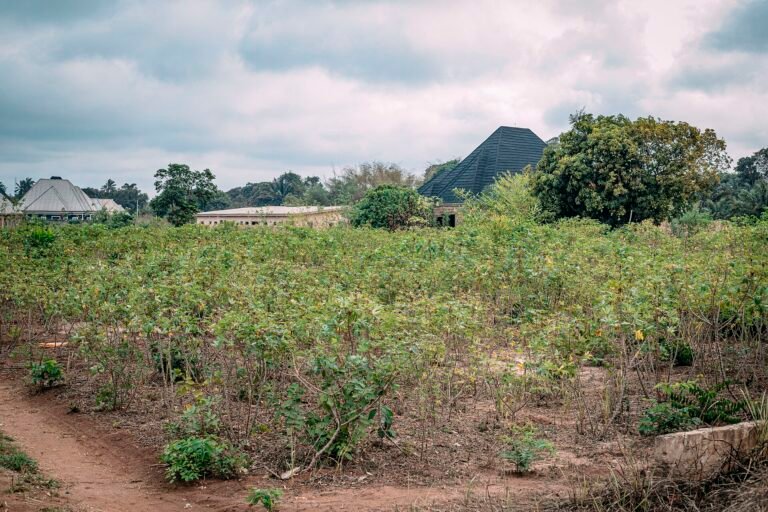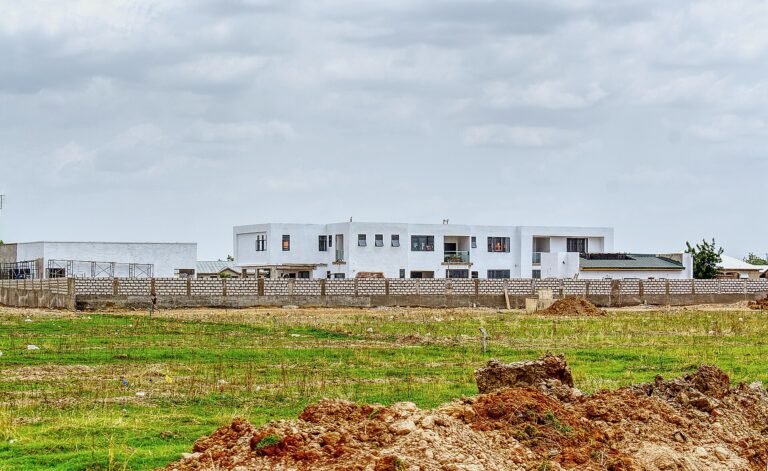
There is a simple reason the Ogun State corridor along the Lagos-Ibadan Expressway became one of the busiest land markets in Nigeria. A plot of land in a decent part of Lagos costs many times what the same size of land costs forty minutes up the expressway. For a family on a normal Nigerian salary, that gap is the difference between renting forever and owning something. Hundreds of thousands of people have quietly made that trade, and the belt running through Magboro, Arepo, Ibafo, Mowe, Ofada and Simawa is the result.
This is a genuinely different kind of market from the ones in the South East. It is not driven by indigenes returning home to build in their own town. It is driven by Lagos economics spilling across a state boundary. That means the demand is deep, because Lagos keeps growing and Lagos keeps being expensive, but it also means the market is competitive and heavily worked by agents and developers of every quality level. There is excellent land here and there is rubbish here, often on the same street.
Ogun also carries two specific traps that catch people who assume it is just “cheap Lagos”. The first is that Ogun State has its own government acquisitions and its own planning authorities, and Lagos knowledge does not transfer directly. The second is water. Parts of this corridor sit on the Ogun River floodplain, and there are years when controlled water release from upstream combines with heavy rain to put whole neighbourhoods under water. That is not a rumour, it is a recurring event, and it is the most important thing a buyer in certain parts of this belt needs to understand. Read our complete guide to buying land in Nigeria for the general steps, then use this for the local detail.
The Ogun land system in plain words
Land in Ogun State is vested in the state governor under the Land Use Act, exactly as in Lagos. The Ogun State Bureau of Lands and Survey handles titles, surveys and searches, and the state’s physical planning authority handles layouts and building approvals.
Three sources of land dominate the corridor:
Family and community land. The original landowning families, often called omonile in everyday speech, hold and sell land under customary right. This is the bulk of the market. It is legitimate when properly done and it is the source of most problems when improperly done. See omonile and land grabbers.
Government-backed estates. The state’s property and investment arm has developed estates in Ogun over many years, and land coming through that route generally has cleaner title and better planning. It costs more. It is usually worth it.
Private developer estates. A company buys a large parcel from families, surveys it, cuts plots and sells. Quality varies enormously. Your task is to verify the developer’s own root of title, not just your plot number.
The Ogun-specific verification checklist
Ogun has its own acquisitions and its own committed land, and this catches Lagos-trained buyers who only think about Lagos acquisition maps.
- Search at the Ogun State Bureau of Lands and Survey using the survey coordinates, through your own lawyer.
- Confirm the land is free of state acquisition and not committed to any government scheme.
- Check for road setbacks, especially anywhere near the expressway, the service lanes and the planned road expansions. Frontage land is valuable and frontage land is also where expansions eat.
- Check the drainage and river reserve. Land within a watercourse reserve cannot be safely built on and may not be lawfully built on.
- Confirm the layout approval if the plot sits in an estate, and ask for the approval reference.
- Confirm the boundary question. Along the Lagos-Ogun border, in places like Arepo and the Ojodu-Abiodun area, there has historically been confusion about which state a particular parcel falls in. That matters for which authority approves your building and which registry records your title. Ask directly and get a documented answer.
Full process in land registry search in Nigeria.
The flooding question, honestly
This is the single most valuable section in this guide, so read it twice.
Parts of the Ogun corridor, particularly around the Isheri, Arepo and Warewa side and low ground near the Ogun River, have flooded severely in past years. Heavy rainfall combined with controlled water release from the dam upstream has, on more than one occasion, put water into estates and forced residents out.
None of that means “never buy in Ogun”. Most of the corridor is fine. It means you must check the specific plot rather than the general area, and you must be willing to walk away from a bargain that sits in the wrong place.
Your checks:
- Ask about the last ten years, by name. Ask neighbours “has water ever entered this compound”, not “does it flood here”.
- Look for the physical evidence. Raised gates and driveways added later, water lines on fences, buildings with unusually high entrance steps, and residents who keep sandbags.
- Find the river and the drainage channels on a map and on foot. Understand which direction water travels from your plot.
- Check the ground level against the road and against the plots around you.
- Talk to the estate’s older residents, not the sales agent.
- If the plot is low, price the fill. Raising a plot properly is a large cost, and doing it badly is worse than not doing it.
A plot that sits high and drains well, at a higher price, is a better buy than a cheap plot with a wet history. Every single time.
Where people buy along the corridor
Magboro and Arepo. Closest to Lagos, therefore the most expensive on this belt and the shortest commute. Check flood history carefully in the low-lying parts.
Ibafo. Established, busy, good access to the expressway, plenty of estates and services.
Mowe and Ofada. The heart of the belt. The presence of a very large religious camp in this area has itself created infrastructure, commerce and a permanent stream of visitors, which supports both residential and short-let demand. Land here has a broad range of prices depending on how far off the expressway you go.
Simawa. Further out towards Sagamu, cheaper, and one of the most active land-banking areas on the corridor.
Sagamu. A proper town of its own with an industrial presence and a junction position on the road towards Ibadan and Benin.
Ota, Sango-Ota, Atan and Agbara. A completely separate Ogun market on the western side, driven by industry and by proximity to Lagos’s Alimosho and Badagry sides. Strong for industrial and workers’ housing.
Abeokuta. The state capital, with its own local demand, government presence and a different, calmer property logic.
The commute is part of the investment
Be honest with yourself about this, because it is the thing that determines whether you will actually live in the house you build.
The expressway can move well and it can also stop completely. A journey that takes forty minutes at six in the morning can take well over two hours at six in the evening. Before you buy, do the journey yourself, at the exact times you would actually travel, on a working day. Not on a Saturday.
Then think about the alternatives. Is there a train option or a planned one you can realistically use? Is there a bus route from the estate gate to the expressway, or will you need a car for every single trip? Are there schools, a market and a clinic within a short distance, or is every errand a trip to Lagos?
An investor who is buying to resell later can ignore some of this. A family buying to live there cannot. Many people have bought a beautiful plot on this corridor, built, moved in, and moved back to Lagos within two years because of the road. That is an expensive way to learn.
Worked example: an Ogun corridor plot
A plot advertised at 3,500,000 naira in an estate off the expressway.
| Item | Example amount |
|---|---|
| Plot price | 3,500,000 |
| Survey fee | 400,000 |
| Deed of assignment preparation | 300,000 |
| Estate development or infrastructure levy | 1,200,000 |
| Agency fee | 175,000 |
| Registration and title processing | 500,000 |
| Total | 6,075,000 |
The development levy is often the biggest surprise on this corridor, because estates here charge for internal roads, drainage, a perimeter fence, a gatehouse and sometimes a borehole. Ask exactly what the levy covers, what the delivery timeline is, and what happens if the estate does not deliver. Get it in writing. See the real cost of buying land in Nigeria.
Rules for buying in the Ogun corridor
- Verify with Ogun State, not Lagos State. Different registry, different acquisitions, different planning authority.
- Ask for the gazette or the state title route for the parcel, and understand exactly what title you will end up with.
- Get family head and principal members’ signatures on customary land, plus a written statement of any development levies expected by the community.
- Do the flood check properly. This is the local risk that matters most.
- Drive the commute at rush hour before you buy to live.
- Check the developer. Corporate Affairs registration, previous delivered estates you can physically visit, and buyers who already hold their documents. See how to check if a real estate company is real.
- Pay corporate, by transfer, with the plot number on every receipt.
- Fence and mark early. Bare land on a busy corridor attracts opportunists.
Final thoughts
The Ogun corridor is one of the most useful things that has happened to ordinary home ownership in southern Nigeria. It gave millions of Lagos workers a realistic path from paying rent forever to owning a home with a gate and a yard, and it did so without requiring them to leave the economy that pays them.
That opportunity is still there. But the corridor is now mature enough that the easy money has been made in the closest sections, and careless buying is now punished rather than rescued by rising prices. The buyers who do well from here on are the ones who treat it as a serious purchase in a different state with its own rules, rather than as a bargain-bin extension of Lagos.
So verify with Ogun State. Understand exactly which title you are getting and how it becomes registered in your name. Interrogate the flood history of the specific plot with real questions to real neighbours. Price the development levy before you commit. Drive the road at the worst hour. And when the paperwork is done, fence the plot and put your name on it.
Do all of that and you have bought the most practical thing on offer in this market: a real address, on solid ground, within reach of the biggest economy in Africa, at a price a working family can actually pay.