Property inspection in Nigeria is usually done badly, and almost never on purpose. A buyer arrives, is shown around by an agent who talks continuously, admires the tiles, notices that the kitchen is bigger than expected, spends about twenty-five minutes in the building and leaves with a general feeling of yes or no. Then, months later, when a problem surfaces that a torch and twenty extra minutes would have found, everybody agrees that houses in Nigeria are unpredictable.
That general feeling is not information. Houses hide their problems, and the problems that matter most, the ones that cost millions to fix, are almost always in the places nobody looks: the ceiling void, the base of the walls, the drainage behind the building, the borehole, the electrical distribution board, and the roof structure above the false ceiling. Meanwhile the things buyers spend the most time on, such as paint colour, tile pattern and kitchen cabinets, are the cheapest things in the building to change.
A proper inspection takes two to three hours, is done twice at different times of day, and is done with a torch and a notebook. It is not glamorous and it is not comfortable, particularly when an agent is waiting and making it clear that other people are interested. But a single afternoon of careful looking is the cheapest form of negotiation available to a buyer, because every defect you find is either a reduction in price or a reason to walk away. This checklist takes you through it, system by system. Use it alongside how to buy your first house in Nigeria.
Before you go: what to bring
A bright torch. A phone with a camera. A notebook. A small spirit level if you have one, or use the level app on your phone. A screwdriver or phone charger to test sockets. Somebody who knows building work, ideally a builder or engineer, and expect to pay them for their time. It is money extremely well spent.
Go once during the day for light, and once in the evening to see the area, the noise, the security and whether the power is on.
The outside and the site
1. Ground level. Is the building lower than the road or the neighbouring plots? Water travels downhill and stops at the lowest point.
2. Drainage. Walk the perimeter. Where does rainwater go? Is there a channel, and does it lead anywhere, or does it stop at a wall?
3. Evidence of past flooding. Water marks on the fence or lower walls, raised entrance steps added after construction, sandbags stored in a corner, a garden that is bare where water sits.
4. The fence. Cracks, leaning sections, or a boundary that does not match the survey plan.
5. Setbacks. Is the building unusually close to the road or the boundary? This may indicate it was built without approval. See building plan approval in Nigeria.
6. Trees and roots. Large trees close to the building can damage foundations and drains.
7. Access. Can a lorry reach the property? Will it still be able to in the rainy season?
8. The neighbours’ buildings. Look at their cracks, their water marks and their raised thresholds. They tell you about the ground.
The structure
9. Cracks in walls. Fine hairline cracks in plaster are usually cosmetic. Stepped cracks running diagonally through blockwork, cracks wider than a few millimetres, and cracks that continue through the wall to the other side are serious. Photograph anything you are unsure about and show it to an engineer.
10. Cracks around window and door openings. Diagonal cracks at corners of openings suggest movement.
11. Floors. Are they level? Put a marble or a bottle cap down. Sloping floors can indicate settlement.
12. Doors and windows. Open and close every one. Doors that jam or windows that will not close often mean the frame has moved.
13. The columns and beams, where visible. Look for cracks, rust stains bleeding through concrete, or exposed reinforcement.
14. Any extension or added floor. Ask whether the original structure was designed for it, and whether it was approved.
The roof
This is where the money hides, and almost nobody looks.
15. Get into the ceiling void. Find the access hatch and use your torch. If there is no hatch, ask why.
16. Roof timbers. Look for rot, insect damage, sagging, and timbers that have been propped rather than properly fixed.
17. Daylight through the roof. Any point of daylight is a leak.
18. Water stains on the ceiling boards from above and below, especially in corners and around the chimney or vent penetrations.
19. The roofing sheets themselves. Rust, loose sheets, missing screws, poorly done ridge caps.
20. Gutters and downpipes, if fitted, and where they discharge.
Water and plumbing
21. The borehole. Ask its depth, when it was drilled, and what the pump is. Ask a neighbour what boreholes cost in that area, because a failed borehole is a very large bill.
22. The overhead tank. Climb up or look. Is it clean, secure and properly supported?
23. Run every tap, hot and cold, and let them run for a minute. Watch the pressure, the colour and whether it drops when another tap opens.
24. Flush every toilet. Twice. Listen for refill problems and watch for slow drainage.
25. Look under every sink with your torch for damp, staining or ongoing drips.
26. The soakaway and septic tank. Where are they, when were they last emptied, and is there any smell?
Electrical
27. The distribution board. Open the cover. Look for proper breakers rather than rewirable fuses, neat wiring rather than a nest, and any sign of burning or heat damage.
28. Test every socket with a charger, and every switch.
29. The meter. Prepaid or postpaid, whose name is it in, and are there arrears? Arrears frequently follow the property.
30. Wiring visible in the ceiling void. Look for joints wrapped in tape, undersized cable and anything improvised.
31. Generator or inverter provision. Is there a change-over arrangement, and does it work?
32. Ask the neighbours about supply. How many hours a day, and how often is there a transformer problem?
Damp and finishes
33. The base of the walls, inside and out. Rising damp shows as staining and blistering paint up to about a metre.
34. Behind and under furniture, which is exactly where sellers put furniture.
35. Corners of ceilings and external walls, the usual places for damp to appear.
36. Smell. A musty smell in a closed room is meaningful. Sellers open all the windows before viewings, so arrive slightly early if you can.
37. Fresh paint in only one area, which is worth asking about directly.
38. Tiles. Tap them. A hollow sound means they are lifting.
The paperwork, checked on site
39. Ask to see the title document and the survey plan at the viewing, and compare the survey to what you are standing on.
40. Ask for the building approval and the approved drawings, and check whether what was built matches them.
41. Ask about the boundary. Where exactly does the property end? Are the beacons findable?
42. Ask about outstanding charges: land charges, ground rent, service charge, electricity arrears, water rates.
43. Ask who currently occupies the property and whether there are tenants, caretakers or family members in occupation, and on what terms.
The area, checked in person
44. Visit in the evening. Is it lit? Is it busy? Would you walk there?
45. Drive the commute at the time you would actually travel.
46. Speak to at least two neighbours. Ask about security, flooding, water, power and the seller. Neighbours are candid and free.
47. Look for the nearest school, clinic, market and transport stop.
48. Visit in the rainy season if at all possible, or ask direct questions about it.
How to use what you find
Divide everything into three lists.
Deal-breakers. Structural cracks, evidence of serious settlement, title problems, flooding, no legal access, building without approval on a road setback. These are reasons to leave, not to negotiate.
Price adjusters. A roof needing replacement, a failed borehole, rewiring, damp treatment, plumbing renewal. Get quotes and deduct them from your offer, with the quotes in hand.
Cosmetic. Paint, tiles, kitchen fittings, doors. Do not pay a premium for these and do not reject a sound house because of them.
Then make an offer that reflects the second list, in writing, with your reasons attached. A seller who has just read a list of eleven specific defects with quotations is in a very different negotiating position from one facing a buyer who simply asks for a discount.
Inspecting an uncompleted building
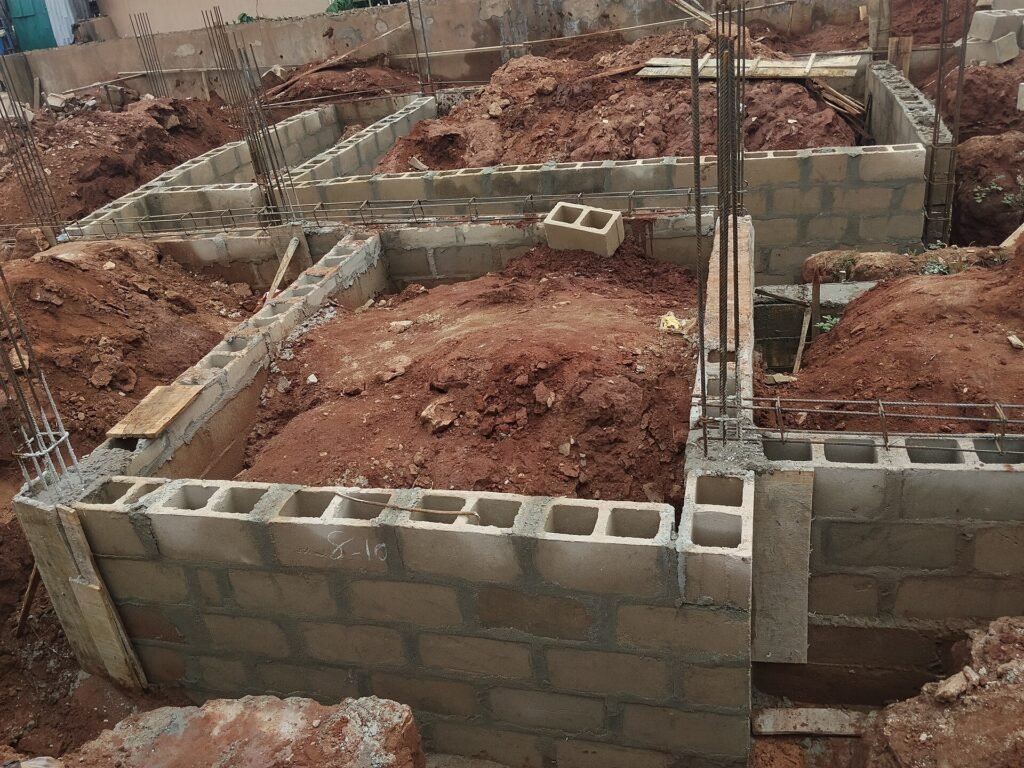
Uncompleted structures are sold constantly in Nigeria, usually by an owner who ran out of money, and they are among the most misjudged purchases in the market. Buyers see a foundation, walls and a roof already standing and assume they are buying most of a house at a discount. Frequently they are buying a problem with a discount attached.
Additional checks for an uncompleted building:
How long has it been standing exposed? Blockwork and reinforcement left open to the weather for years deteriorate. Look for rust stains bleeding through concrete, which indicate corroding reinforcement, and for crumbling block edges.
Was it built to approved drawings? Ask for the building approval and the structural drawings. Without them you do not know what the foundation was designed to carry, which matters enormously if you intend to add a floor.
Was there a soil test? Ask. If the answer is no, get one before you commit, especially on filled or low ground.
Does the workmanship look sound? Check whether walls are plumb, whether courses are level, whether the lintels and columns look properly formed, and whether the roof timber was treated.
What is left to do, priced honestly? Get a builder to price completion from where it stands. Remember that finishing and external works together commonly consume close to half the total cost of a build, so a roofed shell is often much less than half finished in money terms.
Would demolition be cheaper? Sometimes correcting bad work costs more than starting again. Ask the question out loud.
Final thoughts
An inspection is not an act of suspicion towards the seller. It is basic diligence on the largest purchase most people ever make, and honest sellers expect it. The ones who resent it are telling you why.
The discipline is simple. Go twice, at different times. Take a torch and somebody who knows buildings. Look upward into the ceiling void and downward at the base of the walls, because that is where the expensive problems live. Run every tap, flush every toilet, test every socket, open every door. Walk the outside and work out where water goes. Then talk to the neighbours, who will tell you in ten minutes what an agent will not tell you in ten viewings.
Write everything down, sort it into deal-breakers, price adjusters and cosmetics, and negotiate from that list rather than from a feeling.
Two or three hours of careful looking, on a property you will own for twenty years. There is no better-value work available to a buyer anywhere in this process.