Buying your first house in Nigeria is not really one decision. It is about forty decisions, made in sequence, under pressure, usually with more emotion than any other purchase you will ever make. That is why so many first-time buyers end up with something that does not quite work: a house too far from work, a plot they cannot afford to finish, a lovely home with a title that cannot be registered, or a payment plan that turns their salary into a monthly source of anxiety. And unlike almost every other large decision in life, most people make it exactly once, with no practice, no second attempt, and no way to undo it if they get it wrong.
The buyers who get it right are rarely the ones with the most money. They are the ones who took the decisions in the right order. They worked out honestly what they could afford before they fell in love with anything. They chose the area before the house. They understood what title they were buying before they paid. They budgeted for the costs beyond the price. And they were willing, more than once, to walk away from something they liked.
This guide sets out that order. It covers how to work out a realistic budget, how to choose between buying land and building versus buying something finished, how to inspect properly, what documents to demand, how to structure payment, and the specific mistakes that cost first-time Nigerian buyers the most. Where numbers appear, they are illustrative and chosen to make the arithmetic clear. For the land purchase process specifically, read our complete guide to buying land in Nigeria.
Step one: work out what you can actually afford
Start here, before you look at a single listing, because everything else depends on it.
If you are buying with cash and savings, the honest number is not everything you have. Set aside your emergency fund first, at least three to six months of household expenses, and keep it. Then add the extra costs of buying, which commonly run 20 to 40 per cent above the advertised price once survey, legal fees, levies, registration and moving are counted. So if you have 30,000,000 available after your emergency fund, you are shopping in the region of 22,000,000 to 25,000,000, not 30,000,000.
If you are borrowing, be realistic about what Nigerian lending costs. Commercial mortgage rates are high, and total monthly repayments including any other loans should sit comfortably within your income, with room for the months when something goes wrong. See mortgage in Nigeria explained and the National Housing Fund loan.
If you are buying on an instalment plan, be even more careful, because these plans typically have penalties and, in the worst cases, forfeiture clauses. See land payment plans in Nigeria.
Write the number down. Then reduce it by ten per cent, because something always costs more than expected.
Step two: decide between building and buying finished
This is the fork in the road, and both paths are legitimate.
Buy land and build
- Cheaper in total for the same finished quality, because you keep the developer’s margin
- You control the design, the layout and the quality of what goes into it
- Takes eighteen months to three years, sometimes much longer
- Requires you to manage a construction project, or to pay somebody trustworthy to do it
- Costs are exposed to material price changes over the build period
- You pay rent throughout the build, which is a real and often forgotten cost
Buy something finished
- Immediate. You move in, and the rent stops
- Certainty. You can see exactly what you are getting
- More expensive per square metre
- You inherit whatever defects the previous owner concealed
- Less flexibility
The honest guidance: if you have the time, the temperament and someone reliable to supervise, building gives you more house for your money. If you are busy, live far away, or would find a stalled building site unbearable, buy finished. Many first-time buyers underestimate how demanding a Nigerian construction project is on a working person. See cost of building a house in Nigeria.
Step three: choose the area before the house
People do this backwards, falling in love with a house and then reasoning themselves into the area. Reverse it.
Ask these questions about the area first:
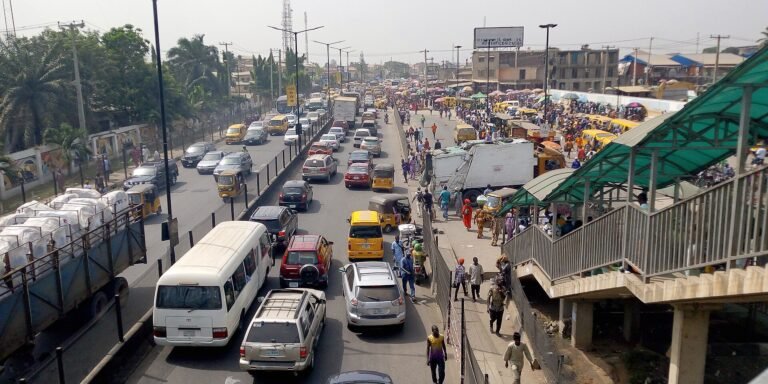
- Commute. Drive it, at the exact time you would travel, on a working day. Then drive it home in the evening. This one exercise has changed more minds than any other.
- Schools. Are there schools you would actually send your children to, within a sane distance?
- Market and shops. Can you buy food without a journey?
- Health. Is there a clinic or hospital nearby?
- Water. How deep are boreholes here, and what do they cost?
- Power. Which distribution company, how many hours of supply, and is there a transformer?
- Security. Ask residents, not agents. Ask specifically about the last two years.
- Flooding. Visit in the rainy season, or ask direct questions about whether water has ever entered compounds on that street.
- Direction of travel. Are buildings going up, or are people leaving?
Only after an area passes should you start looking at houses in it. Our location guides for Enugu, Abuja, Ibeju-Lekki and the Ogun corridor may help.
Step four: verify the title before you fall in love
Never let excitement get ahead of verification. The order is: view, negotiate provisionally, verify, then commit.
Get from the seller: the title document, the registered survey plan, prior deeds if the property has changed hands, and the building approval if there is a building on it.
Then instruct your own lawyer, not the seller’s, to run a title search at the land registry and a charting search at the Surveyor-General’s office. See land registry search in Nigeria.
If a deposit is needed to hold the property, keep it small and get written confirmation that it is fully refundable if the search discloses a problem.
Step five: inspect properly
For a finished property, inspect twice, at different times of day, and take somebody who knows building work.
The essentials: check for cracks, especially stepped or diagonal ones; check the roof from inside the ceiling; run every tap and flush every toilet; test every socket and switch; look for damp on walls and ceilings; open and close every door and window; look at the drainage around the building; ask about the borehole depth and pump; ask about the power situation; look at the neighbours’ compounds.
Our full list is in house inspection checklist.
Step six: understand the full cost
Here is a worked example on a finished house advertised at 40,000,000.
| Item | Example amount |
|---|---|
| Purchase price | 40,000,000 |
| Agency fee | 2,000,000 |
| Legal fees, searches and deed preparation | 1,200,000 |
| Consent, stamp duty and registration | 3,500,000 |
| Survey where a fresh one is needed | 400,000 |
| Repairs and immediate works | 1,500,000 |
| Moving, connection and settling in | 500,000 |
| Total cash required | 49,100,000 |
Nearly ten million naira above the advertised price. This is the number that catches first-time buyers, and it is why the affordability calculation in step one must be done first. See the real cost of buying land in Nigeria.
Step seven: pay safely and complete properly
- Pay by bank transfer, never cash, and never into a personal account when a company is selling.
- Collect a receipt for every payment, with the property clearly identified.
- Stage the payment where possible: a deposit on contract, the balance on execution of the deed and handover of documents and keys.
- Sign a proper deed of assignment, reviewed by your lawyer, with the survey attached. See deed of assignment explained.
- Apply for consent, stamp and register. Do not skip this. See Governor’s Consent explained.
- Collect everything: title documents, survey, building approval, previous receipts, and any warranties or manuals.
The mistakes that hurt first-time buyers most
- Buying at the top of your budget, leaving nothing for fees, repairs or emergencies.
- Skipping the search because the seller was introduced by someone trusted.
- Falling in love before verifying, which makes it emotionally very hard to walk away when a problem appears.
- Ignoring the commute and discovering it after moving.
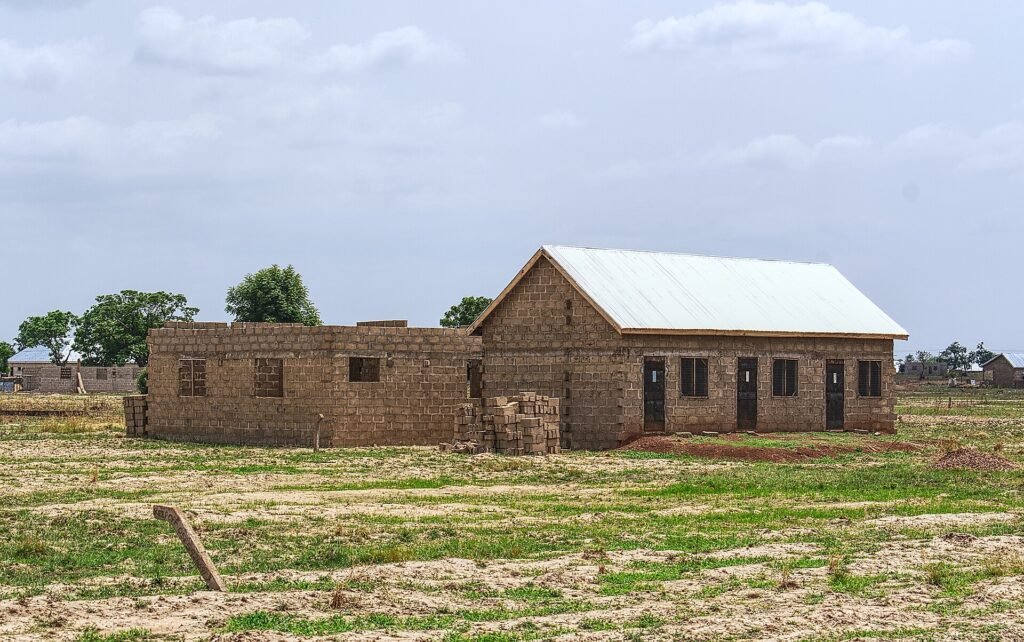
- Underestimating the cost to finish when buying an uncompleted building. Uncompleted structures often cost far more to complete than buyers expect, and the existing work may need correcting.
- Using the seller’s lawyer.
- Not registering the title, which quietly reduces the value of everything you bought.
- Buying in a hurry because a price was rising on Monday.
- Forgetting the rainy season.
- Not visiting the neighbours before buying. Fifteen minutes of conversation with people who live there is the cheapest research available.
Final thoughts
Your first house is not just a financial decision, and it would be dishonest to pretend otherwise. It is where your family will sleep, where your children will grow up, and for many Nigerians it is the proof of something worked very hard for. That emotional weight is real and it deserves respect.
It is also exactly why the process needs structure. Emotion is what makes buyers skip searches, stretch budgets, ignore commutes and sign documents they have not read. Structure is what protects the feeling by making sure the house you fell in love with is actually yours, actually affordable, and actually somewhere you will still want to live in five years.
So take the steps in order. Work out honestly what you can afford, then reduce it. Choose the area before the house, and drive the commute at the worst hour. Verify the title with your own lawyer before you commit emotionally or financially. Inspect twice, with somebody who knows buildings. Budget the full cost, not the advertised price. Pay by transfer, in stages, with receipts. Sign a proper deed and register it.
It is slower than the way most people do it. It is also how you end up, a year later, in a house you can afford, on a street you like, with your name in the land register and nothing to worry about.