Enugu is one of the more interesting property markets in Nigeria because its demand does not come from where most people assume. It is not primarily driven by migration into the state for work, the way Lagos is. It is driven by three quieter forces: a returning diaspora and out-of-state Igbo population who want a home in the East, a student and institutional population that renews itself every session, and a state government that has been visibly investing in the capital’s roads, schools and public facilities. Understand those three forces and the whole market makes sense. Miss them, and Enugu looks like a city where prices rise for no visible reason.
Those forces produce a market with a distinctive shape. Demand for land on the outskirts is deep and persistent, because a plot in Enugu is something a great many people who do not currently live in Enugu want to own. Demand for good rental accommodation in the city is steady rather than explosive. And the top end of the market, the large houses in the established layouts, is thinner than the volume of construction suggests, because the people building them are often building for themselves rather than for tenants.
Understanding those segments separately is the difference between a good Enugu purchase and a disappointing one. This guide maps the market as it actually behaves: the four segments, who buys in each, what drives them, where the growth corridors are, and what a realistic buyer should expect. For the mechanics of buying land here, see our Enugu land buying guide.
The four segments
Segment one: established city property. Independence Layout, GRA, New Haven, Uwani, Achara Layout, Ogui and the older parts of Trans-Ekulu. Planned, serviced, long-settled. Property here is bought to live in or to let, and prices reflect scarcity of good stock rather than growth potential.
Segment two: the student and institutional market. Around the university campuses, the polytechnic, the teaching hospital at Parklane and the Nsukka campus in the north of the state. This is the most reliable income market in Enugu, because demand renews every academic session regardless of what the rest of the economy is doing.
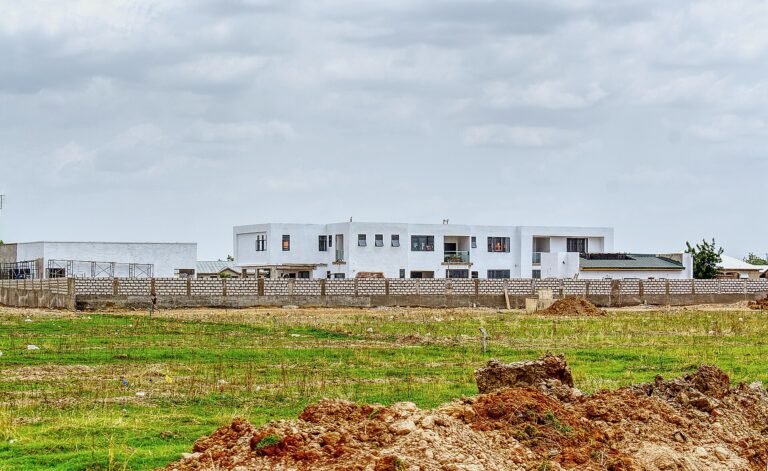
Segment three: the expanding suburbs. Abakpa, Emene, Trans-Ekulu’s outer parts, the Nike axis, Ugwuomu, Amechi, Akpugo, Ugwuaji and the corridors running out along the major roads. This is where most estate activity and most land buying happens.
Segment four: the outer land belt. 9th Mile and towards Ngwo and Udi, the far Enugu-Port Harcourt corridor, and the rural areas beyond. Cheapest entry, longest horizon, most dependent on family-land paperwork done properly.
Each of these behaves differently. Treating them as one “Enugu market” is how people end up buying outer-belt land expecting city-centre rent.
Who actually buys in Enugu
Returning indigenes and the diaspora. The single most important buyer group. People who live in Lagos, Abuja, Europe or America and want a house in the East, whether for retirement, for Christmas, or simply because owning land at home matters. They buy plots, they build slowly, and they are relatively price-insensitive but very vulnerable to fraud because they cannot inspect. See buying property in Nigeria from abroad.
Traders and business owners from the wider South East. Money made in Onitsha, Aba and Lagos frequently ends up in Enugu land.
Civil servants and professionals. Local salary earners buying in the affordable suburbs and building over several years.
Investors and land bankers. Buying on the growth corridors for appreciation. See land banking in Nigeria.
Institutional demand. Schools, churches, hospitals and small businesses buying land for their own use, which quietly absorbs a good deal of well-located suburban land.
The growth drivers, ranked honestly
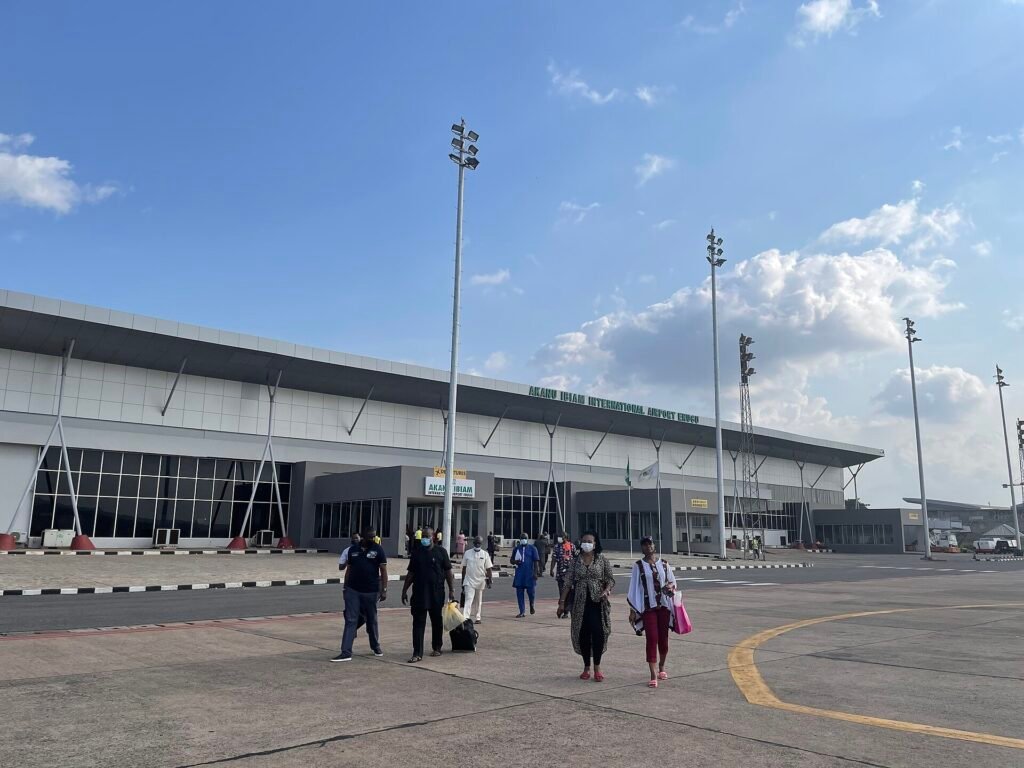
The airport at Emene. Akanu Ibiam International Airport gives Enugu direct connectivity that most South East cities lack, and it has pulled activity along the road that serves it. Airports also attract hotels, logistics and the businesses that depend on travellers.
The 9th Mile junction and the Enugu-Onitsha corridor. 9th Mile is the crossroads of the region, and anything with good access to it has a permanent structural reason to be valuable.
Institutions. The universities, the polytechnic, and the teaching hospitals produce a permanent renewing population. Institutional demand is the most under-rated driver in this market because it is unglamorous and completely dependable.
State government investment. Enugu State has been visibly active on roads, schools and public facilities in recent years. Where road work actually happens, land on that road revalues.
The Enugu-Port Harcourt expressway corridor. Connects Enugu southward to the oil belt cities, and the southern spread of the city follows it.
Security and liveability. Enugu has generally been regarded as one of the calmer capitals in the region, and that reputation itself attracts residential demand from people considering where to settle in the East.
Where the rental market actually works
If you are buying to earn rather than to hold, be specific about your tenant.
Student accommodation near the campuses. Blocks of self-contained rooms and one-bedroom units. Demand is deep, turnover is predictable, and the units are cheap to build relative to what they earn. This is the strongest yield play in the state. See rental yield in Nigeria.
Junior professional housing in the suburbs. Two-bedroom flats in Abakpa, Trans-Ekulu and similar areas, serving civil servants, teachers, nurses and young families. Steady, unspectacular, reliable.
Serviced and short-stay accommodation in the city. Enugu receives business and government visitors, and there is a hospitality market. It is competitive, and success depends heavily on location and management. See short-let apartments in Nigeria.
What works less well: very large houses in the prestige layouts. They cost a great deal to build, the tenant pool is small, and a single long vacancy destroys the return. Many such houses in Enugu are owner-occupied or stand empty for long periods, which is a signal worth reading.
The corridors to watch
The Emene and airport axis. Continued spread along the road, with logistics and commercial potential as well as residential.
The Nike and Ugwuomu direction. Large-scale estate activity, sizeable plots, and a corridor that has attracted substantial investor attention. Verify family-land documentation especially carefully here.
The Ugwuaji and Enugu-Port Harcourt direction. Southern spread with highway access.
Akpugo and the Nkanu side. More affordable, longer horizon.
9th Mile and towards Ngwo. Junction value plus a genuinely different landscape. Attention to slope and access is essential here.
Nsukka. A separate sub-market anchored by the university, with its own student rental logic and much lower entry prices than the capital.
What to be careful about in this market
Family land, always. Most suburban and outer land in Enugu originates from families and kindreds. The single most common cause of loss here is buying from one branch of a family without the family head and principal members signing. See buying family land in Nigeria.
Slope and erosion. Enugu is hilly and parts of the wider region have serious gully erosion. A cheap plot near a slope deserves suspicion, and retaining works are expensive.
Water depth. Borehole depths and costs vary significantly across the Enugu axis. Ask before you buy, not after.
Diaspora-targeted fraud. Buyers abroad are heavily targeted. Never buy on a video call. Send a neutral person and pay your own licensed surveyor.
Estates priced on announcements. A corridor priced as though a road exists, when the road is still a plan, has already given away your profit.
Unregistered title. Enugu land often changes hands on deeds alone. Converting to a state title materially widens your future buyer pool. See what is a Certificate of Occupancy.
A realistic view of returns
Set expectations properly.
Land on a growing corridor should be held five to ten years, with the largest revaluation occurring when infrastructure actually lands rather than when it is announced.
Student rental property can produce among the better net yields available in the state, provided the units are appropriate to the tenant and the building is close enough to campus to matter.
City-centre residential letting produces modest single-digit net yields, in line with most Nigerian residential property.
Very large houses should generally be regarded as consumption rather than investment, unless you have a specific tenant in mind.
Run your own numbers using the method in how to calculate ROI on Nigerian land, including inflation, before accepting anybody’s projection.
Nsukka: the second Enugu market
Buyers focused on the capital often overlook the fact that Enugu State contains a second, quite separate property market in the north of the state, anchored by the university town of Nsukka.
It behaves differently from the capital in several ways. Entry prices are considerably lower. Demand is dominated by a single, powerful and highly predictable driver, which is student accommodation, renewing every academic session regardless of the wider economy. And the buyer pool is narrower, which means resale can be slower than in the capital.
For an investor, the attraction is straightforward. Small units close to campus, whether self-contained rooms or one-bedroom flats, let readily and command rent that is high relative to the cost of the land and the cost of building. Occupancy risk is low during the session, and the tenant profile is well understood.
The cautions are equally straightforward. Buy close to campus, because in a student market walking distance is the product. Build small units rather than family flats, since that is what the tenants need. Expect seasonality in some arrangements and structure your rent accordingly. And do the same family-land verification that the rest of the state requires, because the land around Nsukka is customary land like everywhere else.
For a buyer with roots in that part of the state, or one who can visit regularly, Nsukka can produce better yields than the capital at a considerably lower entry cost. For a buyer who cannot get there, the management burden of student property is real and should not be underestimated.
Final thoughts
Enugu is a market that rewards understanding rather than speed. It does not move in dramatic bursts the way a corridor with a new port does. It grows steadily, driven by people who want to come home, students who arrive every session, and a state capital that keeps extending its roads outwards a little further each year.
That steadiness is an advantage for a careful buyer. There is time to verify title properly. There is time to walk a corridor, count the buildings going up, and visit twice before deciding. There is no genuine reason to accept a Friday deadline in a market that has been expanding gradually for twenty years and will still be expanding next month.
So pick your segment deliberately. If you want income, build small units near an institution. If you want appreciation, buy on a corridor where a road is physically under construction, and hold it. If you want a family home, buy in the established suburbs where services already exist. And in every case, do the family-land work properly, chart the survey, and register the title.
Enugu has been quietly good to patient buyers for two decades. There is no reason to think the next two will be different.