Ask any Nigerian what they want when buying land and you will hear the same three letters: C of O. It has become a kind of magic phrase, the thing that separates a real plot from a risky one. Estate adverts print it in capital letters. Agents drop it into the first sentence. Buyers repeat it to each other like a password.
And yet very few of the people using the phrase can tell you what the document actually is, what it does and does not protect you from, why the government issues it at all, or how it is different from the Governor’s Consent that most resale transactions actually need. That gap is expensive. People pay premium prices for land “with C of O” without ever checking whether the certificate is genuine, whether the name on it has anything to do with the person selling, or whether it covers the exact plot they are standing on.
This guide fixes that. We are going to explain, in ordinary language, why Nigeria has this document in the first place, what is written on a real one, exactly what it protects you against, the specific things it does not protect you against, how the application process works, roughly what it costs, how to verify one, and how the common tricks around it work. By the end you will be able to hold a C of O in your hand and know what you are looking at. If you want the general buying process first, read our complete guide to buying land in Nigeria.
Why this document exists at all
In 1978 Nigeria passed the Land Use Act, and it changed land ownership in this country permanently. The Act said, in effect, that all the land in each state is vested in the Governor of that state, who holds it in trust for the people. In the Federal Capital Territory, the equivalent role sits with the Federal Government through the FCT Minister.
Read that again, because it is the foundation of everything. No ordinary Nigerian owns land outright. What you can hold is a right to occupy and use land for a period of time, granted by the state.
That right comes in two forms. A statutory right of occupancy is granted by the Governor, typically over urban land. A customary right of occupancy relates to land held under customary arrangements, historically granted through local government for rural land.
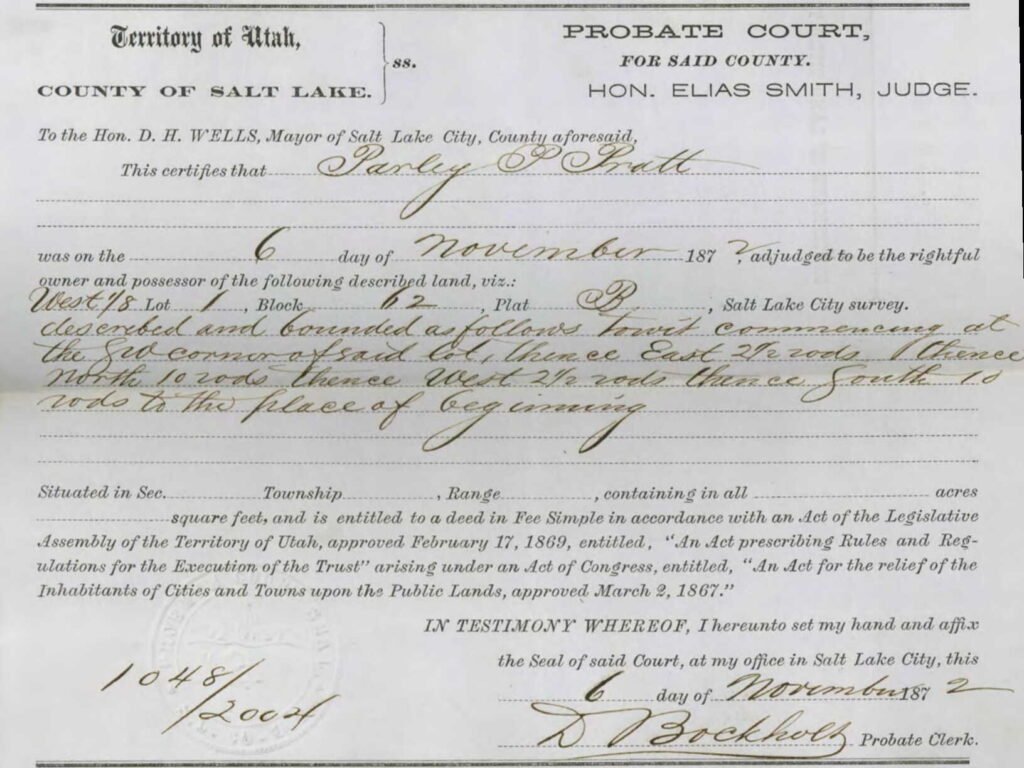
The Certificate of Occupancy is the piece of paper that evidences a right of occupancy granted by the state. It is the government saying, in writing, with a seal and a file number: we have granted this land, to this person, for this purpose, for this term, on these conditions.
That is why it matters so much. It is not a receipt between two private people. It is the landlord of all land in the state acknowledging you.
What is actually written on a C of O
A genuine certificate contains, at minimum:
- The name of the holder. The person or company the land is granted to.
- A description of the land, with the plot number, the block, the scheme or layout name and the local government area.
- A survey plan reference, tying the certificate to specific coordinates on the ground.
- The term of years. Very commonly 99 years from a stated commencement date.
- The purpose. Residential, commercial, industrial, agricultural. This is a condition, not a suggestion.
- The ground rent payable annually to the state.
- Conditions of the grant, which often include developing the land within a stated period.
- A serial number and a registration reference, plus the signature of the Governor or an authorised officer, and the state seal.
Two of those deserve attention because buyers routinely ignore them.
The term. A 99-year lease that commenced in 1982 has fewer years left on it than one that commenced in 2019. For most practical purposes this rarely bites, but it is real, and it matters for very old grants.
The purpose. If the certificate says agricultural and you intend to build a shopping complex, you need a formal change of use. Building against the stated purpose can expose you to enforcement.
What a C of O actually protects you from
Let us be precise, because this is where the myth-making happens.
A genuine C of O, correctly issued over land that was properly available for grant, gives you:
- Government recognition of your right to occupy that land. The strongest form of recognition available in Nigeria.
- A registered record. Your interest sits in the state’s land records, which is what a court, a bank and a future buyer will all look at.
- Protection against most private claims. When a family member of a previous owner appears with a story, a registered state grant is a very strong answer.
- Ability to use the land as security. Banks lend against properly titled and registered land far more readily than against a deed alone.
- A wider pool of future buyers. Titled land sells faster and higher. That difference alone frequently exceeds the cost of getting the title.
What a C of O does not protect you from
This is the section that saves money.
It does not protect you if it is fake. Forged certificates exist and some of them are very good. Verification at the registry is the only defence.
It does not protect you if the seller is not the holder. A C of O in the name of Mr A does not permit Mr B to sell you the land. You need the chain of transfers and, critically, Governor’s Consent for each transfer.
It does not protect you if the government revokes for overriding public interest. The Land Use Act allows revocation where land is required for a public purpose, with compensation for unexhausted improvements. This is uncommon for ordinary residential plots but it is real, particularly on land near planned roads and public projects. See government acquisition, setback and committed land.
It does not protect you from a competing earlier grant. Where the state has, through error, granted the same land twice, you are in a dispute. A registry search before purchase is how you avoid this.
It does not protect you from your own breach. Failure to pay ground rent, failure to develop within the stipulated period, or use contrary to the stated purpose can all expose the grant to challenge.
It does not make a wet plot dry. Title is legal. Flooding, erosion and access are physical. Check both.
How to get a C of O
The process differs by state, but the shape is similar almost everywhere.
- Obtain and complete the application form from the state’s lands ministry or land bureau.
- Attach the required documents. Typically these include your purchase documents, a registered survey plan, passport photographs, means of identification, tax clearance and evidence of any prior transactions on the land.
- Pay the application and processing fees.
- Site inspection. Officials visit to confirm what is on the ground and that it matches the application.
- Charting. The survey coordinates are placed on the state map to confirm the land is not under acquisition, not committed, and not on a road or drainage reserve.
- Publication or notification, where the state requires that competing claims be invited.
- Approval, followed by a demand notice for the statutory payments. These can include a premium, ground rent, capital contributions, stamp duty and registration fees.
- Payment, execution and issuance. The certificate is signed, sealed, registered and released to you.
How long does it take? Honestly, it varies from a few months in the better-organised states to considerably longer elsewhere. Budget time and be patient. What you should not do is treat the delay as a reason to skip the process, because unregistered land is cheap to buy and painful to sell.
Roughly what it costs
Fees are set by each state and change from time to time, so no article should quote you a fixed figure to rely on. What you can rely on is the shape of the bill. Expect a combination of:
- An application and processing fee
- A premium or capital contribution, often calculated on the value of the land
- Ground rent, payable annually
- Stamp duty on the instrument
- Registration fees
- Survey and legal costs
Taken together, the state charges on a title transaction commonly land somewhere in the range of a few per cent up to around a tenth of the land’s assessed value, depending on the state and the land use. Ask your lawyer for the current schedule in the specific state before you budget. Our breakdown of every charge in a land purchase is in the real cost of buying land in Nigeria.
How to verify a C of O
Never verify a certificate by looking at it. Verify it at the registry.
Give the certificate details and the survey plan to your own lawyer, and instruct a search at the state lands office. The registry will confirm whether a file exists with that number, whether the holder’s name matches, whether the coordinates match, whether there are encumbrances such as a mortgage or a caveat, and whether any transfer is pending.
Warning signs on the document itself are worth knowing too. Be alert to a certificate where the survey plan reference does not match the survey you were given, where the plot description is vague, where the printing or seal looks inconsistent with others from the same state and period, where the holder’s name is spelled differently across documents, or where the seller will only ever show you a photocopy.
The full process is in land registry search in Nigeria. Do it before you pay.
The “global C of O” question
You will meet this in estates. A developer holds a single C of O covering a large parcel, then sells individual plots inside it. Buyers are told the estate “has C of O”, which is true of the parcel but not of their individual plot.
This is not automatically bad. It is how many legitimate estates work. But you should understand your actual position:
- Your interest comes through the developer, so the developer’s title is your title.
- You will normally hold a deed of sublease or assignment plus an allocation, and you will need the developer’s cooperation, and Governor’s Consent, to perfect your own interest.
- If the developer collapses, is fraudulent, or has mortgaged the parcel, you are exposed.
So ask: can I see the global certificate, in whose name is it, is it encumbered, and what exactly do I receive and when? Then verify the parcel at the registry yourself.
Final thoughts
The Certificate of Occupancy is the strongest ordinary land document in Nigeria, and it deserves the respect it gets. Land with a genuine, clean, verified certificate is easier to build on, easier to borrow against, easier to defend and easier to sell. If you are choosing between two similar plots and one has proper title, the titled one is almost always the better buy even at a higher price.
What the document is not is a spell. It does not work simply because somebody said the words. A certificate in the wrong name protects the wrong person. A forged certificate protects nobody. A genuine certificate over land the government intends to take for a road will not stop the road. And a beautiful certificate over a plot that floods every August will not keep your feet dry.
So use it properly. Ask for the certificate. Read the name, the plot description, the survey reference, the term and the stated purpose. Take it, with the survey plan, to your own lawyer and pay for a search at the registry before any serious money moves. If the land is being resold, insist on the full chain of deeds and the consents that go with them. And once you own the land, complete your own title and keep your ground rent paid.
Do that and those three famous letters will mean, for you, exactly what everybody assumes they mean for everybody.