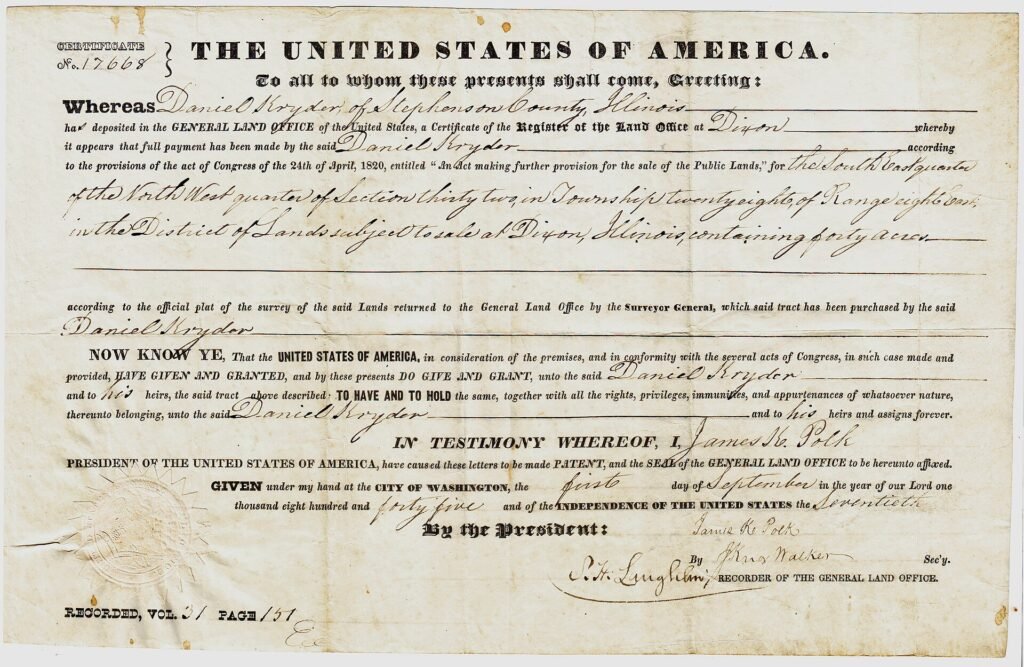
Most Nigerians who have bought land can name the Certificate of Occupancy. Far fewer can explain the deed of assignment, and yet in the great majority of ordinary land transactions, the deed is the document that does the actual work. The certificate says who the state granted the land to. The deed is how the land travels from that person to you.
Think of it this way. If land were a car, the C of O would be the vehicle registration document showing the state recognises the car and who it was registered to. The deed of assignment would be the signed sale agreement transferring that car to you, with the engine number written on it, the price stated, and both parties’ signatures at the bottom. You need both. One without the other leaves you holding half a transaction.
The trouble is that deeds get treated casually in Nigeria. People download templates. Sellers hand buyers a two-page document prepared by the seller’s own lawyer and expect it to be signed on the spot. Buyers, anxious not to seem difficult after weeks of negotiation, sign without reading. Then years later a problem appears, everybody goes looking for the paperwork, and the deed turns out to describe the land vaguely, name the wrong party, omit the survey plan, or contain a clause the buyer never noticed. This guide walks through what a proper deed contains, what each part is for, the clauses worth arguing about, and the errors that turn a deed into scrap paper. For the general process, see our complete guide to buying land in Nigeria.
What a deed of assignment is
A deed of assignment is a written legal document by which the holder of an interest in land, called the assignor, transfers that interest to another person, called the assignee, usually for money.
Two words in there matter.
Assignment means the seller transfers the whole of what they hold, for the whole of the remaining term. This is different from a lease, where the owner grants you possession for a period but keeps the reversion, and different from a sublease, where a leaseholder carves a shorter period out of their own lease and gives it to you.
Deed means a specific kind of formal document. A deed is signed, sealed and delivered, and is witnessed. That formality is what makes it capable of transferring an interest in land rather than merely recording a promise.
If somebody hands you an “agreement of sale” instead, that is not the same thing. A contract of sale is the promise to sell. The deed is the transfer itself. Read our comparison of these papers in receipt, contract of sale and power of attorney.
The parts of a proper deed, and what each one does
The commencement and date
Names the document as a deed of assignment and states the date it was made.
The parties
Full legal names, addresses and descriptions of both the assignor and the assignee.
Check your own name character by character against your identification. A deed naming “Chukwuemeka Okoro” when your passport says “Chukwuemeka Emmanuel Okoro” creates avoidable work later at the registry. If the seller is a company, the exact registered name and the registration number should appear, not the trading name on the signboard.
The recitals
These are the “whereas” paragraphs. They tell the story of the land: how the assignor came to hold it, under what title, and their intention to transfer it.
Recitals are not decoration. They are where a lawyer reading your deed in ten years learns the root of title. A deed with a thin recital that says only “the assignor is the owner of the property” tells nobody anything. A good recital names the C of O and its number, or names the family and the partition, or names the prior deed and its registration particulars.
The consideration
The price. State the true figure. Understating the price to reduce stamp duty is common and it is a bad idea, because the deed is your evidence of what you paid, and it matters for capital gains, for any future dispute and for your own records.
The operative words
The sentence that does the transferring, along the lines of the assignor assigning unto the assignee all their interest in the property for the residue of the term.
The description of the property
The single most important paragraph. It must identify the land so precisely that nobody could confuse it with any other land on earth.
That means the plot number, the block or scheme, the layout or estate name, the local government area, the state, the measurement in square metres, and above all the survey plan number, with the survey plan itself attached to the deed. A deed that says “a parcel of land at Ugwuomu village measuring one plot” is not a description, it is a hint. Read survey plan explained.
The habendum and the term
The words setting out that you take the property for the remainder of the term granted by the state, subject to the rents and conditions in the original grant.
Covenants
Promises by each side. The assignor typically covenants that they have the right to assign, that you will have quiet enjoyment, that they will hand over documents and cooperate with obtaining consent, and that they will indemnify you against prior liabilities. You typically covenant to pay ground rent and observe the conditions of the head grant going forward.
Read these. This is where the balance of the deal actually lives.
Execution
Signatures of both parties, with witnesses who state their names, addresses and occupations. Where a company is a party, execution follows the company’s proper procedure. Where the seller is a family, the family head and principal members sign, and a family resolution should be attached.
The schedule and the plan
The full description and the attached survey plan, and any annexures such as the resolution or a copy of the head title.
The clauses worth arguing about
A deed handed to you by the seller’s lawyer is drafted for the seller. Here are the points a buyer’s lawyer will normally raise.
Cooperation on consent. The seller should be bound to sign every document and provide every paper needed for Governor’s Consent, and this obligation should survive completion. Without it, a seller who has been paid can simply stop answering the phone.
Who bears which cost. Consent fees, stamp duty, registration fees and capital gains tax should be allocated explicitly. Silence causes arguments.
Vacant possession. The date on which you actually get the land, free of occupiers, tenants, caretakers, crops and structures.
Retention. Consider holding back part of the price until documents are handed over or a specific condition is satisfied. This is normal commercial practice, not an insult.
Full disclosure of encumbrances. A clause where the seller confirms there is no mortgage, caveat, court case or government notice affecting the property.
“As is” clauses. Be careful with wording that has you accepting the land in whatever condition and waiving all claims. Ask your lawyer exactly what you are giving up.
Mistakes that make a deed useless
- No survey plan attached. Extremely common and extremely damaging. The deed then transfers land that cannot be precisely identified.
- The wrong seller. The person signing is not the registered holder and cannot show a documented chain to that holder.
- One family member signing for a whole family. See buying family land.
- Names that do not match identification across the deed, the receipts and the survey.
- A price stated that does not match what was paid.
- No witnesses, or witnesses whose details are illegible or fictitious.
- Never stamped and never registered, which leaves the transaction unperfected and materially weakens your position.
- A photocopy signed rather than an original, with the original never produced.
- Recitals that hide the root of title because there is something to hide.
- Signed before verification. The deed is the last step, not the first. Search the title, chart the survey, inspect the land, then sign.
After signing: stamping and registration
Signing the deed is not the finish. Three things must follow.
Stamping. Stamp duty is paid on the instrument. An unstamped deed has limited use in evidence, and it cannot be registered.
Consent. Where the land carries a state title, the transfer requires the Governor’s consent, or the Minister’s in the FCT.
Registration. The stamped, consented deed is registered at the state land registry, and it comes back to you with a registration number. That number is what makes your interest public and defensible.
Together these three are what practitioners call perfecting the title. Budget for them from the start. Our full breakdown is in the real cost of buying land in Nigeria.
A short checklist before you sign anything
- My full legal name, spelled exactly as on my identification
- The seller named correctly, and proven to be entitled to sell
- A clear recital of how the seller got the land
- The true price stated
- Plot number, layout, local government, state, area in square metres
- Survey plan number quoted and the plan physically attached
- Covenant obliging the seller to assist with consent and hand over documents
- Costs allocated between the parties in writing
- Vacant possession date stated
- Two proper witnesses, with full details
- My own lawyer has read it and explained every clause I did not understand
Final thoughts
The deed of assignment is where a land purchase becomes real. Everything before it, the inspection, the negotiation, the promises made in the estate office, is preparation. Everything after it, the consent, the stamping, the registration, is confirmation. The deed itself is the hinge.
Which is why it deserves an afternoon of your attention rather than five minutes on a Friday. Read it. Ask what each paragraph means. Insist that the survey plan is attached rather than promised. Make sure the recitals actually tell the story of how this land came to the person selling it to you. Get the seller’s obligations after payment written down, because that is the moment their enthusiasm naturally declines.
And use your own lawyer, not the seller’s. This one point is worth more than everything else in this article. A lawyer costs a small fraction of the price of the land and works entirely for you. The seller’s lawyer, however friendly, is doing their job by protecting the seller.
Get the deed right and the rest of the process is administration. Get it wrong and you may spend years trying to prove that you bought something you cannot precisely describe from somebody who may not have owned it.