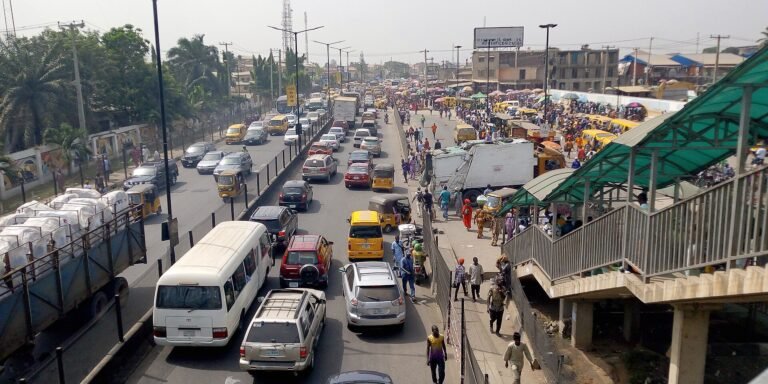
Aba is not a pretty city, and anybody who tells you otherwise is selling you something. What Aba is instead is a working city, and that turns out to matter far more for a property investor. Hundreds of thousands of people in Aba make things for a living. Shoes, bags, belts, clothing, furniture, fabricated metal. Ariaria and the workshop clusters around it supply markets across Nigeria and well beyond it. Money is generated locally, every single day, by people producing goods rather than by a government payroll.
That distinction changes what land is for. In a capital city, land demand is mostly about housing civil servants, professionals and returnees. In Aba, a large slice of land demand is commercial and industrial. People want a plot to put up a workshop, a warehouse, a shop line, a block of small units to rent to traders. Residential demand exists too, of course, but the rent that pays best here is often the rent paid by somebody who is going to work in that space, not sleep in it.
That also changes where the risks sit. Aba’s title issues are the ordinary South-East family-land issues, and they are handled the ordinary way. But Aba has an infrastructure problem that a buyer must price honestly, because drainage and road quality in parts of the city are genuinely poor, and a plot that is unreachable in August is worth less than the same plot on a good street, no matter what the paperwork says. This guide covers Abia’s land system, the axes that are growing, the industrial angle, and the physical checks. Start with our complete guide to buying land in Nigeria if you need the general order of steps.
Understanding Abia land: Aba is not the capital
First, a point that trips up outsiders. Umuahia is the capital of Abia State. Aba is the commercial city. They are different markets with different drivers, roughly an hour apart, and you should not use price or growth logic from one in the other.
Umuahia has the government, the state institutions and a calmer residential market. Land there is bought largely for family homes and for renting to civil servants and professionals.
Aba has the industry, the markets and the noise. Land there is bought to earn.
Both sit on customary land that descends through families and villages, much of it Ngwa land in and around Aba. The Abia State Ministry of Lands handles state titles, searches and the Certificate of Occupancy process.
The Aba land ladder
Here is what you will realistically be offered, and what each one is worth.
| What you are offered | What it means | How to treat it |
|---|---|---|
| C of O in the seller’s own name | State-recognised title | Strongest. Verify at the ministry, then take Governor’s Consent to move it to you |
| C of O in an older name, with a chain of deeds | Title exists but has moved hands | Acceptable if every link in the chain has its deed and consent |
| Registered survey plus deed from a family | Customary sale, documented | Workable. Insist on family head plus principal members, then apply for a C of O |
| Estate allocation with survey and deed | Developer bought a parcel and subdivided | Fine if you verify the developer’s own root of title |
| Receipt and a handwritten agreement | Somebody says they sold you land | Not enough. Do not build on this |
The single most common Aba mistake is treating the fourth and fifth rows as if they were the first. A signboard, a fenced estate and a smiling agent do not create title. Documents do.
Verify, in two directions
Formally. Take the survey plan to the Abia State lands office and have your own lawyer run a search. You want confirmation that the land is not under state acquisition, not on a road or drainage reserve, not already registered to somebody else, and not carrying a caveat or pending suit. See land registry search in Nigeria.
Locally. Aba and its surrounding villages have active family structures, and land can be sold by a branch of a family without the other branches agreeing. Ask three separate neighbours who owns the land, who the family head is, and whether the plot has ever been in dispute. Do this on a normal working day when people are around, not on a Sunday when the street is empty.
Insist that the sale agreement carries the signature of the family head and named principal members, plus a family resolution. Read buying family land in Nigeria for how this is properly documented.
Where Aba is growing
Osisioma and the expressway junction. The Enugu-Port Harcourt expressway meets Aba here, which makes it the natural home for logistics, warehousing and larger commercial plots. Highway access is the whole value proposition, so pay attention to setbacks and any planned road expansion.
Ogbor Hill and across the river. Long-established, dense, with real rental demand, but this is exactly where you must examine drainage and flooding closely.
The Port Harcourt road corridor. Commercial frontage with steady traffic, popular for shops and small industrial units.
Owerri road and Ngwa road axes. Mixed residential and commercial, with plots getting cheaper as you move outward.
Obingwa, Ugwunagbo and the outer local governments. The affordable belt. This is where land banking money goes, and where the family-land paperwork discipline matters most.
Umuahia. A separate calculation. Quieter, more residential, government-anchored, better for a family home or steady residential rent.
The industrial angle most buyers miss
If you are investing in Aba rather than buying a home, think carefully about what you will put on the plot, because the highest and most reliable returns in this city often come from commercial space rather than flats.
Consider these:
- Small workshop units. A row of six to ten simple, secure units with power provision and a shared yard, let to producers, can outperform a residential block on the same plot.
- Warehouse or storage space. Traders need somewhere to keep stock, and secure storage near the market corridors is chronically short.
- Shop lines on a busy road frontage. Ground floor shops with residential above is a classic Aba build for a reason.
- A small logistics yard near the expressway. Space for trucks to load and turn is scarce and valuable.
For any of these, three practical things decide whether it works: is the road usable in the rainy season, is there a workable power arrangement, and is the location secure enough that a trader will leave stock there overnight. Get those three right and tenancy is rarely the problem.
Our guides on rental yield in Nigeria and how to calculate ROI on Nigerian land will help you run the numbers honestly.
The drainage question, which is the real Aba risk
This deserves its own section because it is the thing most likely to cost you money in this city.
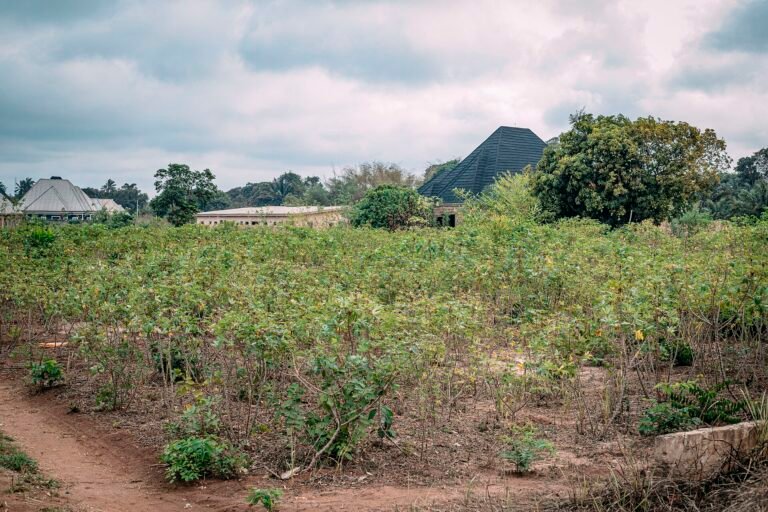
Parts of Aba have serious drainage and erosion problems. Streets flood. Some roads develop deep gullies. Buildings on the wrong side of a slope end up with water running through the compound every rainy season. The city has been the subject of repeated road and drainage intervention efforts precisely because the problem is well known.
Your checks:
- Visit in the rainy season. If that is impossible, ask to see photographs and ask neighbours directly what the street looks like in August.
- Look at ground level. Is the plot lower than the road? Water goes downhill and stops at the lowest point.
- Follow the drainage. Walk the street and find where the channel goes. A drain that ends in nothing is a drain that ends in somebody’s compound.
- Look at the neighbours’ buildings. Water marks on walls, raised entrance steps added after construction, and sandbags are all evidence.
- Check road access for a truck. If a building materials lorry cannot reach the plot for four months of the year, your construction schedule and your future tenants both suffer.
- Budget for filling and a raised plinth if you buy on the low side, and treat that as part of the purchase price rather than a surprise.
A plot on a good, drained street at a higher price is frequently the cheaper buy once you finish the arithmetic.
Worked example: an Aba commercial plot
A plot advertised at 5,000,000 naira on a secondary road near a commercial corridor.
| Item | Example amount |
|---|---|
| Plot price | 5,000,000 |
| Survey plan | 300,000 |
| Deed, family documentation and legal fees | 450,000 |
| Search and verification | 150,000 |
| Registration and title processing | 550,000 |
| Sand filling and site preparation | 900,000 |
| Perimeter fence and gate | 1,500,000 |
| Total before construction | 8,850,000 |
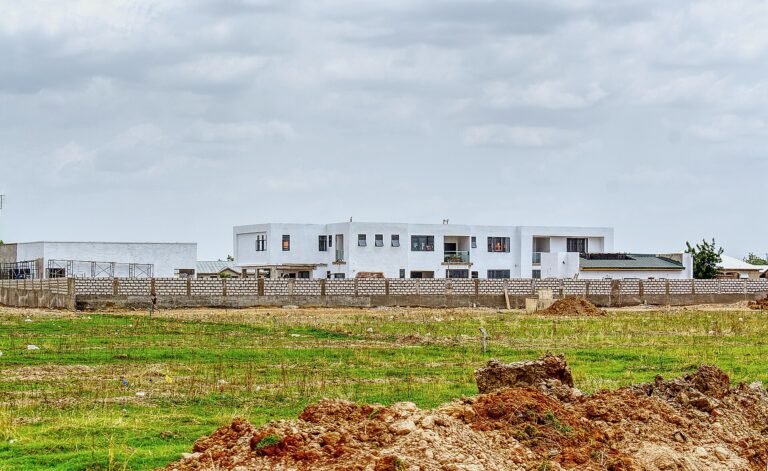
That fence line is not optional in Aba. An open plot in a busy commercial area attracts traders, mechanics and eventually squatters, and removing an established occupier is far harder than preventing one. See the real cost of buying land in Nigeria.
Rules for buying in Aba
- Buy on a usable road. Everything else is negotiable. Access is not.
- Insist on family head plus principal members on any customary sale.
- Chart the survey with the Surveyor-General’s office. An unlodged survey is a picture.
- Run a formal search before payment, with your own lawyer.
- Ask about disputes explicitly, including court cases and suit numbers.
- Pay corporate, by transfer, receipt with plot number. No cash in the market.
- Fence early. Occupation is protection.
- Apply for a C of O once you own it. Aba property with state title sells to a much wider group of buyers.
Final thoughts
Aba is a city that rewards people who understand what it is. It is not a lifestyle destination and it is not a planned capital. It is a place where a very large number of people wake up and make things, and where money moves through the streets every day of the week. Property that serves that activity, which means workshops, storage, shops and modest housing near the working areas, tends to stay occupied.
The mistakes here are rarely exotic. Buyers take family land without full family consent. Buyers accept an uncharted survey. Buyers pick a cheap plot on a bad street and discover in August that “cheap” was a description of the drainage. Buyers leave a plot open for two years and return to find a mechanic workshop on it.
Every one of those is preventable with the same routine. Verify at the ministry and in the neighbourhood. Get every signature that should be there. Choose access over price. Look hard at where the water goes. Pay properly and register. Then fence the land and put your name on it.
Get that right, and Aba will do for you what it has done for generations of traders. It will quietly turn hard work and good positioning into steady, unglamorous, dependable money.