Enugu has quietly become one of the most talked-about property markets in the South East, and the reason is not hard to see. It is a state capital with an international airport, a calm security record compared with many of its neighbours, a steady flow of returning indigenes who want a home in the East, and a government that keeps announcing new roads, schools and tourism projects. Put those together and you get a market where a plot bought in a sleepy area today can look very different in five years.
But Enugu is not Lagos, and buying here the Lagos way will get you into trouble. In Lagos, the biggest question is whether the government has acquired the land and whether it has been excised. In Enugu, the biggest question is usually who in the community actually has the right to sell, and whether the family selling to you has settled its own internal quarrels. Enugu land is largely community and family land in the outskirts, and the person collecting your money is often one member of a family that has other members with opinions.
This guide is written for someone buying a plot in Enugu for the first time, whether you live in the state, in Lagos, or in London. We will go through the areas people are actually buying, the documents that matter here, the specific physical checks that Enugu’s hills and soil demand, the community consent question, and the mistakes that catch outsiders most often. If you want the general national process first, start with our complete guide to buying land in Nigeria, then come back here for the Enugu details.
Know the two Enugus before you choose an area
There are really two property markets inside Enugu, and buyers get confused because agents mix them together in the same advert.
The first is the old, built-up city. This is Independence Layout, GRA, New Haven, Uwani, Achara Layout, Ogui, Trans-Ekulu and parts of Abakpa. Here you are mostly buying developed property or a small infill plot, the roads exist, the title history is longer, and prices are high. You buy here to live or to earn rent, not to double your money.
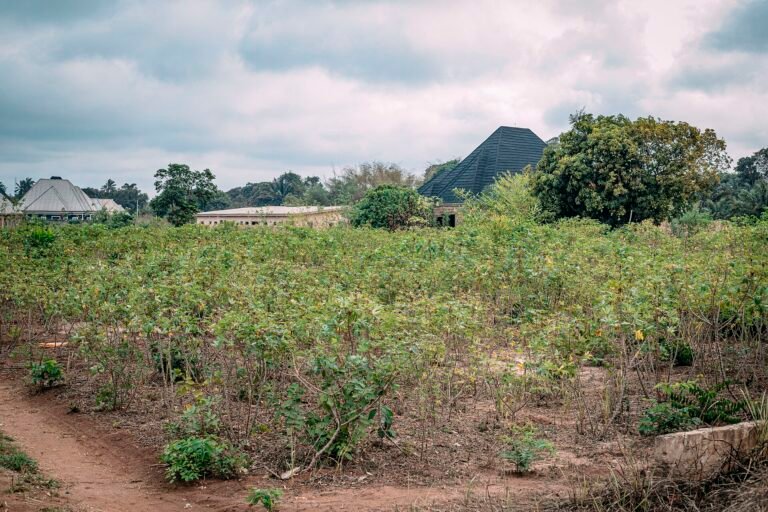
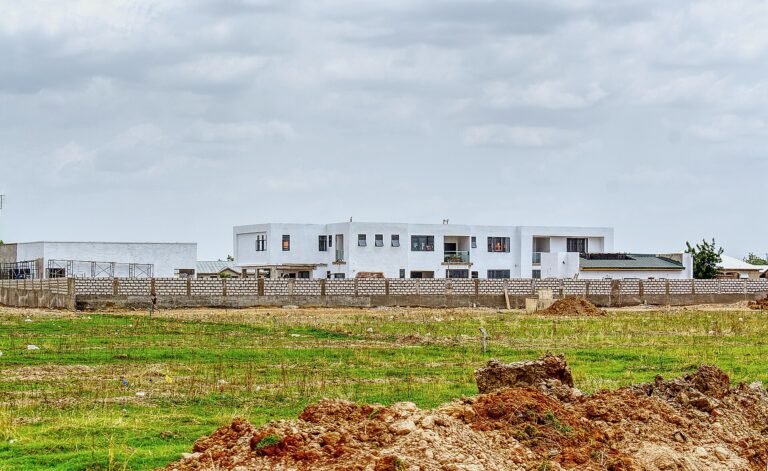
The second is the expanding edge. This is the belt running out through Emene and Nike towards the airport, the Ugwuomu and Amaechi axis, the Akpugo and Nkanu side, the Ugwuaji and Enugu-Port Harcourt expressway corridor, and the 9th Mile corner towards Ngwo and Udi. Here you are buying raw or lightly developed land from families and estate companies, prices are far lower, and growth is the whole point.
Most first-time investors should be looking at the second market, but should walk into it knowing that community land needs more careful paperwork than city land.
Step one: match the area to a real growth driver
Do not buy in Enugu because an advert used the word “prime”. Buy because something physical is pulling people towards that spot. In Enugu, the strongest pullers are these:
- Akanu Ibiam International Airport at Emene. An airport creates traffic, hotels, logistics yards and staff housing along the road that feeds it.
- The Enugu-Onitsha expressway and the 9th Mile junction. 9th Mile is the crossroads of the whole region. Anything on a good road within reach of it has a reason to grow.
- The Enugu-Port Harcourt expressway corridor running south past Ugwuaji, which connects Enugu to the oil-belt cities.
- New government projects. Enugu State has been active with school rebuilds, road works, water schemes and tourism plans. When a road contract is awarded near a village, land on that road stops being a village plot and becomes an investment.
- The university and hospital pull at Nsukka and at Parklane. Institutions create permanent, rent-paying populations.
Now, the honest warning: an announced project is not a delivered project. Land that is priced today as if a road has already been built, when the road is still a press release, is land where somebody else has already collected your profit. Look for work actually happening on the ground.
Step two: understand who is selling you the land
In Enugu’s expanding belt, land usually reaches the market in one of three ways, and each one needs different paperwork.
Direct from a family. The commonest route. A family has held land for generations and now sells a portion. The danger is simple: families are not one person. If the man selling to you is one of five sons and the other four have not agreed, you have bought a court case. You want the sale agreement signed by the recognised head of the family and the principal members, with a family resolution attached, and you want the town union or the Igwe’s cabinet to acknowledge it where that is the local practice.
Through a community or town union scheme. Some communities allocate land under the town union with a formal committee. This is usually safer because the process is public, but you still need to see the minutes, the allocation letter and the list of allottees.
Through an estate company. A developer buys a large parcel, surveys it, cuts it into plots and sells with a survey plan, a deed and often instalment terms. The paperwork is neater, but you must verify the company itself, not just the plot. Check that the company is registered with the Corporate Affairs Commission, ask for the deed by which the company acquired the mother land from the community, and ask to speak to earlier buyers who have already been allocated. Our guide on how to check if a real estate company is real walks through this.
Whichever route, one rule stands: the person receiving your money must be the person, family or company named on the documents. If the names do not match, walk away.
Step three: the documents to demand in Enugu
Here is what a clean Enugu file looks like, from the mother land down to your plot:
- Proof of the family’s or company’s root of title. How did they get it? Inheritance from a named ancestor, a deed of partition among the family, a purchase from the community, or a government grant.
- A deed of partition, if the land came from shared family holdings. This document shows which portion belongs to which branch of the family, so nobody’s brother can appear later. Read more in our guide to buying family land.
- A registered survey plan with beacon numbers and coordinates, prepared by a licensed surveyor and lodged with the Surveyor-General’s office.
- A deed of assignment in your name, properly executed, with the survey plan attached. See deed of assignment explained.
- A Certificate of Occupancy, where the land already has one, or an application in progress. Enugu State’s Ministry of Lands issues these. If the seller has a C of O in a different name, you also need Governor’s Consent to move it to you. See Governor’s Consent explained.
- Receipts for every payment, on letterhead, stamped, with the plot number written on them.
A receipt and a hand-written agreement alone are not enough, no matter how respected the seller is in the village. People die, families change, memories become convenient. Paper does not.
Step four: search the title at the state lands office
Take your survey plan to the Enugu State Ministry of Lands and ask for an official search. Use your own lawyer, one you found yourself, not the one the seller recommends.
The search tells you whether the land is free, whether it sits inside any government acquisition or planned scheme, whether it is affected by a road setback, and whether somebody else has already registered a title over the same coordinates. It is a modest cost against a large risk, and it is the step that separates a calm buyer from a crying one.
Do the search before you pay, or at the very least before you pay more than a small, refundable holding deposit with written refund terms. Once your full money has left, your bargaining power leaves with it. The full method is in land registry search in Nigeria.
Step five: the physical checks Enugu specifically demands
Enugu sits on hills and valleys. That is why it is beautiful, and it is also why some plots cost far more to build on than others. These are the local checks that matter here more than in a flat city.
Slope. Stand on the plot and look at where water would run. A steeply sloping plot needs retaining walls, deeper foundations and more filling. That can add a serious amount to your build cost before the first block is laid. A gentle slope that drains away from the plot is ideal.
Erosion. Parts of the South East, including areas around Enugu, have real gully erosion problems. Look for cracks in the ground, exposed roots, deep channels cut by rainwater, and neighbours’ fences that have collapsed on one side. Ask the people living there what the plot looks like in July, at the height of the rains. Go and see it in the rainy season if you possibly can.
Rock. Some Enugu plots have shallow rock under a thin layer of soil. Rock is good for stability but expensive to excavate for foundations and septic tanks. Ask whether neighbours needed blasting or heavy machinery.
Water. Ask how deep the boreholes go in that area, and what a borehole costs there. In parts of the Enugu axis boreholes are deep and expensive, which is a real cost you should budget for now, not discover later.
Access road. Walk the route from the tarred road to the plot. If it is a footpath through somebody’s farm, ask who owns that path and whether the estate has a legal right of way. A plot with no legal access is worth much less than it looks.
Electricity and setback. Check for high-tension lines crossing overhead, and for the road setback where a highway is planned to be widened. Building inside a setback ends with a demolition notice.
Step six: settle the community properly
This is the part outsiders under-estimate. In Enugu’s rural belt, having a valid legal document and having peace on your land are two different achievements, and you want both.
When you buy, ask the seller what the customary expectations are and put them in the deal. Some communities expect a formal presentation to the town union. Some expect the buyer to be introduced to the Igwe’s cabinet. Some have a levy for development that is applied to new landowners. None of this is a scam if it is normal for that community, documented, and receipted. It becomes a scam when it appears one by one, in cash, after you have paid, from people who cannot show any authority.
Ask three neighbours, separately, who the recognised family head is. If you get three different answers, that land is in dispute, whatever the papers say.
Step seven: budget the full cost, not the plot price
Here is a worked example so the numbers are clear. Take a plot advertised at 3,000,000 naira in a developing Enugu axis.
| Item | Example amount |
|---|---|
| Plot price | 3,000,000 |
| Survey plan | 300,000 |
| Deed preparation and legal fees | 200,000 |
| Community or town union documentation | 150,000 |
| Development levy where applicable | 250,000 |
| Registration and title processing | 300,000 |
| Total to own it properly | 4,200,000 |
That is forty per cent above the sticker price. It is not the seller cheating you, it is what proper ownership costs. Budget it from day one so you never have to stop halfway with a deed you cannot register. We break these charges down fully in the real cost of buying land.
Common Enugu mistakes, and how to dodge them
Buying by video call from abroad. Diaspora buyers are the favourite target of dishonest sellers because they cannot walk the land. Send someone you trust who is not connected to the seller, and pay a licensed surveyor separately to confirm the beacons. See buying property in Nigeria from abroad.
Trusting a relative’s introduction as verification. Your uncle knowing the seller is not a title search. Warm introductions have cost people millions.
Paying cash in the village. Always transfer to a named account and collect a receipt.
Buying the advertised plot but being allocated a different one. Get your plot number in writing at the point of payment, and confirm the beacons on the ground match that number.
Leaving the land bare for years. Bush-covered land invites re-selling by opportunists. Clear it, put a signboard with your name and number, and visit twice a year.
Skipping registration because “everybody here just uses a deed”. Everybody here also has land disputes. Register.
Final thoughts
Enugu rewards patient buyers. The state has the two things that make land grow over time, which are a genuine reason for people to move in and enough room left to expand into. A plot bought carefully on a growing corridor here can be one of the most sensible things a Nigerian family does with its savings.
But the reward only comes to the buyer who respects how land actually works in this part of the country. That means treating the family behind the land as seriously as the paperwork in front of you. It means paying for a search at the Ministry of Lands before your money moves, using your own lawyer rather than the seller’s friend, walking every beacon with a surveyor, and looking hard at slope, erosion and water before you fall in love with a view.
Do those things and Enugu land buying becomes ordinary. You pay, you register, you fence, you wait. The hills stay where they are, the roads keep coming, and one day the quiet corridor you bought into is the address everybody is asking about.
Take your time. The good plots have been there for a hundred years. They can wait two more weeks while you do a proper search.