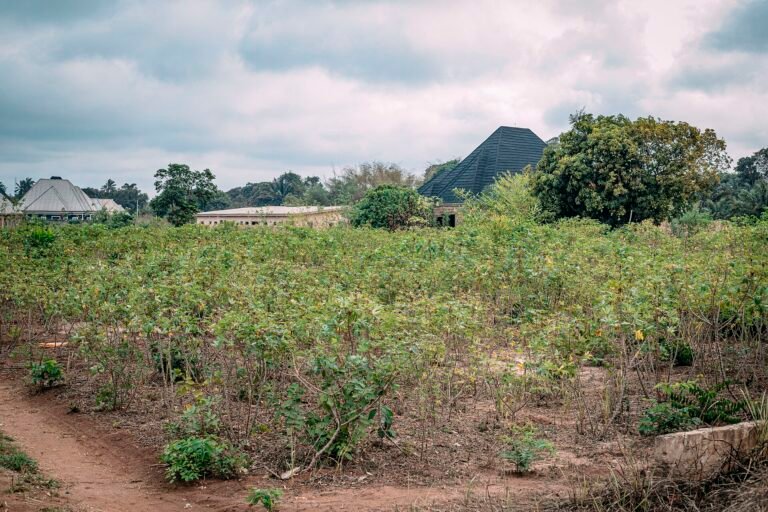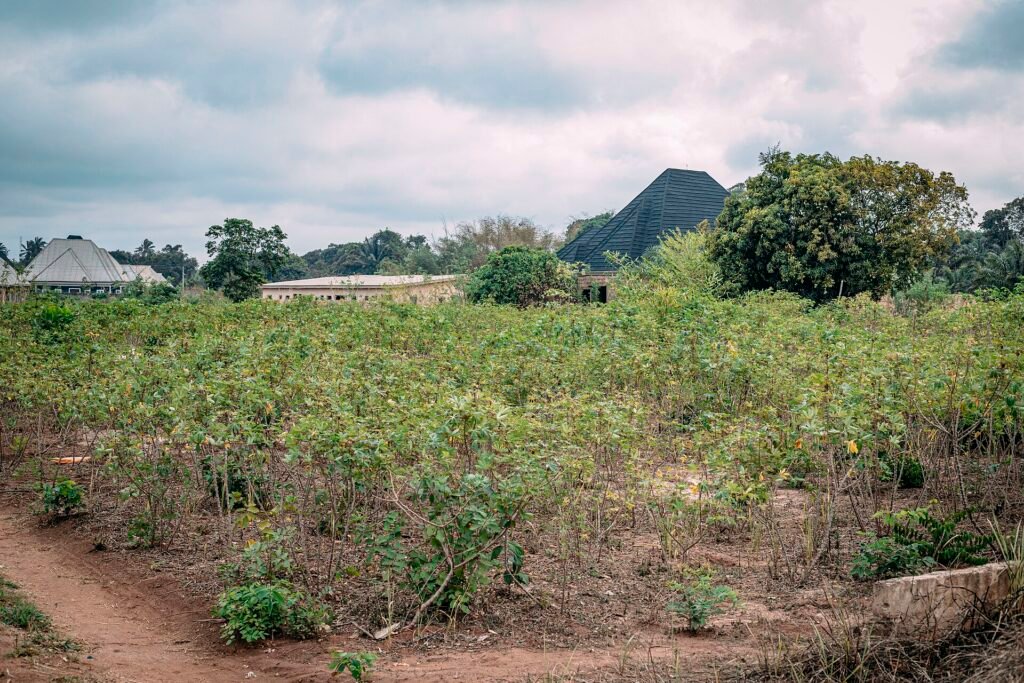
Farmland has become one of the most heavily marketed property products in Nigeria, and for understandable reasons. It is cheap per hectare compared with residential land. It sits in states where land is still genuinely abundant. It produces something you can eat or sell, which appeals to people who are tired of assets that only exist on a screen. And the marketing is very good, full of promised annual yields, pictures of cashew seedlings and phrases like “earn while your land appreciates”.
Some of it is excellent. Well-chosen farmland in the right state, with water, decent soil and honest management, is a genuinely sound long-term asset that also happens to feed people. But farmland is also the property category where the gap between a good deal and a bad one is widest, because the things that decide whether farmland works are almost entirely invisible on a survey plan. Two plots of identical size, with identical documents, at an identical price, can be worth wildly different amounts depending on soil, water, access, security and who is farming it.
That is the core message of this guide. When you buy residential land you are mostly buying location and title. When you buy farmland you are buying location, title, and productive capacity, and that third item requires a completely different set of questions. This guide walks through those questions in order: how farmland is measured and priced, what to check on the ground, how to read managed farmland and promised-yield schemes honestly, what documents you need, and how to work out whether the numbers actually make sense. If you have not read our complete guide to buying land in Nigeria, the general order of steps is there.
First, learn the measurements
Farmland is sold in units that confuse people who are used to residential plots. Get these straight before you compare any prices.
| Unit | Size | Useful comparison |
|---|---|---|
| 1 hectare | 10,000 square metres | About the size of a football pitch and a bit more |
| 1 acre | 4,047 square metres | About 0.4 hectares |
| 1 hectare | 2.47 acres | So one hectare is roughly two and a half acres |
| A typical residential plot | Often quoted as 50ft by 100ft, about 464 square metres | About 21 plots make a hectare at that size |
Why this matters: an advert saying “one acre for 800,000 naira” and another saying “one hectare for 1,800,000 naira” look similar at a glance. They are not. The second is roughly 2.47 times the land for about 2.25 times the price, so it is cheaper per square metre. Always convert everything to naira per hectare before comparing anything.
Also confirm the actual measurement of what you are being sold, on the survey plan, in square metres. “One plot” means different things in different states and in different estates.
The five things that decide whether farmland is worth anything
Water
This is first for a reason. Without water, farmland is just land.
Ask where the water comes from. Rain only? A stream or river? A borehole? If a borehole, how deep, what does it cost to drill there, and what is the yield in litres per hour? A shallow, high-yield borehole is a huge advantage. A 200-metre borehole with poor flow changes the economics of everything you plant.
Ask about the dry season. Nigeria has a long dry season in most of its farming states, and a farm that is beautiful in September can be dust in February. If the plan depends on irrigation, ask who pays for the pump, the fuel and the maintenance.
Soil
Not all soil grows everything. Sandy soil drains fast and suits cassava, cashew and groundnut. Heavier loam holds water and suits maize and vegetables. Waterlogged clay suits rice in the right setting and almost nothing else without drainage.
Pay for a soil test. It is not expensive relative to the price of land and it tells you the texture, the pH and the organic content. A seller who resists a soil test is telling you something.
Access
A farm that cannot get its produce to a road is a farm that loses money on every harvest. Check the last kilometre carefully. Can a truck reach the plot in the rainy season, when the harvest usually happens? Is the access road a legal right of way or somebody’s goodwill? How far is the nearest tarred road and the nearest real market?
Security
Be practical and unemotional about this. Some farming regions of Nigeria have experienced serious conflict between farmers and herders, and some have experienced banditry. That risk is not evenly spread, and it changes over time.
Ask specific questions. Has this community had incidents in the last three years? Who provides security for the farm estate, if it is a managed scheme? Is there a fence, a gate, a guard presence? Do the local farmers work their land freely?
Do not rely on a marketing brochure for this answer. Ask people who live there.
Community relations
Farmland sits in somebody’s village. If the community feels cheated, ignored or excluded, your farm will have problems that no document can solve, from grazing incursions to theft at harvest to outright confrontation.
Ask how the land was acquired and whether the community was properly settled. Ask whether local people are employed on the estate. Ask to meet a village representative. A well-run farm estate is usually proud to arrange that.
The documents for farmland
The paperwork is broadly the same as for residential land, with a few differences.
- Root of title. Community, family or government. Most farmland in Nigeria is community land, so the family head and principal members must sign, with a resolution attached. See buying family land.
- Registered survey plan with beacons and coordinates. Walk the beacons yourself, because farmland boundaries in bush are easy to blur.
- Deed of assignment in your name. See deed of assignment explained.
- Certificate of Occupancy where obtainable, for agricultural use. Note that a C of O carries a stated purpose. Agricultural land converted later to residential use requires a formal change of use, not a decision. See what is a C of O.
- A search at the state lands office to confirm the land is free of acquisition, not on a road corridor, and not registered to somebody else. See land registry search in Nigeria.
- The management agreement, if the farm is managed for you. This is the most important document in a managed scheme and we deal with it next.
Managed farmland and promised yields: read this carefully
A large share of farmland sold to city buyers is sold with management attached. You buy the land, the company plants and manages a crop on it, and you receive a share of the proceeds. Cashew, teak, oil palm, plantain, cassava and ginger are common.
This can work. It can also be the vehicle for the most disappointing property purchases in Nigeria. The difference is in the detail, so ask these questions and insist on written answers.
- Is the land actually mine, in my name, with a deed and survey? Or am I buying a unit in a scheme with no land title at all? These are completely different products with completely different risks.
- What exactly is promised? A share of actual proceeds is a real agricultural arrangement. A fixed percentage return regardless of harvest is a financial promise, and a financial promise needs a financially sound promisor, not a farm.
- Who bears the loss if the crop fails? Drought, pests, fire and theft all happen. If the answer is “we guarantee against all of that”, ask how, and ask what backs the guarantee.
- When does the crop first pay? Cashew, oil palm and teak take years to mature. A brochure showing income in year one for a tree crop is not describing farming.
- What are the management fees, and are they taken before or after your share?
- Can I visit unannounced? The answer should be yes.
- Is the operator registered and, where it is offering an investment product to the public, regulated? Nigeria’s securities regulator has moved to bring public agro-investment offerings under registration requirements, and an operator who cannot explain their regulatory position is a risk.
- Show me a full cycle. Ask for evidence of investors who have completed a full harvest cycle and been paid, and ask to speak to two of them.
An honest farmland operator will answer all eight of these comfortably. We take the yield question apart in full detail in our guide to how the farmland yield model really works. Anyone who becomes irritated by question three or question eight has told you what you need to know.
Running the numbers honestly
Here is a simple worked example so you can see how to think.
Say you buy one hectare of managed cassava farmland for 1,500,000 naira, all in. Cassava is a roughly annual crop, so it pays relatively quickly compared with trees.
- Land and setup: 1,500,000
- Expected gross farm proceeds per hectare per cycle in a decent year: assume 900,000
- Costs of inputs, labour, harvest and management: assume 500,000
- Your share after management split, say half of the net: 200,000
That is a return of about 13 per cent on the money in a good year, before the land appreciates at all. In a poor year it could be zero. Over several years, the land value itself may be the bigger part of your total gain.
Now compare that to a brochure promising 80 per cent per year. To deliver that on the same hectare, the farm would need to earn several times the realistic gross above, every year, with no bad seasons. Ask exactly how, and ask for the harvest records that prove it. Not a projection. Records.
Our guide on how to calculate return on investment shows how to do this properly, including the cost of tying your money up for years.
Where farmland is commonly bought
Farmland estates are active in several belts. The Oyo axis around Iseyin and the wider south-west has been very active, helped by reasonable rainfall and access to Lagos and Ibadan markets. Ogun, Osun and Kwara have significant activity. Nasarawa and the areas within reach of Abuja attract buyers who want a weekend farm. Parts of Delta, Edo and the South East have active oil palm, cassava and plantain schemes.
The general principle is that the further you go from a major market, the cheaper the land and the more the transport cost eats your margin. A hectare that is 30 minutes from a big market town is usually worth more than a cheaper hectare four hours away, and the difference is not visible in the purchase price.
Final thoughts
Farmland can be a genuinely good buy. It is one of the few property categories where the asset can pay you something while you hold it, and where the price of entry is still within reach of an ordinary Nigerian family. Land in a state with water, decent soil, a usable road and a peaceful community is not going to become worthless, and food demand in this country is not going to fall.
But farmland demands honesty from a buyer in a way that residential land does not. Residential land forgives you a little, because a badly chosen plot in a growing city still tends to rise. Farmland does not forgive you at all. Bad soil stays bad. No water stays no water. A community that feels cheated stays angry. And a promised return that was never realistic never becomes realistic.
So do the unglamorous work. Convert every price to naira per hectare. Pay for a soil test. Find the water and ask what it costs in February. Drive the access road. Ask the neighbouring farmers about security and about the company. Get real title in your own name with a charted survey. Read the management agreement line by line and ask who bears the loss. And judge every promised yield against the arithmetic of what a hectare of that crop can actually produce.
Do that, and you will end up owning something that grows in two different ways at once. Skip it, and you will own a certificate and a story.