Asaba has an unusual advantage among Nigerian cities: it is a state capital that sits directly across the River Niger from one of the biggest commercial towns in West Africa. Onitsha does the trading. Asaba does the living, the governing and increasingly the investing. Thousands of people work on the Anambra side and sleep on the Delta side, and every improvement to the crossing between them pushes more of that population into Asaba’s estates.
The second Niger bridge changed the mathematics of that relationship. A crossing that used to be a daily test of patience became a manageable trip, and land on the Delta side became a serious option for traders and professionals who had never previously considered living outside Onitsha. Add an international airport at Asaba, a state government that has invested consistently in the capital’s roads, and a capital territory development agency that plans the core area, and you have a market with more structure than most South-South and South-East cities.
Structure is good for a buyer, because structure means records. Asaba is not a city where you are left entirely to the mercy of village oral history. But it is also a city where family land, quarter land and community expectations are very much alive, particularly along the Okpanam, Ibusa and Ugbolu directions where most affordable plots are. This guide covers how Delta State land works, what documents to demand, which areas people are buying and why, and the specific physical risks of building near a great river. For the general order of steps, see our complete guide to buying land in Nigeria.
Who controls land in Delta State
As everywhere in Nigeria, the Land Use Act puts land in the hands of the state governor, held in trust for the people. In practice, three groups matter to an Asaba buyer.
The Delta State Ministry of Lands, Survey and Urban Development. This is where titles are recorded, where searches are done and where a Certificate of Occupancy comes from.
The capital territory development agency. Asaba’s core area is planned, and there are layout schemes with defined plot sizes, land uses, road widths and setbacks. If your plot falls inside a planned scheme, the scheme rules apply to what you can build.
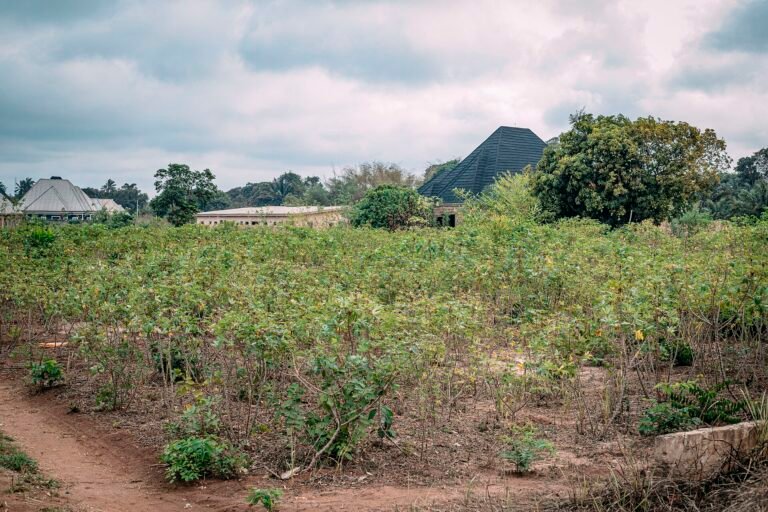
The traditional families and quarters. Asaba itself, Ibusa, Okpanam, Ugbolu, Illah and the surrounding towns each have their own family and quarter landholding structures. Most raw land you will be offered on the outskirts originates from one of them.
The safest Asaba purchase is one where the customary root is clean and the state title is either already in place or clearly obtainable.
What a proper Asaba file looks like
- Root of title from the family or quarter, showing how the land came to the seller.
- A registered survey plan with beacon numbers and coordinates, prepared by a licensed surveyor.
- Deed of assignment in your name with the survey attached. See deed of assignment explained.
- Certificate of Occupancy where one exists, plus Governor’s Consent if a titled plot is being transferred to you. See what is a C of O and Governor’s Consent explained.
- Layout approval if the plot sits inside a planned scheme, plus building plan approval before you build. See building plan approval in Nigeria.
- Receipts for every payment on letterhead with the plot number written on them.
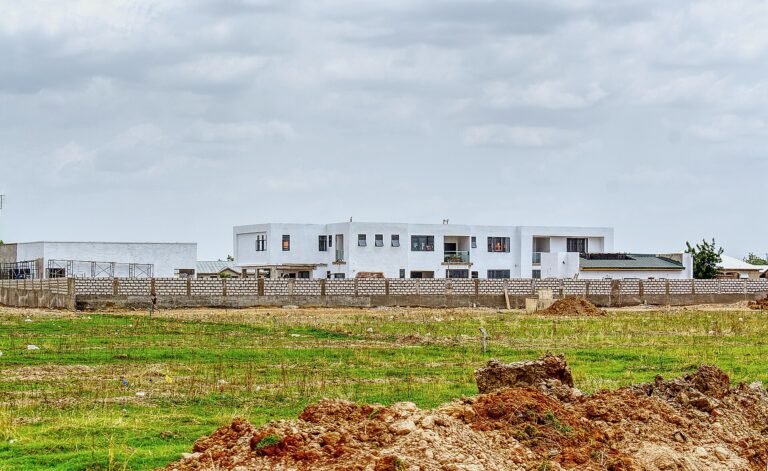
Ask one blunt question early: is this plot inside an approved layout or outside it? Inside means more rules and more security. Outside means more freedom and more risk. Neither answer is wrong, but you should know which one you are buying.
Verify before you pay
Run a search at the Delta State lands office through your own lawyer, using the survey coordinates. You are confirming that the land is not under a state acquisition or scheme, that it does not sit on a road setback or drainage corridor, that nobody else has registered over it, and that no caveat or court case is attached.
Also run the local check, because Asaba’s outskirts are family land and the registry cannot tell you about a quarrel that has never reached paper. Ask neighbours. Ask separately. Ask who the recognised head of the family is and whether the land has ever been in dispute. Full method in land registry search in Nigeria.
Where Asaba buyers are looking
The Okpanam Road corridor. The main spine of Asaba’s expansion. Estates line it and continue past Okpanam town. Prices fall the further out you go, and infrastructure follows the road.
Ibusa (Igbuzo) road axis. A big traditional town with substantial land, popular for affordable plots and family homes, with steady creep towards the city.
Ugbolu and the airport side. Land nearer the airport and along the Benin-Asaba highway direction. Cheaper, more industrial and logistics potential, more patience required.
The GRA, Core Area and Summit Road districts. Established, planned, expensive. Buy here for a finished home or a commercial property, not for land banking.
Cable Point, Umuagu and the older quarters. Dense, close to the river, historic. Good rental demand, but check flooding carefully.
Along the Onitsha-Asaba axis near the bridgehead. Commercially valuable because of traffic, but this is also where you must be most careful about road expansion setbacks and government plans.
The river is the local risk
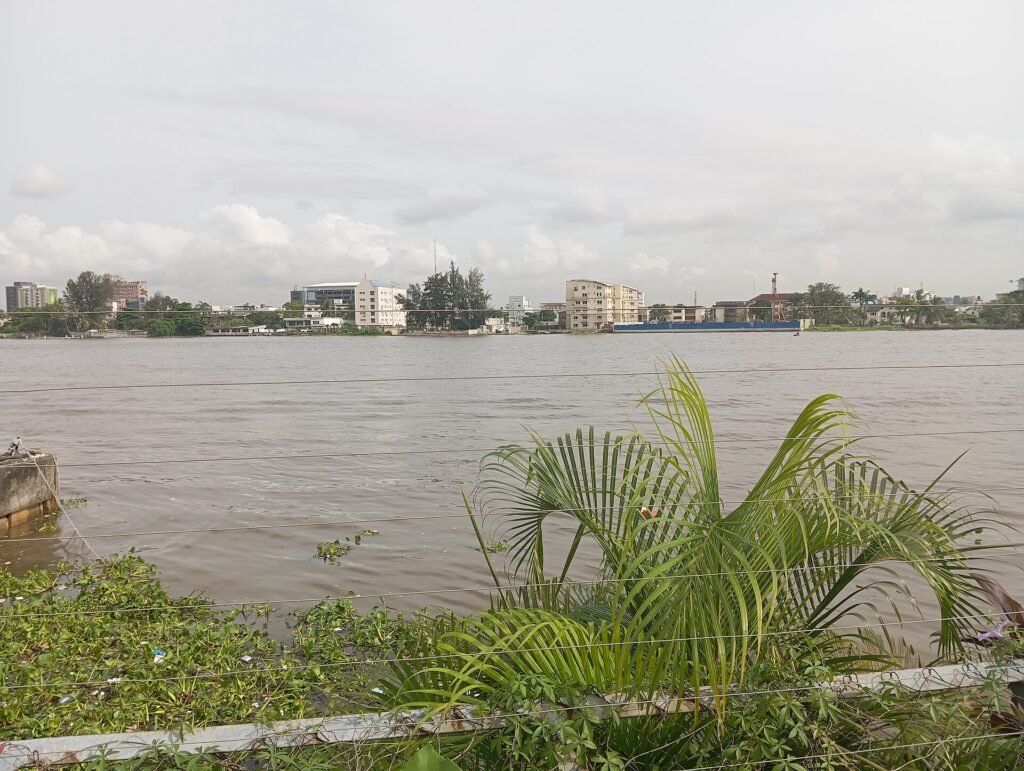
Everything good about Asaba’s position comes from the River Niger, and so does the main physical danger. Nigeria has had serious flood years, and riverine communities along the Niger have been badly affected in some of them.
Do these checks specifically:
- Ask about flood history over ten years, not two. Ask the oldest neighbour you can find.
- Look at the ground level relative to the road and to the surrounding plots. Land noticeably lower than everything around it is a warning.
- Find the drainage. Where does rainwater on this street actually go? If nobody can answer, it goes into somebody’s compound.
- Check for reclaimed or filled land. Freshly filled low ground can settle for years and crack buildings. Ask what was there before.
- Budget for sand filling and a raised foundation if you are on the low side. It is far cheaper to plan for it than to discover it.
Worked example: what an Asaba plot really costs
A plot advertised at 4,000,000 naira on an Asaba expansion corridor.
| Item | Example amount |
|---|---|
| Plot price | 4,000,000 |
| Survey plan | 350,000 |
| Deed and legal fees | 300,000 |
| Family or quarter documentation | 200,000 |
| Development levy inside an estate | 500,000 |
| Registration and title processing | 450,000 |
| Total | 5,800,000 |
If the plot needs filling because it sits low, add that separately. Filling a plot properly is often a seven-figure job on its own, and it is the cost that most first-time Asaba buyers forget. See the real cost of buying land in Nigeria.
Practical rules for Asaba
- Confirm whether the plot is in an approved layout. Then get the layout number and check the plot against it.
- Never accept a survey plan that has not been lodged with the Surveyor-General. An uncharted survey is a drawing.
- Watch the highway setbacks. Land fronting the Benin-Asaba and Onitsha-Asaba highways is valuable precisely because those roads matter, which is also why portions of that frontage may be reserved for expansion.
- Get the family head and principal members to sign on any customary land. One signature is not consent.
- Pay corporate, by transfer, with a receipt bearing the plot number.
- Use a Delta State lawyer. Local procedure and local knowledge of which families are in dispute is worth more than a cheaper fee.
- Check the developer. Corporate Affairs Commission registration, prior buyers who have received their documents, and a physical office you can visit. See how to check if a real estate company is real.
The Onitsha commuter calculation
A large share of Asaba’s residential demand comes from people whose money is made on the Anambra side. If you are buying to live, or buying to let to that group, the crossing is the number that matters most, and it deserves to be measured rather than assumed.
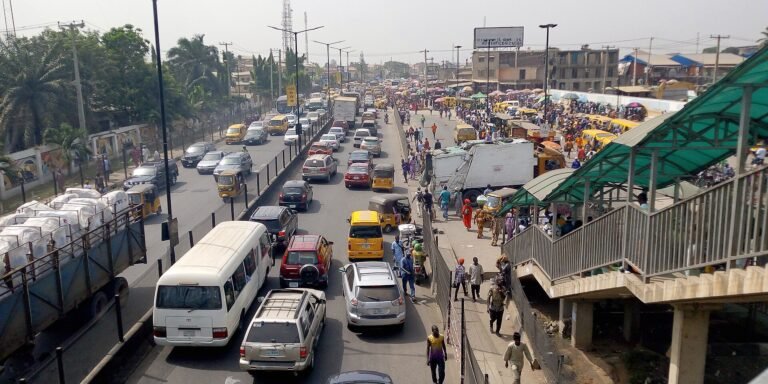
Do the journey yourself, both ways, on a working weekday. Cross in the morning at the hour a trader would cross, and come back in the evening at the hour they would return. Then do it again on a market day if you can, because market days change the traffic pattern completely.
What you are testing is not the distance. It is the variability. A crossing that takes twenty minutes on a good day and ninety on a bad one produces a different quality of life, and a different tenant, from one that is consistently forty. Ask residents how often the bad days happen and what causes them.
Then price the result honestly. Property closer to the bridgehead commands a premium precisely because it shortens that journey, and it is usually a premium worth paying if your tenant is a trader. Property further out along Okpanam or Ibusa road is cheaper because the journey is longer, and it suits people whose work is in Asaba itself, such as civil servants, professionals and staff of the state institutions.
Match the location to the tenant you actually intend to serve. Buying a plot on the far edge of the city and hoping to let it to somebody who trades in Onitsha every day is a plan that fails quietly, one vacant month at a time.
Final thoughts
Asaba is one of the more sensible medium-sized property markets in Nigeria. It has a real economic reason to exist beyond government, which is its relationship with Onitsha. It has an airport. It has a planned core and a state government that has kept building roads into the capital. And it still has affordable land within twenty minutes of everything, which is a combination that Lagos lost a generation ago.
The things that go wrong here are predictable, which means they are avoidable. Buyers take family land without getting the whole family to sign. Buyers accept an uncharted survey plan. Buyers fall in love with a cheap plot without asking why it is cheap, and the answer turns out to be that it goes under water in a bad year. Buyers ignore the setback on a highway frontage and lose the front third of their land to a road expansion.
Every one of those is caught by the same short routine: charted survey, official search, family head signature, neighbour interviews, a hard look at ground level and drainage, full costs in writing, corporate payment, and registration.
Do that in Asaba and you are buying into a city whose best years are, by any reasonable reading of the map, still ahead of it.